
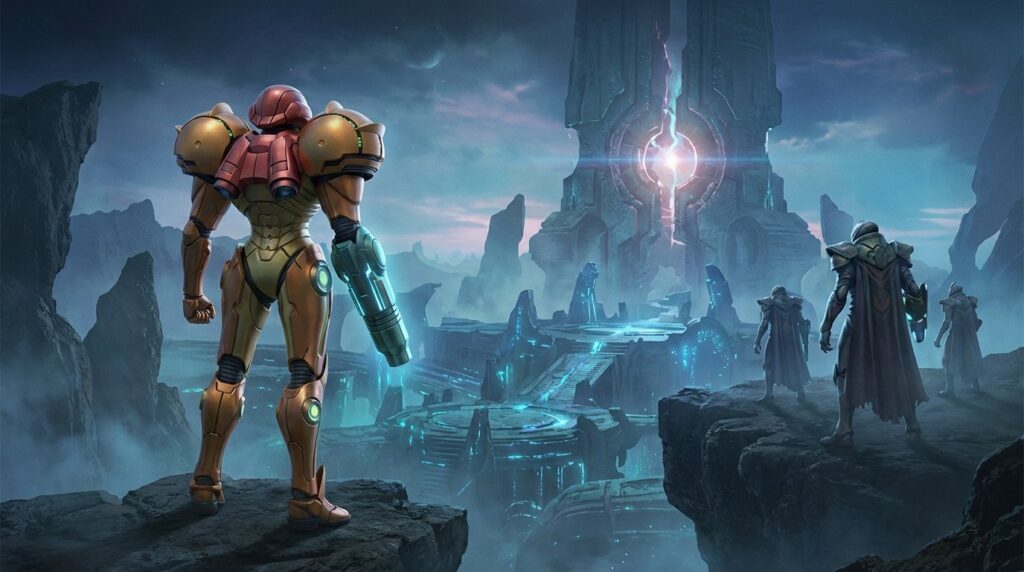
For nearly two decades, fans of the Metroid Prime series have waited with bated breath for the next chapter in Samus Aran’s first-person odyssey. After years of rumors, delays, and a rare development reset, “Metroid Prime 4” has finally landed on the Nintendo Switch 2—and it is nothing short of a revelation. In an era where reboots and remakes dominate the gaming landscape, Retro Studios has delivered a sequel that not only honors its legendary lineage but confidently pushes the boundaries of the genre it helped define.
“Metroid Prime 4” arrives at a pivotal moment in Nintendo’s history. The Switch 2, with its remarkable leap in hardware capabilities, sets the stage for a new era of hybrid gaming. Yet, the true test of any console remains its exclusive titles, and Samus’ return is a resounding statement of intent. This is not simply a nostalgia trip; it’s a bold, modern reinterpretation that sets a new standard for atmospheric exploration and first-person adventure on the platform.
In classic Metroid fashion, the game immerses you in a labyrinthine world teeming with secrets, danger, and awe-inspiring vistas. But what elevates “Metroid Prime 4” above its predecessors is its deft balancing act between the familiar and the innovative. Retro Studios has not only recaptured the magic that made the original trilogy so beloved but infused it with fresh ideas, stunning visuals, and a narrative depth that resonates in 2026’s competitive gaming scene.
Gameplay: Evolution of Exploration
At its core, “Metroid Prime 4” remains true to the series’ essence: exploration, discovery, and mastery over hostile alien environments. The sense of isolation and vulnerability is palpable from the outset, but so too is the thrill of empowerment as Samus acquires new abilities and uncovers the planet’s secrets. The game’s pacing is masterful, alternating between intense combat sequences and contemplative exploration, ensuring no two hours feel the same.
Retro Studios has fine-tuned the gameplay to near perfection, delivering a fluid and responsive experience that feels both familiar and refreshingly modern. The controls, leveraging the Switch 2’s improved ergonomics and adaptive triggers, are intuitive and precise. Samus’ acrobatic maneuvers—be it the Morph Ball’s swift traversal or the newly enhanced Grapple Beam—feel more satisfying than ever, providing players with a tactile connection to the world.
Every encounter matters. Enemies are more intelligent and varied, requiring a thoughtful approach rather than simple brute force. Boss battles, always a hallmark of the series, are now cinematic, multi-phase spectacles that demand both skill and strategy. The thrill of victory is heightened by the risk of defeat, making success all the sweeter.
Core Mechanics
“Metroid Prime 4” meticulously preserves the core mechanics that defined the series while introducing subtle but meaningful refinements. At the heart of the experience is the scan visor, which returns with a sleeker interface and deeper lore integration. Scanning environments, enemies, and hidden relics is as rewarding as ever, encouraging a methodical approach to exploration that rewards curiosity and patience.
The series’ iconic arsenal—ranging from the Power Beam to the beloved Super Missiles—returns with satisfying upgrades, each weapon feeling weighty and impactful. The new modular upgrade system allows for unprecedented customization, enabling players to tweak Samus’ suit to suit their playstyle. Whether you favor a stealthier approach or all-out aggression, the game offers meaningful choices that enhance replayability.
Movement is more dynamic thanks to the addition of a dash mechanic and improved wall-jumping, making traversal through the interconnected biomes a joy. The game strikes a fine balance between accessibility for newcomers and depth for veterans, with optional tutorials and layered difficulty settings that cater to all skill levels.
New Additions and Features
“Metroid Prime 4” doesn’t rest on its legacy. One of its most notable innovations is the introduction of the “Echoes” system—a new mechanic that allows Samus to interact with spectral echoes of previous explorers, uncovering clues, puzzle solutions, and hidden paths. This system adds a layer of environmental storytelling that feels organic and immersive, deepening the sense of history in every corner of the world.
Another standout feature is the adaptive AI, which not only heightens the challenge but makes every playthrough feel distinct. Enemies will learn from your habits, forcing you to adapt your tactics and weapon choices. The result is a game that remains engaging and unpredictable, even on repeat runs.
Online integration has also been thoughtfully implemented. In addition to asynchronous multiplayer features—such as sharing scan data and hidden markers with friends—the game offers seamless cloud saves and an in-depth achievement system that rewards long-term engagement. For those seeking a more social experience, the cooperative “Raid” mode introduces a fresh take on classic Metroid gameplay, allowing up to three friends to tackle custom-built challenge maps together.
Single-Player Campaign
The single-player campaign spans a sprawling alien world that deftly interweaves classic Metroidvania structure with modern, open-ended design. Each biome feels distinct, with unique visual identities, enemy types, and environmental puzzles. The campaign’s pacing is impeccable, gradually unveiling new powers and areas while maintaining a constant sense of discovery.
Story beats are delivered through a combination of environmental storytelling, voice logs, and cinematic cutscenes. The narrative remains largely non-intrusive, allowing players to explore at their own pace while still providing enough context and intrigue to drive the adventure forward. The balance between player agency and storytelling is one of the campaign’s greatest strengths.
With a main quest that can easily stretch beyond 20 hours—and even longer for completionists—“Metroid Prime 4” offers remarkable value. The campaign is peppered with optional challenges, hidden upgrades, and lore-rich side quests, ensuring that there’s always something new to uncover, even after the credits roll.
Story and Setting
Set against the backdrop of the mysterious planet Cyrad, “Metroid Prime 4” crafts a narrative that is both epic in scale and deeply personal. Samus is once again at the heart of a cosmic conflict, but this time the stakes are higher and more nuanced. The story explores themes of identity, legacy, and the cost of heroism, giving our silent protagonist a surprising amount of emotional weight.
While the main plot revolves around a new threat—a rogue AI manipulating the ancient ruins of Cyrad—Retro Studios wisely leaves much of the storytelling in the player’s hands. Lore is sprinkled throughout the world, rewarding those who are willing to dig deeper. The interplay between the remnants of a lost civilization and the encroaching forces of the Space Pirates creates a palpable sense of tension and urgency.
The setting itself is a character. Cyrad’s diverse biomes, from luminescent fungal forests to crumbling, storm-lashed citadels, are rich with detail and atmosphere. Each zone tells its own story, inviting players to piece together the planet’s tragic history through clues, echoes, and environmental design. The result is a world that feels alive, ancient, and full of secrets waiting to be unearthed.
Level Design
Level design has always been a cornerstone of the Metroid Prime series, and the fourth installment is no exception. The world is an intricate web of interconnected zones, each seamlessly blending linear progression with non-linear exploration. Shortcuts, secret rooms, and environmental puzzles abound, making backtracking feel rewarding rather than tedious.
Retro Studios has mastered the art of environmental storytelling. Every corridor, chamber, and vista is meticulously crafted to draw the player’s eye and spark curiosity. The game’s layered design ensures that each upgrade or new ability opens up tantalizing new possibilities, encouraging players to revisit previously inaccessible areas and uncover hidden treasures.
The verticality of the environments has been significantly enhanced, thanks in part to the Switch 2’s improved hardware. Climbing, grappling, and platforming are more fluid and dynamic, with multi-level arenas that test both your combat prowess and spatial awareness. The inclusion of environmental hazards, shifting weather patterns, and dynamic lighting further deepen the sense of immersion and challenge.
Multiplayer and Online Experience
Although the Metroid Prime series is best known for its single-player campaigns, “Metroid Prime 4” introduces a surprisingly robust suite of multiplayer options. The headline addition is the cooperative “Raid” mode, which blends the series’ trademark exploration and puzzle-solving with fast-paced, team-based challenges. Working together to overcome complex boss encounters and environmental hazards adds a welcome social dimension to the otherwise solitary experience.
Competitive multiplayer also makes a return, updated for modern sensibilities. Classic deathmatch and capture-the-flag modes are joined by inventive new formats like “Artifact Hunt,” where players race to claim hidden relics while contending with both each other and the environment. Matchmaking is efficient and stable, with minimal lag and a fair, skill-based ranking system that keeps the experience engaging over time.
Online features extend to community-driven content as well. Custom map sharing, leaderboards, and asynchronous challenges provide a constant stream of new content, ensuring that “Metroid Prime 4” remains fresh and relevant long after launch. The integration with Nintendo’s revamped online infrastructure on Switch 2 is seamless, making it easier than ever to connect and compete with friends or strangers alike.
Graphics and Visuals
“Metroid Prime 4” is a visual tour de force, making full use of the Switch 2’s advanced capabilities. Gone are the days of low-resolution textures and muddy lighting; in their place are vibrant, high-fidelity environments that rival the best on any platform in 2026. Every biome is bursting with color, detail, and dynamic effects that bring Cyrad to life in ways previously unimaginable on a Nintendo console.
The art direction is a masterclass in sci-fi world-building, seamlessly blending organic and mechanical elements to create environments that are both alien and strangely familiar. Whether exploring the phosphorescent depths of an underground lake or the gleaming, oppressive corridors of a Space Pirate stronghold, each area is visually distinct and memorable.
Character models, especially Samus herself, are rendered with exquisite detail. Reflections, particle effects, and real-time weather changes add layers of realism and atmosphere that heighten immersion. The game runs at a consistent frame rate, even during the most chaotic battles, and offers a choice between performance and fidelity modes for those who prioritize speed or visual splendor.
Soundtrack and Audio Design
The Metroid franchise has a storied history of unforgettable music, and “Metroid Prime 4” continues that tradition with one of the most evocative soundtracks in recent memory. Composer Kenji Yamamoto returns, blending haunting melodies with driving, percussive tracks that perfectly capture the game’s mix of wonder and tension. Each biome boasts its own distinct musical identity, reinforcing the atmosphere and emotional stakes of the journey.
Sound design is equally impressive. From the whirring of Samus’ arm cannon to the distant rumble of alien machinery, every audio cue is crisp and purposeful. The use of spatial audio, made possible by the Switch 2’s hardware, creates a truly three-dimensional soundscape that heightens both immersion and situational awareness. Subtle environmental sounds—dripping water, skittering creatures, the crackle of electrical storms—contribute to a sense of place that is as important as any visual flourish.
Voice acting, while sparingly used, is of high quality and never intrusive. Most of the narrative is conveyed through logs, echoes, and environmental storytelling, preserving the series’ signature sense of solitude and discovery. The few spoken lines serve to underscore key moments, lending emotional weight without breaking immersion.
Conclusion: Should You Play It?
In a year crowded with blockbuster releases and genre-bending experiments, “Metroid Prime 4” stands tall as a triumph of design, ambition, and execution. It is both a love letter to fans who have waited patiently for Samus’ return and a bold, forward-looking reinvention of one of gaming’s most revered franchises. Retro Studios has delivered a game that not only meets but exceeds the sky-high expectations set by its predecessors.
Whether you’re a longtime fan or a newcomer to the series, “Metroid Prime 4” is an essential experience—an atmospheric, thrilling, and deeply rewarding adventure that showcases the best of what the Switch 2 has to offer. With its expertly crafted world, engaging mechanics, and wealth of content, it is a landmark achievement in both the Metroid canon and the broader landscape of 2026 video gaming.
Samus Aran’s return was worth every minute of the wait. “Metroid Prime 4” is not just the best Metroid game in years—it’s one of the defining titles of this generation. Don’t miss it.