
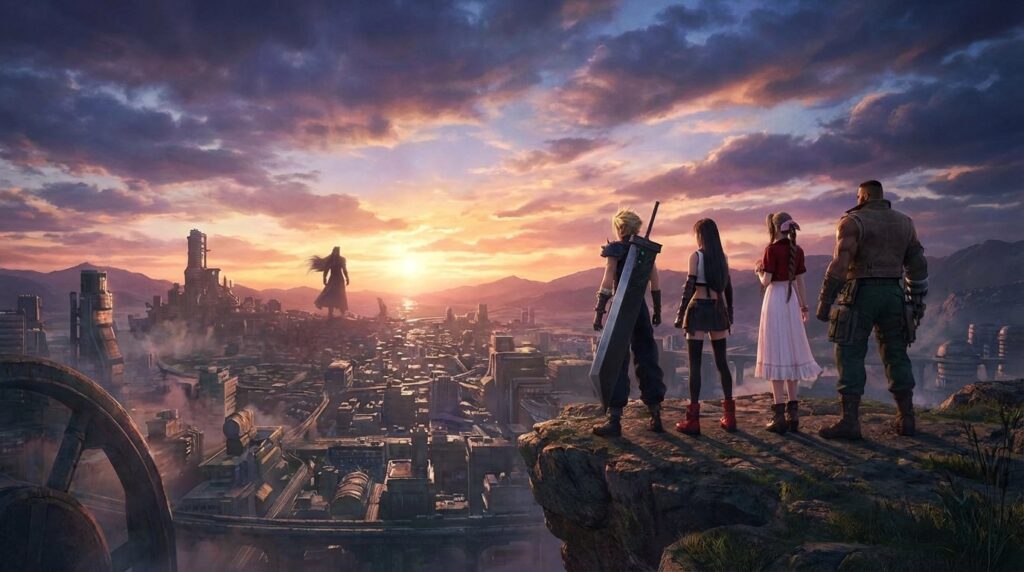
When Square Enix released the first installment in their ambitious Final Fantasy VII Remake project, anticipation and skepticism ran in tandem. Could any reimagining of a beloved classic truly recapture the original’s magic, while also building something new for a modern audience? In 2026, with the arrival of Final Fantasy VII Rebirth, the answer comes through loud and clear: not only can it be done, but it can also expand the legacy in breathtaking fashion. Rebirth is not just a continuation—it is a reinvention, a grand statement that stands as a testament to both nostalgia and innovation.
Final Fantasy VII Rebirth picks up the torch from Remake’s dramatic conclusion, sending Cloud Strife and his companions beyond the towering metropolis of Midgar and out into the sprawling, unpredictable world that captured players’ imaginations nearly three decades ago. For returning fans, the game is a treasure trove of references, reinterpretations, and surprises. For newcomers, it is a masterclass in modern RPG design, blending deeply emotional storytelling with cutting-edge gameplay and visuals. As the gaming landscape of 2026 continues to push the boundaries of immersion and interactivity, Rebirth stands out as a shining example of how to honor the past while forging boldly ahead.
In a world where remakes and remasters are more common than ever, it’s easy to become jaded. Yet, Final Fantasy VII Rebirth demands attention, not merely for the pedigree it carries, but for the sheer scope and artistry on display. It is a game that pulls no punches, delivering both the expected and the utterly unforeseen in equal measure. Whether you are a veteran of Cloud’s journey or stepping onto this path for the first time, Rebirth invites—and rewards—your curiosity with one of the most compelling adventures in recent memory.
Gameplay: Evolution at Its Finest
<img src="https://pressstartgaming.com/images/nano_banana_69c958abd4e8d.jpg" alt="Final Fantasy VII Rebirth Review: A Masterful Reimagining for a New Generation gameplay moment” loading=”lazy” />
At its core, Final Fantasy VII Rebirth builds atop the refined battle system introduced in Remake, blending real-time action with strategic, menu-driven commands. The result is a combat experience that is both exhilarating and deeply tactical, inviting players to master not only the strengths and weaknesses of each party member but also the nuances of enemy behavior and environmental hazards. The seamless integration between exploration, combat, and narrative ensures that every moment is engaging, never feeling disjointed or out of place.
The open-world design marks a significant shift from the linear corridors of Remake. Here, players are free to roam expansive regions, hunt for secrets, and take on a broad array of side quests. The world feels alive, brimming with dynamic events, challenging encounters, and meaningful discoveries. Traversal is smoother than ever, with new mechanics such as mountable Chocobos and environmental puzzles that add variety to the journey. The sense of scale is awe-inspiring, and the freedom offered to the player is a true highlight.
Balancing familiarity with innovation, Rebirth keeps the spirit of classic JRPGs alive while modernizing every facet. The depth of customization, from Materia loadouts to weapon upgrades, allows for a tailored experience that rewards experimentation. Meanwhile, thoughtful quality-of-life improvements ensure that the game never becomes overwhelming, even as it expands in complexity and scope.
Core Mechanics
Combat in Rebirth retains the hybrid system that set Remake apart, expertly balancing fast-paced action with the deliberate tactics that define Final Fantasy’s best battles. Players can fluidly switch between party members on the fly, utilizing each character’s unique abilities and Limit Breaks with satisfying precision. The ATB gauge returns, now enhanced with new synergy attacks that encourage creative team compositions and coordinated assaults.
Materias—those iconic orbs of power—remain central to progression. The breadth of available Materia has been expanded, introducing new spells, summons, and support actions that further enrich the strategic possibilities. Weapon customization is deeper and more meaningful, with branching upgrade paths and unlockable skills that make each party member feel distinct and indispensable. The need to adapt your loadouts for different challenges keeps encounters fresh and engaging throughout the campaign.
Exploration is equally rewarding. The world map is dotted with hidden caves, ancient ruins, and bustling towns, each offering its own set of challenges and rewards. Environmental interaction plays a larger role than ever, with puzzles and obstacles that leverage character abilities and equipment. These mechanics strike a careful balance between accessibility and depth, ensuring that players of all skill levels can find something to enjoy.
New Additions and Features
Rebirth does not rest on the laurels of its predecessor. Among its most noteworthy additions is the Synergy System, which allows for devastating joint attacks between party members. These combos not only look spectacular but also add a new layer of strategy, as timing and pairing become crucial for overcoming tough foes. This mechanic breathes fresh life into battles, encouraging experimentation and collaboration within your party.
The open world itself is a marvel, featuring dynamic weather, day-night cycles, and wildlife that interact in surprisingly believable ways. Side activities abound: from Chocobo racing to new minigames and crafting systems, there’s always something to distract from the main quest. These diversions are thoughtfully integrated and never feel tacked on; instead, they serve to deepen your connection to the world and its inhabitants.
Perhaps the most surprising addition is the expanded base-building and settlement management elements. Players can now invest in the reconstruction of devastated towns, influencing both the economy and the story. This system, while optional, offers tangible rewards and helps ground the narrative stakes in the player’s actions. It’s a bold move that pays off, providing yet another layer of engagement for those willing to dig deeper.
Single-Player Campaign
The heart of Rebirth is its single-player campaign, a sprawling epic that spans dozens of hours. The narrative pacing is expertly handled, with moments of high drama balanced by quieter, character-driven interludes. Side quests are more meaningful than ever, often tying directly into the main story or offering unique insights into the world and its people. Gone are the days of fetch quests for their own sake; here, every task feels purposeful.
Boss battles are frequent and memorable, each crafted with care and demanding a blend of strategy, quick reflexes, and preparation. These set pieces are among the best the series has ever offered, blending cinematic flair with genuine challenge. The game’s difficulty curve is finely tuned, offering accessibility for newcomers while providing ample depth for veterans seeking to push their limits.
Replayability is high, thanks to branching narrative decisions and multiple endings that invite discussion and debate. Optional dungeons and end-game content further extend the campaign’s lifespan, rewarding those who wish to see every corner of this meticulously crafted world. It’s a testament to the game’s design that the urge to keep playing rarely wanes, even after the credits roll.
Story and Setting
Final Fantasy VII Rebirth walks a tightrope, honoring the original’s legendary narrative while daring to diverge in bold, unexpected ways. The main cast—Cloud, Tifa, Aerith, Barret, and the rest—are more fully realized than ever, with expanded backstories and relationships that resonate on a deeper emotional level. The writers have managed to strike a balance between nostalgia and innovation, ensuring that every twist lands with impact, whether you know what’s coming or not.
The world itself is a character, rich in lore and atmosphere. From the slums of Midgar to the open grasslands and mysterious forests, each region is distinct and memorable. The game deftly explores themes of environmentalism, corporate greed, and the search for identity, lending the story a timeless relevance even in 2026. Dialogue is sharp and natural, aided by excellent voice acting that brings the cast to life.
Perhaps most impressive is the way Rebirth plays with expectations. Iconic moments are reimagined, sometimes subverted, keeping even the most diehard fans on their toes. This approach could have easily backfired, but instead, it invigorates the experience, making familiar beats feel fresh and unpredictable. The result is a story that feels both comfortingly familiar and thrillingly new.
Level Design
Gone are the funnelled corridors of the previous entry; Rebirth’s environments are vast, intricate, and packed with secrets. Towns are bustling with activity, each NPC offering not just flavor text but unique quests, lore, and opportunities for interaction. The level design encourages exploration without overwhelming the player, cleverly using visual cues and environmental storytelling to guide your progress.
Dungeons and special areas are particularly noteworthy, blending classic puzzle-solving with modern design sensibilities. These spaces are more than mere combat arenas—they are integrated into the world’s narrative, often telling their own stories through layout and detail. Whether scaling a snowy mountain or delving into a forgotten ruin, the sense of discovery is palpable.
The inclusion of verticality is another major improvement. Climbing, swimming, and creative traversal mechanisms allow for layered spaces that reward curiosity. Secret paths, hidden treasures, and environmental puzzles abound, ensuring that every journey off the beaten path offers its own reward. This is a world that begs to be explored, and the design supports that urge at every turn.
Multiplayer and Online Experience
While Final Fantasy VII Rebirth is unabashedly a single-player epic at heart, it introduces a suite of online features that enhance the experience without detracting from its narrative focus. Asynchronous elements such as player-shared tips, leaderboard challenges, and user-created side quests offer a sense of community and competition. These optional features are seamlessly integrated, never intruding on the core adventure but offering depth for those who seek it.
The new cooperative challenge dungeons are a standout addition. Allowing up to three players to team up online, these encounters demand coordination and strategy, offering exclusive rewards and unique boss battles not found in the main campaign. While not essential to progression, they add a welcome social dimension that extends the game’s longevity and appeal.
Connectivity is smooth and matchmaking efficient, with robust tools for teaming up with friends or strangers alike. Square Enix has clearly learned from the online missteps of other franchises, creating a system that feels optional but rewarding. For those who prefer to play entirely solo, none of these elements are required, ensuring that the integrity of the single-player journey remains intact.
Graphics and Visuals
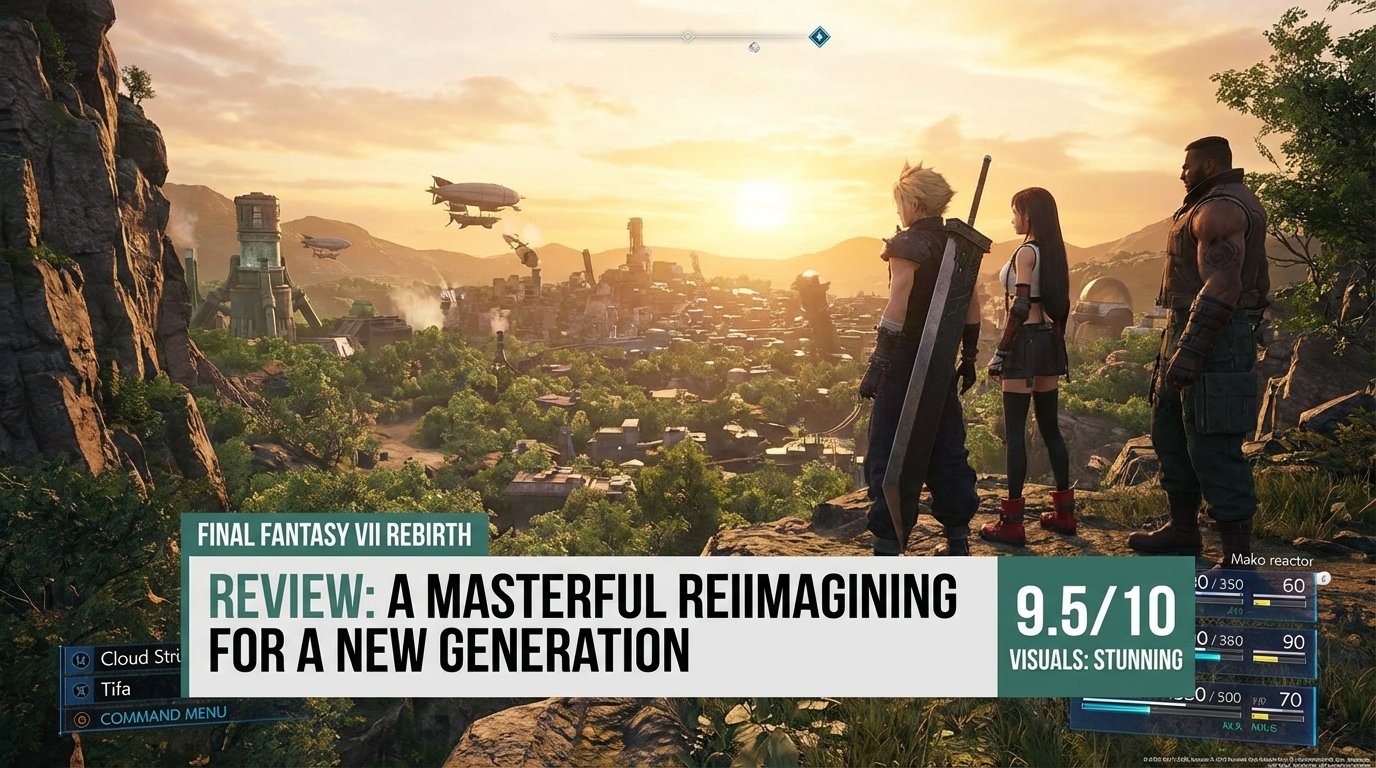
In 2026, graphical fidelity is reaching new heights, and Final Fantasy VII Rebirth stands proudly at the forefront. Powered by the latest iteration of the Luminous Engine, the game boasts breathtaking environments, meticulously detailed character models, and fluid animations that rival even the most visually ambitious titles of the era. Every region is a feast for the eyes, from sun-dappled forests to neon-lit cityscapes, rendered with a painterly attention to light and color.
Character expressions and body language are more nuanced than ever, lending emotional weight to even the smallest interactions. The cinematic presentation during major story beats is nothing short of spectacular, seamlessly transitioning between gameplay and cutscenes without a hitch. Weather effects, particle systems, and dynamic lighting all contribute to the world’s sense of immersion and believability.
Performance is equally impressive, with options for high frame rates, ray tracing, and a suite of accessibility features that ensure a smooth experience across a range of hardware. Load times are virtually nonexistent, and the technical polish is evident throughout. In a market saturated with visually impressive games, Rebirth still manages to stand out, thanks to its art direction and commitment to world-building detail.
Soundtrack and Audio Design
No discussion of a Final Fantasy title would be complete without addressing the music, and Rebirth delivers in grand fashion. Composer Nobuo Uematsu’s iconic themes are lovingly reinterpreted, blending orchestral arrangements with modern flourishes and new compositions that fit seamlessly within the expanded narrative. The soundtrack is both sweeping and intimate, elevating every moment from quiet reflection to bombastic battle.
Sound design is similarly top-notch. The world is alive with ambient noises, from the bustle of city streets to the rustle of wind through the grasslands. Each weapon swing, spell cast, and enemy roar is rendered with crisp clarity, adding a tactile dimension to combat. Voice acting is universally strong, with returning cast members delivering nuanced performances that bring depth to their characters.
The combination of music and sound design ensures that every scene resonates, drawing the player deeper into the experience. Whether you’re engaged in an epic boss fight or simply wandering through a tranquil village, the audio landscape is as rich and evocative as the visuals. It’s a reminder of how integral sound can be to storytelling and immersion in a game of this scale.
Conclusion: Should You Play It?
Final Fantasy VII Rebirth is more than just a sequel or a remake—it is a love letter to one of gaming’s most cherished worlds, reimagined for a new era. Square Enix has achieved something remarkable, delivering a game that honors its roots while confidently forging its own path. Every aspect, from gameplay and story to graphics and sound, reflects a level of craft and ambition that few games can match in 2026.
Whether you’re a lifelong fan or a curious newcomer, Rebirth offers an experience that is both familiar and utterly new. Its willingness to take risks pays off in spades, resulting in a journey that is as emotionally resonant as it is mechanically satisfying. In a year crowded with high-profile releases, Final Fantasy VII Rebirth stands tall—a masterful reimagining that sets a new standard for what a remake can be.
If you’re seeking a game that will transport you, challenge you, and stay with you long after the credits roll, look no further. Final Fantasy VII Rebirth is an essential play, not just for fans of the series, but for anyone who loves the art of interactive storytelling. This is the rare sequel that not only lives up to its legacy, but elevates it for a new generation.