
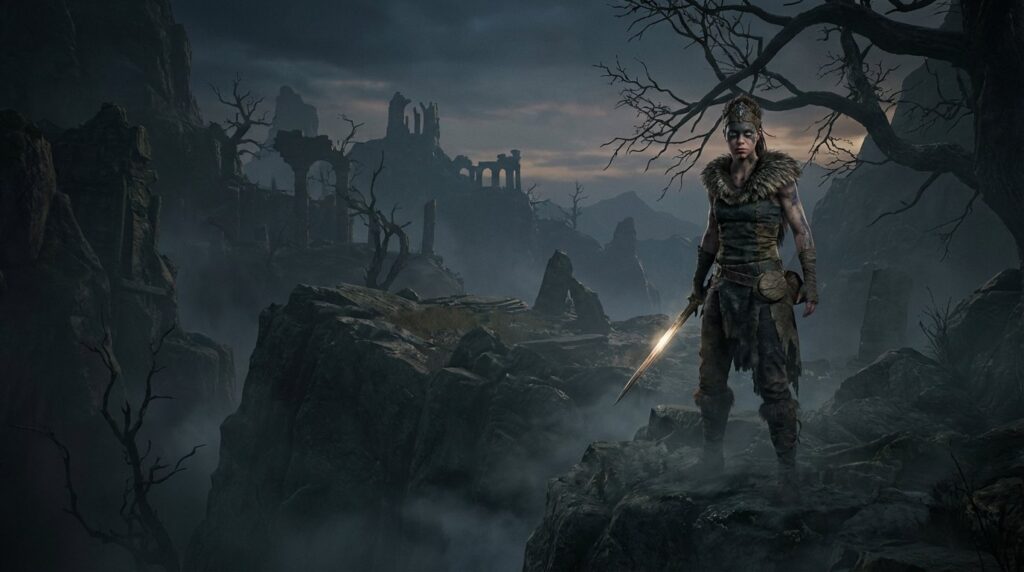
The original “Hellblade: Senua’s Sacrifice” stunned players and critics alike in 2017, not only for its harrowing depiction of psychosis but for its bold fusion of myth, madness, and raw, cinematic presentation. Nearly a decade later, “Senua’s Saga: Hellblade II” emerges as one of the most anticipated releases of 2026, promising to further push the boundaries of interactive narrative and visual fidelity. Ninja Theory returns with a sequel that is as haunting as it is beautiful, inviting players back into Senua’s fractured mind and the stark, myth-drenched landscapes of ancient Iceland.
In an era where blockbuster sequels often err on the side of bloat, Hellblade II stands out for its laser-focused vision. It is a meticulously crafted experience that leans heavily into its atmospheric storytelling, unflinching psychological themes, and groundbreaking technical achievements. The game’s marketing has been shrouded in mystery, with cryptic trailers and developer diaries hinting at an even deeper exploration of Senua’s struggles and the Norse mythology that envelops her journey.
As the gaming landscape of 2026 grows ever more crowded with sprawling open worlds and live service behemoths, Senua’s Saga: Hellblade II carves its own path—a potent, narrative-driven odyssey that dares to stare directly into the abyss. But does this sequel justify its long gestation and the sky-high expectations of fans and newcomers alike? Let’s descend into the darkness and find out.
Gameplay: A Dance of Survival and Sanity
Hellblade II’s gameplay is a study in deliberate restraint, much like its predecessor, but with a heightened sense of agency and tension. The moment-to-moment experience oscillates between quiet, introspective exploration and explosive, visceral combat. The game’s third-person perspective returns, but the camera feels even tighter and more intimate, reinforcing the claustrophobia and anxiety that permeate Senua’s psyche.
Combat has evolved from the original’s minimalist approach, offering deeper mechanics without sacrificing the oppressive weight that made every encounter feel consequential. Timing, positioning, and reading enemy movements are crucial; there’s no room for button-mashing here. Hellblade II’s fights are as much psychological as physical, echoing Senua’s internal struggle and forcing players to engage with her vulnerability.
Puzzles remain a central pillar, but they’re more organically woven into the world. The environmental riddles—so memorable in the first game—now feel more varied and meaningful, often reflecting Senua’s shifting perceptions and the blurred line between reality and hallucination. The result is a gameplay loop that is tense, immersive, and emotionally charged.
Core Mechanics
At its heart, Hellblade II retains and refines the core mechanics that defined the original. The interplay between exploration, combat, and puzzle-solving is seamless, with each element reinforcing the narrative stakes. Senua’s unique perspective manifests in gameplay through the persistent “Furies”—the chorus of voices that comment, warn, and sometimes mislead. These voices remain a constant companion, both aiding and undermining the player, and are now more dynamic and context-sensitive than ever before.
The combat system, while still one-on-one and brutally intimate, introduces new layers of complexity. Parrying, dodging, and countering are more responsive, and enemy archetypes demand varied strategies. Instead of overwhelming the player with hordes, Hellblade II’s encounters are sparse but memorable, each fight feeling like a personal trial rather than a mechanical obstacle.
Exploration is more tactile, with Senua able to interact with her environment in subtle ways—tracing ancient runes, steadying herself against walls, or pausing to listen to the wind. These small touches, combined with the game’s minimalist HUD and lack of traditional quest markers, deepen immersion and encourage players to inhabit Senua’s world and mental state.
New Additions and Features
Ninja Theory hasn’t rested on its laurels. Hellblade II introduces several new features that expand the scope and depth of the experience without diluting its focus. Chief among these is the “Inner World” mechanic, which allows players to momentarily peer through Senua’s fragmented perception, revealing hidden truths or dangers invisible to the naked eye. This mechanic is elegantly integrated, both as a gameplay tool and a narrative device, providing fresh layers to both puzzles and exploration.
The sequel also debuts a dynamic weather and day-night system, which isn’t just for show. Environmental conditions subtly influence Senua’s mental state and the behavior of certain mythic entities she encounters. The world feels more alive and unpredictable, with storms that heighten tension and moments of sunlight that offer fleeting reprieve from the darkness.
While Hellblade II remains a single-player experience at its core, it features a robust “Photo Mode” and an innovative accessibility suite, building on the industry’s best practices in 2026. Players can tailor the experience to their needs, from customizable subtitle options to a groundbreaking audio navigation system for visually impaired players—a welcome evolution for a game so rooted in sensory experience.
Single-Player Campaign
The single-player campaign is a taut, roughly 12-hour journey that wastes no time on filler. Every chapter is meticulously paced, with a sense of mounting dread and revelation. The narrative is tightly interwoven with gameplay, and there’s a palpable sense of forward momentum. Unlike some contemporary epics, Hellblade II never overstays its welcome, ensuring that every moment is meaningful and every discovery impactful.
Replayability comes from the subtle ways in which choices—both narrative and practical—alter Senua’s perception and the unfolding of key events. While the story’s arc is largely linear, the details and emotional cadence can shift, encouraging players to revisit earlier chapters and piece together the full tapestry of Senua’s experience.
The lack of traditional side quests or sprawling open-world distractions is a deliberate choice. Hellblade II is a focused descent into character and myth, and the campaign’s structure reflects this. It’s an intensely personal journey, and one that rewards attention, patience, and emotional investment.
Story and Setting
Set against the wild, untamed landscapes of 10th-century Iceland, Hellblade II plunges players deeper into the Norse mythos and Senua’s battle with her own mind. The narrative picks up some years after the events of the first game, with Senua now carrying the scars—and wisdom—of her previous ordeal. Her quest is both a physical journey through hostile territory and a metaphysical pilgrimage, seeking meaning in suffering and redemption in the face of overwhelming darkness.
The writing is as poetic as it is raw, weaving historical detail and mythic grandeur with the intimate, subjective reality of Senua’s psychosis. New characters—both mortal and otherworldly—populate the saga, each with their own agendas, traumas, and mysteries. Allies are rare, and trust is always fraught, with the narrative expertly blurring the line between friend and foe, reality and delusion.
Perhaps most impressively, Hellblade II never sensationalizes Senua’s mental illness. Instead, it uses her unique perspective as a lens through which to explore universal themes of loss, resilience, and the search for meaning in chaos. The result is a story that is harrowing and hopeful in equal measure—a narrative achievement that stands tall in the crowded landscape of 2026’s story-driven games.
Level Design
Hellblade II’s environments are a masterclass in atmospheric level design. Each location—be it a windswept fjord, a shadowy pine forest, or the ruins of a forgotten temple—feels simultaneously grounded in history and tinged with mythic unreality. The levels are meticulously crafted to serve the narrative, guiding players through a series of escalating challenges while reinforcing the sense of isolation and dread.
Gone are the artificial bottlenecks or filler corridors of lesser games. Instead, each area tells a story through its layout and environmental storytelling. Hidden runes, subtle changes in architecture, and shifting weather patterns all provide clues to both the broader lore and Senua’s state of mind.
Puzzles are cleverly embedded in the environment, often requiring players to see the world through Senua’s eyes—literally and figuratively. The game encourages exploration without ever feeling aimless, rewarding curiosity with deeper insight into the world and Senua’s past. It’s a triumph of design that serves both gameplay and narrative in equal measure.
Multiplayer and Online Experience
True to the spirit of the original, Hellblade II is a resolutely single-player affair. There is no traditional multiplayer or co-op mode, and the experience is richer for it. The game’s intimacy and focus would be diluted by extraneous online features, and Ninja Theory wisely resists the temptation to chase trends.
However, the game does include a subtle online component in the form of shared “Echoes”—audio diaries and spectral messages left by other players, which can be encountered at specific locations. These echoes provide glimpses into the experiences and interpretations of fellow players, adding a communal layer to the otherwise solitary adventure. It’s a restrained and thoughtful implementation, enhancing immersion without breaking narrative integrity.
Leaderboards and challenge modes are notably absent, in keeping with the game’s ethos. Hellblade II is a personal journey, meant to be experienced at one’s own pace, unencumbered by competitive distractions. In 2026, where multiplayer is often shoehorned into every major release, this commitment to a singular vision is both rare and refreshing.
Graphics and Visuals
Hellblade II is, quite simply, one of the most visually impressive games of this generation. Powered by Unreal Engine 5.3 and taking full advantage of next-gen hardware, every frame is a work of art. Facial animations—so crucial to Senua’s performance—have been elevated to near-photorealism, capturing the subtlest flickers of fear, hope, and determination.
The environments are staggering in their detail and scale. Dynamic lighting, volumetric fog, and real-time weather effects create a world that feels alive and ever-changing. The meticulous motion capture work, combined with an advanced physics system, grounds every movement in tangible reality. In terms of visual storytelling, Hellblade II sets a new benchmark for the industry in 2026.
Performance is rock-solid across platforms, with seamless transitions between cutscenes and gameplay. The lack of loading screens and the game’s immersive camera work further blur the line between player and protagonist. Whether played on a high-end PC or the latest consoles, Hellblade II is a technical marvel that raises the bar for narrative-driven games.
Soundtrack and Audio Design
The audio design in Hellblade II is nothing short of revelatory. Building on the BAFTA-winning soundscape of the first game, Ninja Theory has crafted an auditory experience that is as unsettling as it is beautiful. The binaural audio returns, best experienced with headphones, enveloping the player in the chorus of voices that haunt Senua’s mind. Every whisper, shriek, and sigh is positioned with surgical precision, making the player feel both surrounded and isolated.
David Garcia and Andy LaPlegua return to deliver a soundtrack that fuses traditional Nordic instruments with experimental sound design. The music ebbs and flows with the narrative, shifting from haunting chants to pounding percussion as the tension mounts. Moments of silence are used to devastating effect, heightening both dread and catharsis.
Environmental audio is equally impressive. The crunch of snow underfoot, the distant howl of wolves, the creak of ancient trees—all contribute to a sense of place that is as immersive as any seen (or heard) in modern gaming. In 2026, Hellblade II stands as a masterclass in using sound not just to enhance gameplay, but to tell a story all its own.
Conclusion: Should You Play It?
Senua’s Saga: Hellblade II is not a game for the faint of heart, nor is it for those seeking easy escapism. It is a harrowing, hypnotic journey that demands—and rewards—emotional investment. In a year crowded with open-world juggernauts and multiplayer heavyweights, it is a singular, uncompromising vision that stands apart.
Ninja Theory has delivered a sequel that improves on the original in every respect, from mechanics and visuals to narrative depth and emotional power. It is a technical marvel, a narrative tour de force, and one of the most ambitious explorations of mental health ever attempted in interactive media. While its focused, linear structure may not appeal to everyone, those willing to embrace its darkness will find a game that lingers long after the credits roll.
In 2026, Hellblade II is more than just a game—it is an experience, a piece of art, and a testament to what the medium can achieve. For those seeking a haunting, unforgettable journey through mind and myth, Senua’s saga is essential.