





The return of Samus Aran has been one of the most anticipated gaming events of the decade. After nearly two decades since the original trilogy’s conclusion, and a full nine years since its announcement, “Metroid Prime 4” finally arrives on the Nintendo Switch 2 with the weight of expectation on its shoulders. For fans, the wait has been agonizing, punctuated by rumors, development restarts, and a shroud of secrecy that only intensified the hype. Now, in 2026, “Metroid Prime 4” emerges as both a bold step forward and a loving tribute to the series’ storied past.
With the gaming landscape crowded by open-world epics and live-service giants, the question loomed: could Samus’ signature blend of exploration, isolation, and first-person action still carve a space for itself? “Metroid Prime 4” answers with a resounding yes, delivering a meticulously crafted experience that honors its roots while confidently advancing the franchise. Retro Studios, returning to the helm after a tumultuous development journey, has struck a balance between reverence and innovation, offering a game that feels both familiar and freshly invigorating.
For newcomers, “Metroid Prime 4” is a remarkably accessible entry. It distills the essence of what made the original trilogy iconic—atmospheric world-building, intricate level design, and a sense of wonder—while leveraging modern hardware to elevate every facet of the experience. For veterans, it’s a homecoming: a masterclass in tension, reward, and the thrill of the unknown. In a year already brimming with ambitious releases, Samus’ latest mission stands out as a testament to the enduring power of the Metroidvania formula.
Gameplay: Evolution and Refinement
At its core, “Metroid Prime 4” is a first-person adventure that seamlessly blends shooting, exploration, and puzzle-solving. The game’s loop is as compelling as ever: you traverse hostile alien environments, acquire upgrades, and gradually unlock new paths in a labyrinthine world. However, Retro Studios has clearly learned from both fan feedback and the wider evolution of the genre, resulting in gameplay that feels more fluid and responsive than any prior entry.
Combat is faster and more dynamic, with enemies that display smarter AI and a greater variety of behaviors. Samus’ arsenal is both familiar and expanded, offering a satisfying array of beam weapons, missiles, and gadgets. The addition of a dedicated dodge mechanic, reminiscent of modern action games, introduces a new layer of strategy to firefights and boss encounters. The controls are tight and intuitive, whether you’re playing with traditional inputs or the new motion-assisted aiming system.
What truly elevates the gameplay is its relentless sense of progression. Every upgrade not only enhances your combat prowess but also unlocks new avenues for exploration. The satisfaction of backtracking to previously inaccessible areas remains undiminished, and the game cleverly encourages experimentation, rewarding curiosity with hidden secrets and shortcuts.
Core Mechanics
“Metroid Prime 4” adheres to the series’ tried-and-true formula of exploration-driven progression, but with several key refinements. The scan visor returns, allowing players to gather lore, analyze enemy weaknesses, and uncover environmental clues. This mechanic remains optional but is woven more organically into the game’s flow; scanning feels less like a chore and more like a natural extension of curiosity.
The Morph Ball, Grapple Beam, and various suit upgrades are back, each with nuanced tweaks that refresh their utility. For example, the Grapple Beam now doubles as a traversal tool and a combat option, letting you pull shields off enemies or swing across vast chasms. The Morph Ball puzzles are more intricate, taking advantage of the Switch 2’s improved physics engine to create inventive new challenges.
Resource management is more streamlined, with ammo and health pickups distributed in a way that rewards skillful play without being punishing. Save stations remain, but the addition of mid-mission checkpoints ensures frustration is kept to a minimum, even during the game’s more daunting boss fights.
New Additions and Features
Retro Studios hasn’t rested on nostalgia alone; “Metroid Prime 4” introduces several new gameplay systems that feel right at home within the series’ DNA. Chief among these is the “Echo Visor,” a new scanning mode that reveals sound-based clues and hidden pathways, adding a sonic dimension to exploration and puzzle-solving. It’s an inspired addition that deepens the sense of immersion and rewards players who pay attention to their surroundings.
Another standout feature is the expanded customization of Samus’ Power Suit. Through a newly introduced upgrade tree, players can tailor certain abilities—opting for enhanced mobility, stronger shields, or specialized weapon effects. This system doesn’t veer into RPG territory, but it adds a welcome layer of personalization, letting you adapt to different playstyles or challenges.
Accessibility options have also been greatly improved, with customizable controls, colorblind modes, and adjustable difficulty settings. These inclusions make “Metroid Prime 4” the most welcoming entry yet, ensuring that a wider audience can experience Samus’ latest adventure without compromise.
Single-Player Campaign
The single-player campaign in “Metroid Prime 4” is a tour de force of pacing and design. Clocking in at around 20 to 25 hours for a first playthrough—and considerably more for completionists—it strikes a delicate balance between guided narrative and open-ended exploration. Players are rarely lost, but never feel overly shepherded; the game trusts you to connect the dots and rewards you for doing so.
The mission structure is more cohesive than previous entries, with main objectives that feel urgent without being restrictive. Side paths and optional challenges abound, offering both tangible rewards and deeper glimpses into the lore. Boss encounters are frequent and memorable, each presenting unique mechanics that test your mastery of recently acquired abilities.
Perhaps most impressive is how the campaign sustains momentum. There are few, if any, pacing lulls; every new area introduces fresh threats and environmental twists, keeping the sense of discovery alive from start to finish. The game’s clever use of environmental storytelling—through both visuals and the revamped scan logs—ensures that exploration is always meaningful, never aimless.
Story and Setting
Set several years after the events of “Metroid Prime 3: Corruption,” this new chapter finds Samus drawn to the mysterious planet Vespera, a world teeming with ancient ruins and the lingering echoes of a cataclysmic event. The narrative strikes a darker, more introspective tone, delving into the consequences of Samus’ past actions and her place within the broader cosmic order.
The core storyline is more character-driven than ever before. Through a combination of in-engine cutscenes and environmental cues, we see Samus confront not just external threats, but also her own doubts and fears. The supporting cast is expanded, with both allies and antagonists that are far more fleshed out than the series’ usual rogues’ gallery. Newcomers, such as the enigmatic scientist Dr. Lira and a reimagined Space Pirate hierarchy, add depth and intrigue to the narrative.
Despite these additions, “Metroid Prime 4” maintains the series’ hallmark sense of isolation. You are alone for much of the journey, with radio chatter and story beats used sparingly to punctuate the silence. This restraint preserves the tension and atmosphere that fans cherish, even as the story ventures into more ambitious territory.
Level Design
Level design has always been the beating heart of the Metroid Prime series, and the fourth installment raises the bar yet again. Vespera is a sprawling, interconnected world that masterfully balances freedom and direction. Each biome—ranging from bioluminescent caverns to gravity-defying research facilities—feels distinct, both visually and mechanically.
Retro Studios has crafted environments that are not just beautiful, but also alive with secrets. Shortcuts and hidden chambers abound, rewarding players who think outside the box or revisit old haunts with new tools in hand. The layout of each area encourages a constant sense of forward momentum, minimizing tedious backtracking while maximizing the thrill of discovery.
Puzzles are woven seamlessly into the terrain, with new mechanics like the Echo Visor and advanced Grapple Beam traversal providing fresh wrinkles. The world’s interconnectedness is further emphasized by “environmental hazards” that change over time, subtly altering the path forward and encouraging repeat exploration. The sense of place is so strong that, even after hours of play, you’ll find yourself recalling the twists and turns of each region like the corridors of a well-loved home.
Multiplayer and Online Experience
One of the most surprising aspects of “Metroid Prime 4” is its robust suite of multiplayer and online features. While the focus remains firmly on the single-player campaign, Retro Studios has crafted a multiplayer mode that feels like a natural extension rather than an afterthought. The “Hunter Trials” mode pits players against each other in objective-based arenas, blending classic deathmatch gameplay with unique Metroid twists such as morph ball combat and environmental hazards.
Online connectivity is smooth, thanks to the Switch 2’s upgraded infrastructure. Matchmaking is quick, and lag is minimal—even in matches involving the game’s more chaotic, power-up-laden arenas. There’s also a cooperative mode that allows two players to tackle specially designed challenge rooms, emphasizing teamwork and puzzle-solving over pure firepower. These challenges are tough and rewarding, providing a compelling reason to return long after the credits roll.
Importantly, multiplayer is entirely optional and unobtrusive. There are no intrusive microtransactions or battle passes—unlockables are earned through skill and perseverance. For those who prefer solitude, the online features are easy to ignore, ensuring the core experience remains uncompromised.
Graphics and Visuals
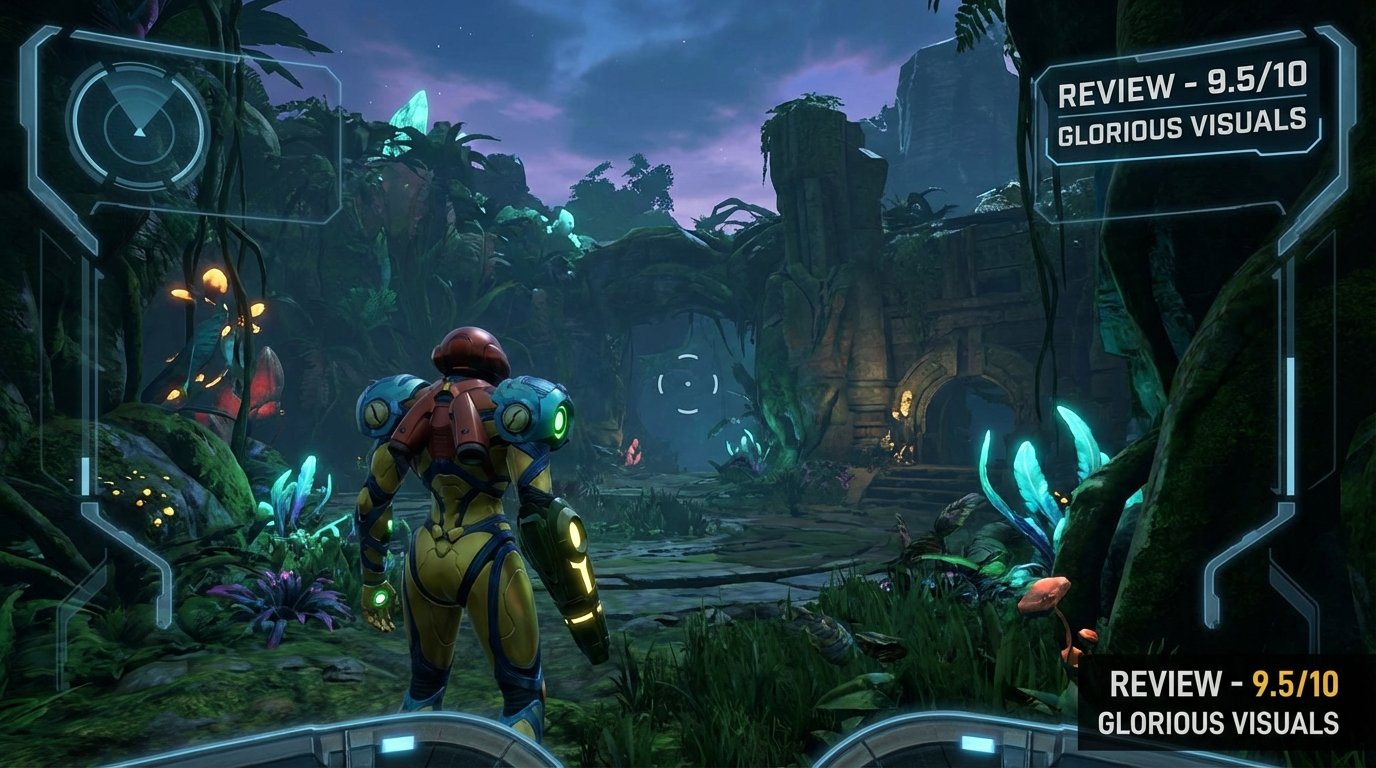
“Metroid Prime 4” is a technical showcase for the Nintendo Switch 2, pushing the hardware to its limits with stunning results. The environments are richly detailed, from the swaying flora of Vespera’s jungles to the gleaming corridors of abandoned research stations. Lighting plays a crucial role, with dynamic shadows and atmospheric effects creating an ever-present sense of tension and wonder.
Character models are meticulously crafted, with Samus’ Power Suit rendered in exquisite detail. Animations are fluid and believable, lending weight to every movement. Enemy designs are both inventive and faithfully alien, each boasting distinct silhouettes and attack patterns that are easy to read in the heat of battle.
Performance is generally rock-solid, targeting 60 frames per second in both docked and handheld modes. Occasional dips occur during the most frenetic battles, but they are fleeting and never disrupt the flow of gameplay. The art direction, true to the series’ legacy, favors bold contrasts and moody palettes, ensuring every environment feels both alien and inviting.
Soundtrack and Audio Design
Audio has always been a cornerstone of the Metroid experience, and “Metroid Prime 4” continues that tradition with a soundtrack that is equal parts haunting and heroic. Series composer Kenji Yamamoto returns alongside a new cohort of electronic and orchestral talent, resulting in a score that seamlessly blends the old with the new. Ethereal synths, ominous drones, and soaring orchestral themes create an auditory landscape that is as memorable as any visual.
Ambient sound design is equally impressive. The echo of footsteps in a cavern, the distant chitter of unseen creatures, the mechanical hum of ancient technology—all serve to immerse you further in Vespera’s mysteries. Audio cues are cleverly utilized in gameplay, particularly with the new Echo Visor, which makes attentive listening a key component of exploration and puzzle-solving.
Voice acting, though sparing, is well executed, with Samus’ few lines delivered with measured restraint. The minimalism of spoken dialogue only heightens the impact when it does occur, preserving the series’ signature sense of solitude and introspection.
Conclusion: Should You Play It?
In an era crowded with sprawling open worlds and relentless live-service titles, “Metroid Prime 4” stands as a testament to the enduring power of focused, expertly crafted adventure. It is a triumphant return for Samus Aran—one that honors the series’ storied legacy while pushing boldly into the future. Every element, from its razor-sharp gameplay and atmospheric world-building to its innovative new features, is executed with confidence and care.
For veterans, it is everything you hoped for and more: a loving continuation that deepens the lore and refines the mechanics without losing sight of what made the original trilogy legendary. For newcomers, it is the perfect entry point—a game that welcomes you with open arms and rewards you for your curiosity, patience, and skill.
“Metroid Prime 4” isn’t just a great Metroid game; it’s one of the defining releases of 2026, and a must-play for anyone who values exploration, atmosphere, and the thrill of discovery. After all these years, Samus has truly returned in glorious fashion.