


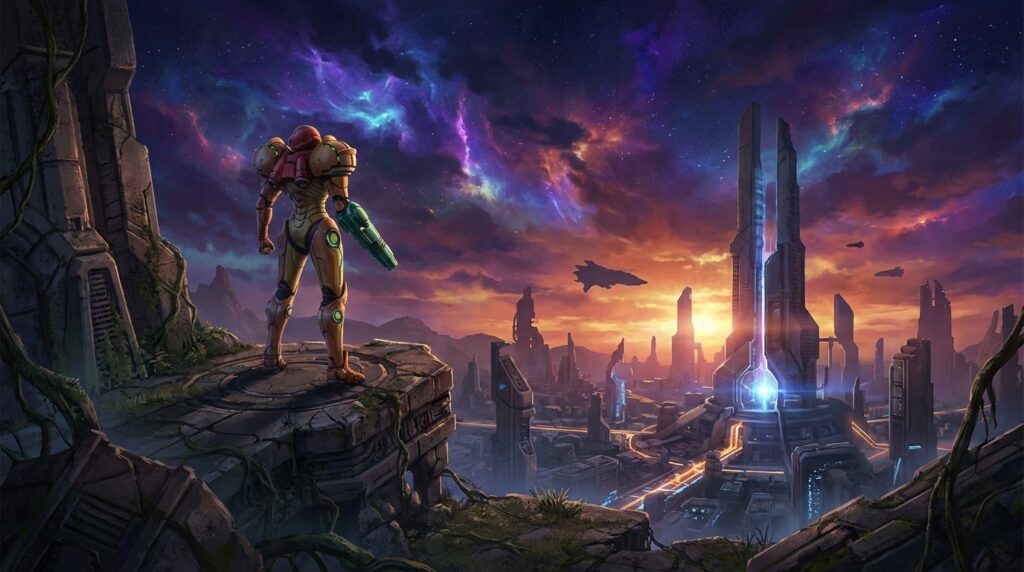
Few franchises evoke the kind of reverence and anticipation as Metroid. After years of speculation, delays, and near-mythic status, “Metroid Prime 4” has finally landed on the Nintendo Switch 2, marking the triumphant return of Samus Aran to the 3D first-person adventure format that redefined her saga two decades ago. The wait has been long, punctuated by rumors, restarts, and a generation of new players discovering the series through remasters and retrospectives. Now, in 2026, the bar for sci-fi epics is higher than ever, and the question on every fan’s mind is simple: was it worth the wait?
The answer, in short, is a resounding yes. “Metroid Prime 4” is a masterclass in atmospheric design, gameplay evolution, and narrative ambition. It manages to honor the legacy of Retro Studios’ original trilogy while pushing the franchise boldly into the future. This isn’t just another sequel—it’s a galactic event, a statement of intent from Nintendo that their most enigmatic bounty hunter still has new horizons to explore and new threats to overcome.
From the moment the opening sequence fades in, there’s a palpable sense of scale and intrigue. The galaxy is older, scarred by past conflicts, but teeming with fresh dangers and mysteries. Samus steps back into the limelight with a confidence that reflects both her character’s legendary status and the developers’ hard-won expertise. For newcomers, “Metroid Prime 4” is a stellar entry point; for veterans, it’s a reunion with a long-lost friend—one who’s grown wiser and more formidable with age.
Gameplay: Evolution of Exploration
“Metroid Prime 4” cements itself immediately as a game about discovery and mastery. The series’ signature loop—exploration, backtracking, and upgrading—returns, but is noticeably more refined. The environments are vast, interconnected, and filled with secrets that demand both curiosity and critical thinking. The sense of isolation, a hallmark of the series, is balanced by environmental storytelling and a slew of new traversal mechanics that make movement a joy rather than a chore.
Combat is both familiar and freshly invigorated. Samus’s arsenal feels weighty and satisfying, with every weapon and gadget offering tactical depth. The lock-on system has been modernized, borrowing the best ideas from contemporary shooters while still feeling distinctly “Metroid.” Encounters with enemies and bosses are tense, requiring a keen eye for patterns and weaknesses. Each victory feels earned, and each defeat a lesson in patience and precision.
One of the most striking aspects of the gameplay is its pacing. “Metroid Prime 4” never rushes the player, instead trusting you to absorb its alien worlds at your own speed. Whether you’re scanning ancient ruins for lore or frantically dodging a monstrous foe’s attacks, the game’s rhythm keeps you engaged without feeling overwhelming. It’s a testament to Retro Studios’ understanding of what made the originals so beloved, even as they introduce fresh twists to the formula.
Core Mechanics
At its heart, “Metroid Prime 4” remains a first-person adventure, blending shooting, exploration, and light puzzle-solving into a seamless whole. The scan visor returns, reimagined with new layers of interactivity. It’s not just a lore-dumping tool; it’s integral to solving environmental puzzles, uncovering weak points in enemies, and piecing together the fragmented history of the galaxy. The sense of being a lone investigator on the edge of the unknown is as strong as ever.
Movement has seen a substantial upgrade. Samus feels more agile, with parkour-inspired mechanics allowing for wall runs and quick vaults. The morph ball is smoother and more dynamic, incorporating new abilities that creatively expand traversal options. Grapple points are now multi-functional, letting Samus swing, pull objects, or even channel energy in certain puzzles. The interplay between old and new mechanics is handled with finesse, giving veterans plenty to master while welcoming newcomers with intuitive controls.
Resource management—missiles, energy, and new forms of ammunition—adds a subtle layer of strategy to encounters. Upgrades are thoughtfully placed, never feeling arbitrary. Discovering a new suit or weapon remains a thrill, both for the immediate power boost and the tantalizing promise of previously unreachable areas. The game is careful to preserve the joy of backtracking, making it feel like rewarding exploration rather than tedious retreading.
New Additions and Features
Innovation is at the core of “Metroid Prime 4’s” appeal, and nowhere is this clearer than in its new features. The most significant is the introduction of the “Galaxy Link” system, a semi-dynamic map interface that not only tracks your progress but reacts to your choices. Certain doors and pathways shift depending on in-game events, adding a layer of unpredictability and replayability that’s rare in the genre.
Another standout is the “Adaptive AI” for enemies and bosses. Foes will actively learn from your tactics, forcing you to switch up your approach rather than relying on rote memorization. This keeps even familiar encounters feeling fresh, especially in the late game when the stakes are highest. The boss battles are particularly inventive, blending environmental hazards and multi-phase mechanics reminiscent of the best recent action games.
Quality-of-life improvements abound. The new quick-swap weapon wheel, improved auto-mapping, and customizable UI make a huge difference in moment-to-moment play. Accessibility features have also been thoughtfully implemented, ensuring that players of all skill levels can enjoy Samus’s latest adventure. And for the first time in the series, a limited co-op mode allows a second player to drop in as a support drone, offering assistance with scanning and puzzle-solving—an optional but welcome twist on the classic solitary experience.
Single-Player Campaign
The heart of “Metroid Prime 4” is its sprawling single-player campaign, which easily stands among the series’ best. Clocking in at 20-30 hours for a typical playthrough (with completionists likely doubling that time), the campaign is a meticulously crafted journey through new and familiar star systems. Each biome feels distinct, brimming with environmental hazards, secrets, and a sense of history that begs to be uncovered.
The campaign’s structure is tighter and more ambitious than previous entries. While the classic hub-and-spoke design remains, there’s a greater emphasis on narrative-driven objectives and branching paths. Key story beats are delivered through environmental cues, data logs, and a handful of expertly directed cutscenes that never break immersion. The pacing is superb, doling out upgrades, lore, and set-piece moments with a deft touch that keeps the experience feeling fresh from start to finish.
Boss encounters are a particular highlight, challenging your mastery of both arsenal and environment. Each fight feels unique, blending traditional pattern recognition with dynamic elements that force you to adapt on the fly. The campaign’s difficulty is finely tuned, offering a steady climb that rewards persistence without ever feeling unfair. For those craving a challenge, the new “Hunter” mode ups the ante, introducing permadeath runs and randomized enemy placements for maximum tension.
Story and Setting
“Metroid Prime 4” continues the series’ tradition of weaving a quietly profound narrative through atmosphere and discovery. Set several years after the events of “Metroid Prime 3: Corruption,” the galaxy is in flux, with new political factions vying for dominance and the shadow of the Phazon crisis still looming. Samus is drawn into a conspiracy involving ancient alien technology, rogue Chozo, and a resurgent Space Pirate threat that could reshape the fate of known space.
The storytelling is more confident and layered than ever before. While much of the lore is still found through scanning and exploration, key moments are delivered with subtle voice acting and expressive character animation. Samus herself feels more fully realized, her stoic exterior occasionally peeling back to reveal moments of vulnerability and resolve. The supporting cast—ranging from enigmatic AI to rival bounty hunters—add depth without overshadowing the player’s agency.
World-building is a clear priority. Each location feels lived-in, with environmental details hinting at centuries of history, tragedy, and triumph. The balance between explicit narrative and player-driven discovery is expertly handled, allowing you to engage with the story as deeply (or superficially) as you wish. Fans of the series’ understated approach to storytelling will find much to love, but newcomers will appreciate the clear stakes and steady escalation of the central mystery.
Level Design
Retro Studios has always excelled at world design, and “Metroid Prime 4” is perhaps their most ambitious effort yet. The interconnected maps are a marvel of construction, blending verticality, intricate pathways, and clever shortcuts. Each biome is visually and mechanically distinct—from the acid rain-soaked jungles of Elysian Prime to the crystalline caverns of Arctis Null. Traversing these spaces is a joy, with every corner promising a secret, a shortcut, or a new challenge.
Backtracking, often a contentious aspect of Metroidvanias, is handled with refreshing elegance. New abilities open up not just obvious locked doors, but entire sub-areas and hidden routes that reward creative thinking. Fast travel points are plentiful but never intrusive, preserving the sense of scale and journey while respecting the player’s time. The game’s dynamic map system also highlights potential secrets as you uncover new upgrades, nudging you toward discovery without outright spoiling surprises.
Puzzle design is another area where the game shines. Environmental challenges range from physics-driven set pieces to clever logic puzzles that make full use of Samus’s expanding toolkit. Nothing ever feels tacked on; each puzzle is integrated naturally into the world, deepening your connection to the environments and rewarding experimentation. The flow between combat, exploration, and puzzle-solving is seamless, ensuring that the experience never stagnates.
Multiplayer and Online Experience
While “Metroid Prime” has always been a solitary experience at its core, “Prime 4” takes a cautious but successful step into multiplayer territory. The new “Hunter’s Gauntlet” mode pits players against each other in arena-based challenges, blending traditional deathmatch elements with exploration and puzzle-solving. It’s a surprisingly robust addition, offering competitive and cooperative modes that feel true to the series’ ethos.
Online play is smooth and reliable, thanks to the Switch 2’s improved infrastructure. Matchmaking is quick, and the netcode holds up even in hectic four-player bouts. Leaderboards and seasonal events add replay value, with exclusive cosmetic rewards and timed challenges that encourage regular engagement. Importantly, multiplayer is wholly optional—nothing here detracts from the single-player experience, and purists can safely ignore it without missing out on core content.
The aforementioned drop-in co-op mode is a clever touch, allowing a second player to assist as a support drone. This is particularly valuable for younger or less experienced players, making “Metroid Prime 4” more accessible without diluting its challenge. The integration is smooth, and the secondary player’s role is meaningful enough to feel engaged, if not quite as central as Samus herself.
Graphics and Visuals
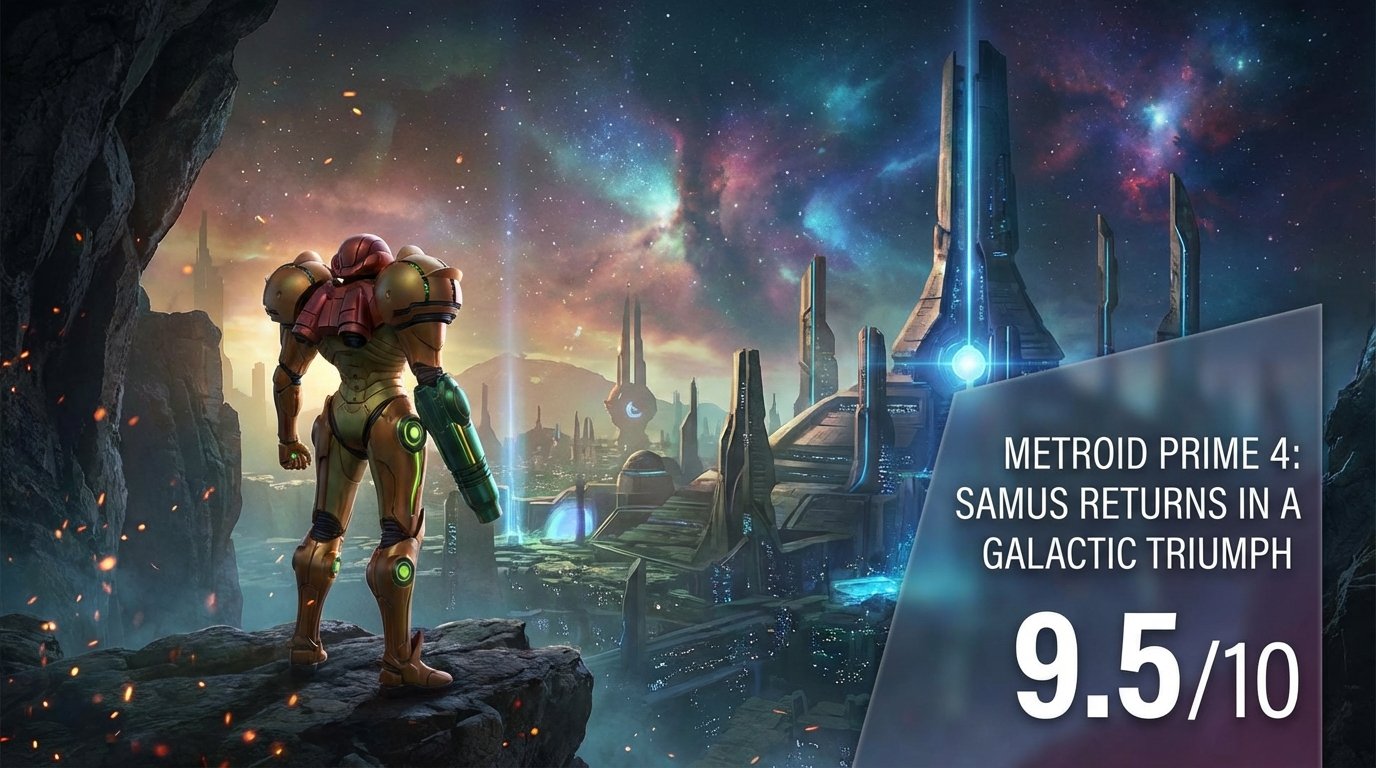
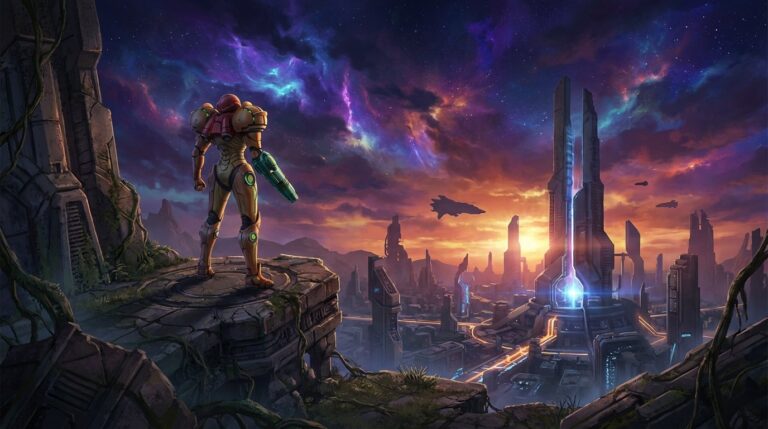
Visually, “Metroid Prime 4” is a showcase for the Switch 2’s capabilities. Environments are richly detailed, with dynamic lighting, volumetric fog, and weather effects that bring alien worlds to life. The sense of scale is awe-inspiring, with towering vistas and intricate interiors rendered in crisp 4K. Art direction remains true to the series’ roots—organic yet mechanical, mysterious yet inviting.
Character models are equally impressive. Samus’s suit is rendered with meticulous detail, reflecting battle damage and environmental effects in real time. Enemy designs are varied and imaginative, with animations that convey both menace and vulnerability. The UI is clean and unobtrusive, adapting dynamically to different gameplay contexts without breaking immersion.
Performance is rock-solid, maintaining a steady 60 frames per second in both docked and handheld modes. Load times are minimal, thanks to the Switch 2’s SSD, and transitions between areas are seamless. The visual polish extends to small touches—subtle reflections, dynamic shadows, and particle effects—that collectively enhance the game’s atmospheric power. It’s a technical and artistic triumph, standing shoulder to shoulder with the best-looking games of this generation.
Soundtrack and Audio Design
The audio landscape of “Metroid Prime 4” is nothing short of mesmerizing. Composer Kenji Yamamoto returns, delivering a score that is both hauntingly familiar and daringly new. Ambient tracks pulse with tension, swelling into orchestral crescendos during boss fights and story revelations. Each biome has its own musical identity, blending synth, orchestral, and even choral elements to create a soundscape that is at once alien and evocative.
Sound design is equally meticulous. Every weapon, gadget, and enemy emits distinctive audio cues, providing vital feedback in the heat of battle. The environmental audio is immersive—dripping water in caverns, the distant rumble of alien fauna, the echo of Samus’s footsteps in abandoned corridors. The spatial audio implementation on the Switch 2 is particularly impressive, allowing players to track threats and secrets by sound alone.
Voice acting is used sparingly but effectively, with Samus’s few spoken lines delivered with understated gravitas. Supporting characters and AI are brought to life with a mix of digital effects and nuanced performances, ensuring that even brief interactions leave a lasting impression. The audio mix is balanced, never overwhelming the player but always enhancing the mood and tension of the moment.
Conclusion: Should You Play It?
“Metroid Prime 4” is more than a long-awaited sequel—it’s a triumphant return to form and a bold step forward for one of gaming’s most storied franchises. It manages the rare feat of honoring its legacy while innovating in meaningful, player-focused ways. The campaign is an enthralling, atmospheric odyssey, the gameplay loop is as addictive as ever, and the new features add depth without sacrificing the series’ core identity.
In the crowded landscape of 2026, where sci-fi epics are plentiful and nostalgia is often a crutch, “Metroid Prime 4” stands out as a work of vision and craftsmanship. It’s a game made with care, respect, and just the right amount of daring. Whether you’re a lifelong fan or a newcomer eager to understand the legend of Samus Aran, this is a journey you owe it to yourself to experience.
Simply put: Samus has never shone brighter. “Metroid Prime 4” is a galactic triumph—one that reaffirms why the series matters, and why her story is far from over. Don’t miss it.