

Few studios have managed to redefine a genre as boldly as Guerrilla Games did with the original Horizon: Zero Dawn, and its successors. Now, in 2026, Horizon: New Age arrives as both a culmination and a reinvention—an ambitious leap forward for the series and its place in the contemporary gaming landscape. With a new protagonist, a world richer and more dangerous than ever, and a bold foray into cooperative and competitive multiplayer, New Age seeks not just to satisfy longtime fans, but to attract a new generation of players.
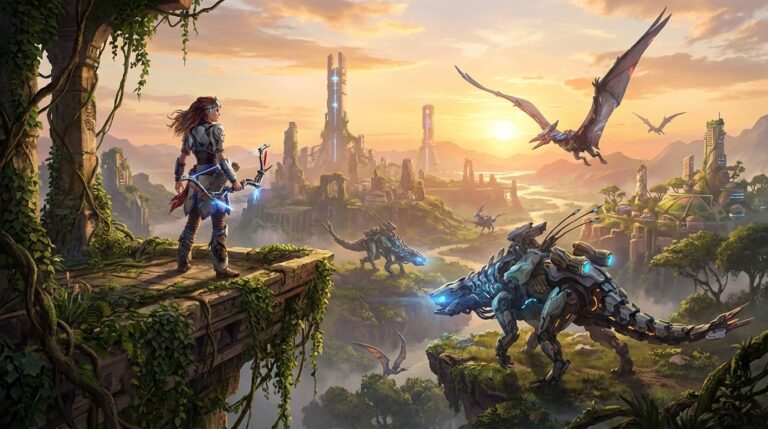
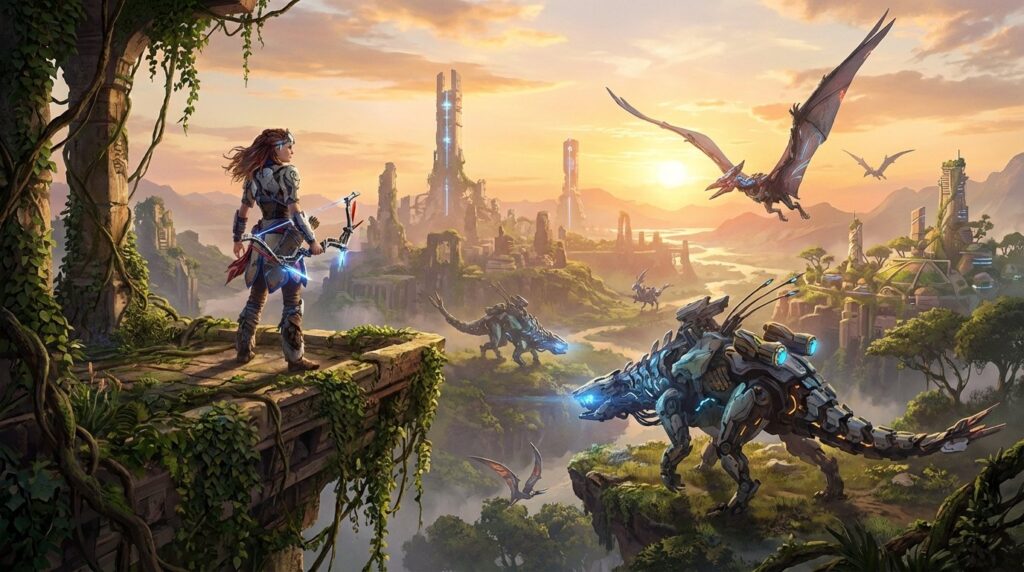
In a year already stacked with open-world heavyweights and technical marvels, Horizon: New Age had its work cut out for it. Yet from the first moments—standing atop a cliff overlooking a biomechanical forest teeming with strange new lifeforms—it’s clear Guerrilla has poured creative energy and technical prowess into every facet of the experience. The result is a sci-fi epic that feels both familiar and refreshingly new, delivering on the promise of a world where the line between nature and machine is ever blurred.
Whether you’re chasing the next big open-world adventure or looking for the kind of narrative depth that lingers long after the credits roll, New Age offers something for everyone. But does this ambitious sequel stick the landing, or is it weighed down by its own aspirations? Let’s dive deep into what makes this chapter of the Horizon saga soar—and where it occasionally stumbles.
Gameplay: Dynamic Evolution in Every Encounter
At its core, Horizon: New Age retains the series’ signature blend of tactical combat, exploration, and resource gathering, but nearly every element feels more nuanced and interconnected. The thrill of stalking a deadly machine through tall grass, plotting out weak points, and choosing the perfect moment to strike remains undiminished. Yet, the stakes are higher, with enemies now behaving in more unpredictable ways, forcing players to adapt or perish.
Traversal has been meaningfully improved, with the new “Eco-Glide” system allowing for seamless movement across vertical landscapes and ravines. Whether you’re climbing, gliding, or riding a newly tamed machine, the world feels more accessible and ripe for exploration. The addition of underwater combat and traversal, previously teased in Forbidden West, is now fully realized, opening up vast new ecosystems and enemy types beneath the surface.
Combat, meanwhile, is more responsive and varied. Melee and ranged attacks have been expanded with new weapon classes, including modular bows and magnetic gauntlets. The tactical depth is further enhanced by environmental hazards and dynamic weather, which can alter both your approach and the behavior of the machines you hunt—or flee from.
Core Mechanics
Guerrilla Games has doubled down on the tactical depth that made Horizon stand out, refining core mechanics to make every encounter feel meaningful. Weapon customization has reached new heights, with a modular system that allows you to swap out components and elemental effects on the fly. Crafting is more streamlined yet offers deeper rewards for those willing to scour the world for rare parts.
The skill tree has been reimagined with branching paths that reward diverse playstyles, whether you prefer stealth, brute force, or strategic manipulation of machines. The introduction of “Bonding Protocols” lets you form temporary alliances with machines, turning former foes into invaluable allies during key moments in combat and exploration.
Resource management is now more strategic, with a new encumbrance system and limited-use crafting benches scattered throughout the world. These mechanics encourage thoughtful planning and risk-reward calculations, especially in longer expeditions far from safe zones.
New Additions and Features
Horizon: New Age introduces several headline features that set it apart from its predecessors. Chief among them is the “Echo Link” multiplayer system, which allows up to four players to join forces in seamlessly integrated co-op missions and dynamic world events. This cooperative play doesn’t just feel tacked on—it’s woven into the narrative and world design, with special events and bosses requiring teamwork and strategic coordination.
Another notable addition is the “Terraformer’s Journal,” a persistent log that tracks the player’s influence on the environment. Completing certain quests or defeating specific machine types can have lasting effects on local ecosystems, encouraging players to consider the broader impact of their actions. This sense of agency over the world is both empowering and thought-provoking, adding another layer to the series’ ongoing themes of nature versus technology.
For the first time, New Age introduces customizable player settlements, offering a hub to upgrade gear, recruit NPC allies, and even shape the look and function of your base. These settlements evolve over time, reflecting your choices and achievements, and serve as a rallying point for both single-player and multiplayer activities.
Single-Player Campaign
The single-player campaign remains the beating heart of Horizon: New Age. This time, the story follows Maia, a new protagonist with her own distinct voice and motivations. Her journey, while rooted in the franchise’s lore, is a fresh entry point for newcomers and a rewarding continuation for veterans. Guerrilla deftly balances Maia’s personal stakes with the sweeping narrative about the world’s future, making every mission feel significant.
The pacing is a notable improvement over previous entries, with fewer fetch quests and more meaningful character-driven storylines. Main missions are often multi-layered, blending exploration, puzzle-solving, and cinematic set pieces. The campaign’s structure allows for both focused progression and organic detours, ensuring players never feel railroaded or overwhelmed by side content.
Boss encounters are a particular highlight, showcasing inventive machine designs and unique combat scenarios. Each major fight is a test of skill and adaptability, leveraging the full suite of new and returning mechanics to keep players on their toes.
Story and Setting
Set several generations after the events of Forbidden West, Horizon: New Age explores a world in flux. Humanity has splintered into new factions, each with their own philosophies about how to coexist with—or control—the machine ecosystem. The narrative deftly tackles themes of legacy, adaptation, and the consequences of technological hubris, all while introducing a cast of memorable allies and adversaries.
Maia’s quest is deeply personal, yet inextricably tied to the fate of the world. The writing is sharper than ever, with nuanced dialogue and meaningful choices that impact both character relationships and the broader world. Side stories are more than just distractions; many offer emotional resonance and world-building that enrich the central narrative.
The setting itself is a triumph of world-building, with new regions ranging from lush, overgrown cities to arid wastelands reclaimed by machines. The lore is expanded through environmental storytelling, collectible logs, and hidden ruins, rewarding players who take the time to dig deeper.
Level Design
The world of Horizon: New Age is vast, varied, and meticulously crafted. Guerrilla Games has moved beyond the familiar open-world playbook, designing biomes that feel alive and interconnected. Each area features its own micro-ecosystems, dynamic weather, and machine populations, making exploration consistently engaging and unpredictable.
Verticality is used to great effect, with sprawling cliffside settlements and deep subterranean networks. The “Eco-Glide” system makes traversal a joy, encouraging players to experiment with different routes and approaches. Hidden secrets, challenging platforming sections, and environmental puzzles abound, rewarding curiosity and skill in equal measure.
Mission design is equally robust, with main and side quests making full use of the environment. Stealth sections, large-scale battles, and intricate dungeon-like areas ensure a constant sense of discovery, while new fast-travel options streamline backtracking without sacrificing immersion.
Multiplayer and Online Experience
Horizon: New Age’s multiplayer modes mark a significant evolution for the series. The “Echo Link” system integrates co-op play directly into the campaign, allowing friends or strangers to drop into your world for specific missions, world events, or just to explore. Teamwork is emphasized, with party roles, shared objectives, and unique combo attacks that encourage coordination.
The competitive “Machine Arena” mode offers a welcome diversion, pitting teams against waves of increasingly difficult machines or head-to-head in strategic battles. Matchmaking is smooth, and Guerrilla’s commitment to fair play is evident in robust anti-cheat measures and a responsive reporting system.
Online stability has been consistent in our testing, with minimal lag and quick matchmaking times. Cross-play between platforms further broadens the player base, making it easy to find allies and adversaries alike. Seasonal events and community challenges provide ongoing reasons to return, ensuring the multiplayer suite feels more than just an afterthought.
Graphics and Visuals
Horizon: New Age is a technical marvel, leveraging the latest hardware to deliver breathtaking visuals. The world is rendered in exquisite detail, from the intricate designs of new machine types to the lush, overgrown environments that stretch to the horizon. Dynamic weather and lighting effects breathe life into every scene, with storms rolling in to obscure vision or sunlight breaking through the clouds to illuminate a hidden ruin.
Character models and animations have seen a substantial upgrade, with expressive faces and fluid movement that enhance both cutscenes and gameplay. The attention to detail is staggering: mud clings to Maia’s boots, machines show visible battle damage, and biomes transition seamlessly as you explore.
Performance is impressively stable, even in the busiest moments. On current-gen consoles and high-end PCs, New Age maintains a steady frame rate at high resolutions, with only occasional dips during the most chaotic battles. Accessibility options abound, including robust visual modes for colorblind players and customizable HUD elements.
Soundtrack and Audio Design
Audio has always played a vital role in Horizon’s world-building, and New Age is no exception. The soundtrack, composed by returning series veterans and fresh talent, expertly blends orchestral grandeur with electronic undertones, perfectly capturing the tension and wonder of a post-apocalyptic world brimming with both danger and hope.
Ambient sounds are richly layered, from the distant screech of a Thunderjaw to the gentle hum of a machine herd moving through the underbrush. Environmental audio cues are not just atmospheric—they serve as important gameplay signals, alerting players to threats or hidden treasures.
Voice acting is uniformly strong, with Maia’s performance anchoring the narrative and supporting characters brought to life through nuanced delivery. The sound design shines in combat, where every arrow fired and machine charge resonates with impact, immersing players fully in the action.
Conclusion: Should You Play It?
In a year where open-world fatigue has become a common refrain, Horizon: New Age stands out as a testament to what’s possible when a studio refuses to rest on its laurels. Guerrilla Games has delivered a sequel that is both respectful of its roots and unafraid to take bold risks, resulting in one of the most compelling sci-fi adventures of the decade.
The game’s blend of refined mechanics, meaningful new features, and a captivating story ensures that both longtime fans and newcomers will find plenty to love. While the sheer scope and ambition occasionally lead to minor pacing issues or technical hiccups, these are small blemishes on an otherwise stellar experience.
If you’re seeking a rich, dynamic world to lose yourself in—one that rewards curiosity, creativity, and collaboration—Horizon: New Age is essential. It’s not just an evolution of the franchise, but a new benchmark for what open-world games can achieve in 2026 and beyond.