
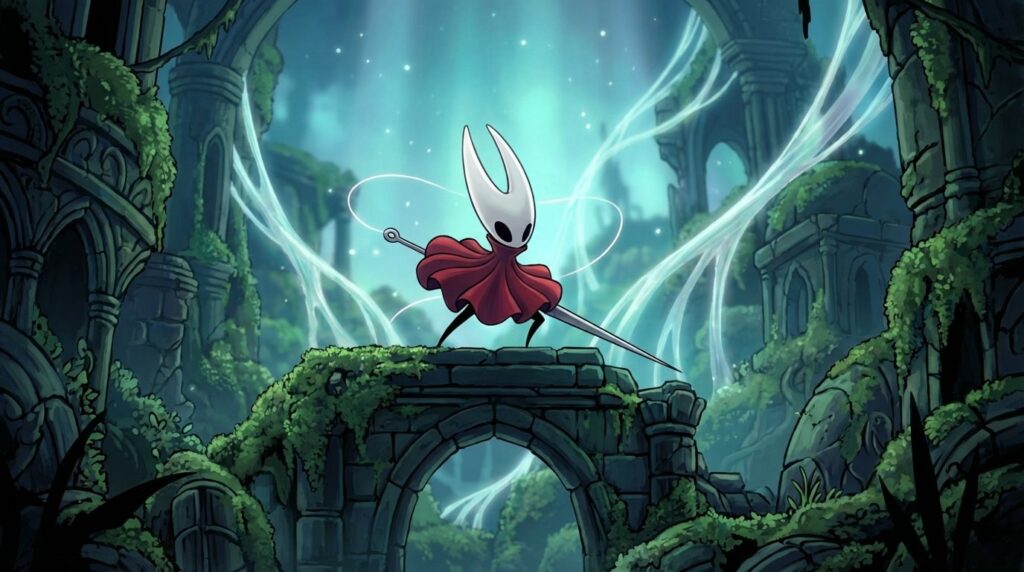
When Team Cherry first unveiled “Hollow Knight: Silksong,” anticipation soared to feverish heights. Years of speculation, teases, and delays only intensified the hunger for a sequel to 2017’s iconic “Hollow Knight,” a Metroidvania that redefined the genre and inspired countless imitators. Now, in 2026, “Silksong” has finally emerged from the shadows, inviting players back to a world of haunting beauty and perilous adventure. The question is whether this long-awaited sequel can recapture the magic of its predecessor while forging its own legacy.
From the first moments, “Silksong” asserts itself as more than just a sequel—it’s a bold reimagining of what made the original so beloved. Taking the reins as Hornet, the agile princess-protector, players are thrust into a sprawling new kingdom teeming with secrets, danger, and mystery. This isn’t merely a return to Hallownest, but a journey into a land both familiar and strange, echoing the melancholy melodies and intricate design that made “Hollow Knight” a modern classic. Yet, “Silksong” is no simple retread. It’s a game that dares to evolve its core formula, challenging veterans and newcomers alike with fresh twists and breathtaking ambition.
In a gaming landscape where sequels often play it safe, “Silksong” stands out as a testament to meticulous craftsmanship and creative risk-taking. Its release in 2026 feels both timely and essential, offering a masterclass in how to honor a beloved legacy while pushing the boundaries of the genre. Whether you’re a diehard fan of the original or a newcomer drawn in by the buzz, “Silksong” is poised to be one of the year’s defining experiences.
Gameplay: Precision, Agility, and Challenge
At its core, “Silksong” is a game of relentless precision and fluid movement. Where the original “Hollow Knight” championed methodical, weighty combat, “Silksong” pivots toward speed and agility, reflecting Hornet’s unique abilities. Every leap, dash, and attack feels meticulously tuned, resulting in a combat system that is both exhilarating and unforgiving. Players are constantly asked to read enemy patterns, exploit openings, and master the intricate dance of offense and defense.
One of the game’s most striking features is its relentless difficulty. “Silksong” is not for the faint of heart; it demands patience, adaptability, and a willingness to learn from failure. However, the game never feels unfair. Each defeat is a lesson, every hard-fought victory a testament to skill and perseverance. This challenging gameplay is woven seamlessly into the world’s design, encouraging exploration, experimentation, and mastery.
Platforming, too, has been given a significant overhaul. Hornet’s nimbleness opens up new avenues for traversal, from wall-jumping to grappling with silken threads. The movement feels both empowering and essential, as many of the game’s toughest challenges lie not just in combat, but in navigating dizzying vertical landscapes and intricate environmental puzzles.
Core Mechanics
“Silksong” builds upon the tight foundation of the original while introducing a host of new mechanics tailored to Hornet’s abilities. The most noticeable change is the healing system. Unlike the Knight’s slow, stationary healing, Hornet’s “Bind” ability allows for rapid recovery on the move, but at the cost of silk—a resource earned through combat and exploration. This adjustment fundamentally alters the rhythm of encounters, rewarding aggressive play and strategic resource management.
Hornet wields a needle and thread, which aren’t just for show. The thread can be used for attacks, special abilities, and even to interact with the environment, such as activating switches or creating shortcuts. This versatility makes every encounter feel dynamic and encourages creative problem-solving.
Charms return in “Silksong,” but with significant tweaks. The system now offers more customization and synergy, allowing players to craft builds that reflect their preferred playstyles. Experimenting with different charm combinations is both rewarding and essential, especially as the game’s difficulty ramps up. The inclusion of “Rosaries,” a new currency, adds another layer of risk and reward, as they are lost upon death and must be reclaimed.
New Additions and Features
Team Cherry has packed “Silksong” with a wealth of new content and features that elevate the experience beyond mere iteration. The most prominent is the expanded quest system, which introduces a diverse array of side missions, NPC storylines, and challenges. These quests are seamlessly integrated into the world, encouraging thorough exploration and rewarding curiosity with unique items, lore, and powerful upgrades.
Another standout addition is the “Hunt Board,” where players can track and pursue formidable bounty targets scattered throughout the kingdom. These encounters are among the game’s most challenging, offering intense boss battles that test even the most seasoned players. Each hunt is distinct, with mechanics that push players to adapt and refine their tactics.
Accessibility has also been improved, with new options for players seeking a less punishing experience. Adjustable difficulty settings, visual aids, and a more forgiving checkpoint system help make “Silksong” approachable without diluting the core challenge that defines the series. The introduction of new movement abilities, including mid-air dashes and wall-running, further expands the game’s possibilities, ensuring that even longtime fans will find surprises around every corner.
Single-Player Campaign
The heart of “Silksong” lies in its sprawling single-player campaign, which is nothing short of epic. Clocking in at over 30 hours for a first playthrough—and much longer for completionists—the campaign takes Hornet on a journey across the vast kingdom of Pharloom. Each region is distinct, brimming with secrets, lore, and formidable adversaries.
What stands out is the campaign’s pacing. Team Cherry expertly balances moments of intense action with periods of quiet exploration and storytelling. Boss fights are a highlight, each one a multi-phase spectacle that demands focus and adaptability. These encounters are not just tests of skill, but narrative milestones that further immerse players in Hornet’s journey.
Side content is just as robust as the main story. From hidden challenges to elaborate questlines, “Silksong” is packed with optional content that rewards curiosity and persistence. The game strikes a fine balance between guiding players and allowing them to carve their own path, ensuring that every playthrough feels unique.
Story and Setting
“Silksong” takes players far from the ruined halls of Hallownest to the mysterious kingdom of Pharloom—a realm as enchanting as it is deadly. The narrative is delivered in the series’ trademark subtle style, with environmental storytelling, cryptic dialogue, and evocative visual cues. Rather than relying on exposition, the game invites players to piece together its secrets, fostering a sense of discovery that permeates every corner of the world.
Hornet’s journey is deeply personal, rooted in themes of identity, duty, and sacrifice. As she seeks to ascend to the kingdom’s shining citadel, players encounter a cast of memorable characters, each with their own stories and motivations. The writing is spare but powerful, relying on implication and atmosphere to build a sense of melancholy and wonder.
Pharloom itself is a marvel of world-building. From sun-dappled meadows to shadowy crypts, each area feels distinct and alive, rich with lore and history. The game’s interconnected regions are filled with secrets, shortcuts, and hidden chambers, encouraging exploration and rewarding those who look beyond the obvious path.
Level Design
Level design has always been a hallmark of the “Hollow Knight” series, and “Silksong” elevates this tradition. The kingdom of Pharloom is a labyrinthine expanse, with regions that twist and fold back upon themselves, revealing new paths as players gain abilities. The sense of place is palpable; every area feels handcrafted, with layouts that challenge both platforming skill and memory.
Verticality is a key theme in “Silksong.” Many of the game’s most memorable moments come from scaling towering structures, diving into subterranean depths, or traversing precarious bridges. The level design masterfully integrates Hornet’s movement abilities, making traversal as satisfying and challenging as combat itself.
Secret areas abound, and the thrill of discovery is ever-present. Whether stumbling upon a hidden boss, an enigmatic NPC, or a shortcut to a previously visited region, the game constantly rewards exploration. The interconnectedness of the world feels organic, never contrived, and encourages players to piece together its mysteries at their own pace.
Multiplayer and Online Experience
While “Silksong” is fundamentally a single-player experience, Team Cherry has introduced a handful of asynchronous online features that add a subtle layer of community interaction. Players can leave “silken echoes”—short messages or hints—at certain locations, which can appear in other players’ worlds. This system fosters a sense of camaraderie and discovery, reminiscent of the beloved messaging feature in the “Souls” series.
Leaderboards now track completion times, boss rush records, and challenge runs, allowing players to compete with friends and the broader community. These features are unobtrusive but welcome, providing extra motivation for those seeking mastery or bragging rights.
Notably absent is any form of co-op or competitive multiplayer, which may disappoint some fans hoping for a more social experience. However, the game’s focus remains squarely on the solitary journey, and the limited online elements serve to enhance rather than distract from the core adventure.
Graphics and Visuals
Visually, “Silksong” is nothing short of stunning. Team Cherry’s hand-drawn art style returns in full force, with richer detail, more vibrant color palettes, and smoother animations than ever before. Pharloom is a kingdom of contrasts—lush gardens give way to crumbling ruins, bioluminescent caves glow with eerie light, and sunlit vistas evoke both hope and melancholy. Every frame is a work of art, filled with small touches that reward close attention.
Character design is equally impressive. Hornet herself moves with a balletic grace, her animations fluid and expressive. Enemies are uniquely crafted, from hulking brutes to nimble assassins, each with their own visual flair and attack patterns. Bosses, in particular, are showstoppers—towering, grotesque, and beautifully animated, they are as much a feast for the eyes as they are a challenge for the player.
Performance is rock-solid across platforms, with crisp resolutions and smooth frame rates that ensure the game’s beauty is never marred by technical hiccups. The visual storytelling—through environmental detail, character animation, and subtle effects—remains one of “Silksong’s” greatest strengths, drawing players deeper into its haunting world.
Soundtrack and Audio Design
The soundtrack, composed once again by Christopher Larkin, is a masterclass in atmosphere. From mournful strings to triumphant fanfares, the score weaves itself seamlessly into the fabric of the game, heightening emotion and tension at every turn. Each region has its own distinct musical identity, reinforcing the sense of place and the stakes of Hornet’s journey.
Ambient sound design is equally compelling. The creak of wooden bridges, the distant hum of mysterious machinery, the chittering of unseen creatures—all contribute to an immersive soundscape that brings Pharloom to life. Audio cues are integral to gameplay, signaling enemy attacks, hidden secrets, and environmental hazards with subtlety and precision.
Voice work remains understated—most characters communicate through evocative gibberish and musical inflection—but it’s delivered with charm and personality. The sparseness of dialogue only adds to the game’s enigmatic atmosphere, inviting players to fill in the gaps with their own imagination.
Conclusion: Should You Play It?
In a year already brimming with standout releases, “Hollow Knight: Silksong” is a singular achievement. It honors its predecessor’s legacy while boldly charting its own course, delivering a game that is both familiar and refreshingly new. The refined combat, masterful level design, and haunting world combine to create an experience that lingers long after the credits roll.
“Silksong” is not a game that coddles its players. Its challenges are steep, its mysteries deep, and its secrets well-guarded. Yet, for those willing to embrace its demands, the rewards are immense—a journey of discovery, mastery, and wonder. In 2026, it stands as a towering example of what the Metroidvania genre can achieve when crafted with vision and care.
Whether you’re a returning veteran or a first-time visitor to Team Cherry’s enthralling universe, “Silksong” is an essential addition to any gamer’s library. It’s a mesmerizing odyssey that redefines expectations, and a triumphant return to a world that continues to enchant and challenge in equal measure. Simply put: don’t miss it.