
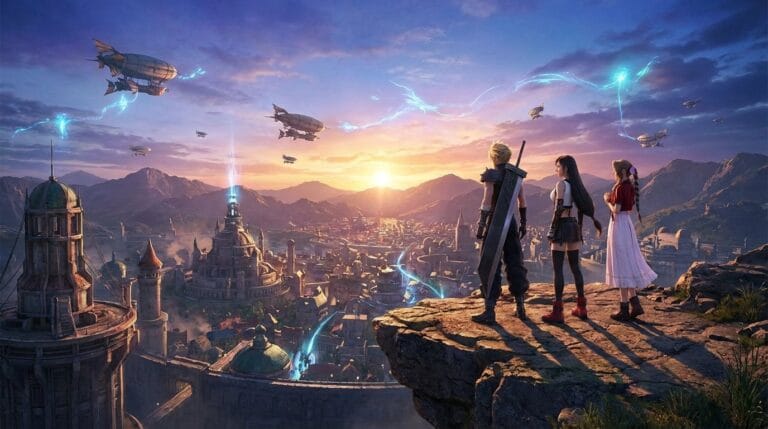


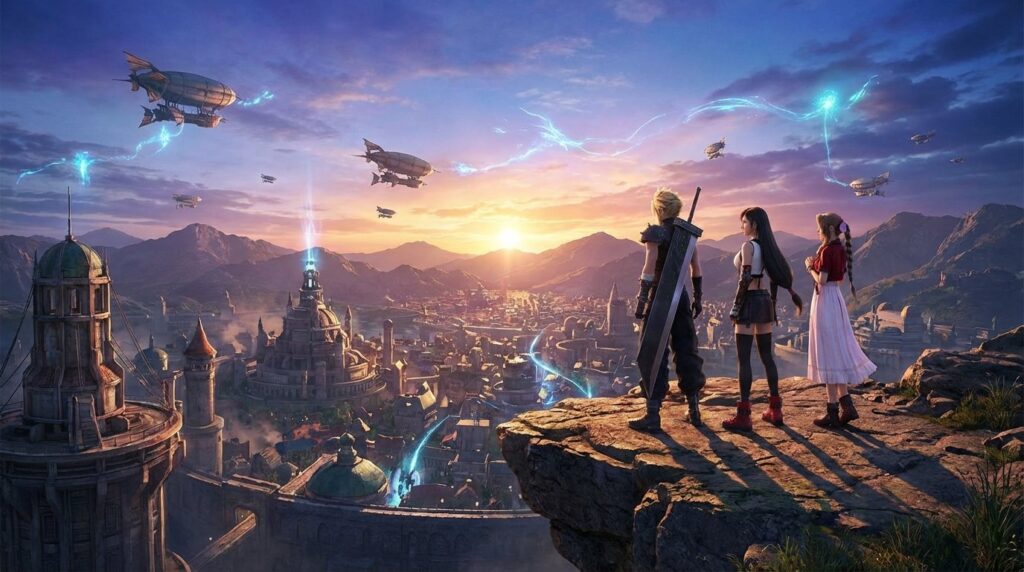
Square Enix has never shied away from bold reinventions, but with “Final Fantasy VII Rebirth,” the studio has truly outdone itself. Building on the ambitious foundation of 2020’s “Final Fantasy VII Remake,” this second entry in the trilogy not only expands a beloved classic’s world and systems, but fearlessly reimagines its core narrative and gameplay in ways that are both reverent and refreshingly unafraid. In a gaming landscape now brimming with remakes and sequels, “Rebirth” manages to set itself apart—delivering an experience that feels at once deeply nostalgic and thrillingly new.
For longtime fans, the question has always been whether Square Enix could sustain the magic of the original “Final Fantasy VII” while evolving the design to match modern expectations. For newcomers, the bar is even higher: does this epic justify its own existence as a standalone RPG in 2026, in a year crowded with open-world giants and narrative powerhouses? The answer, after dozens of hours exploring every inch of Gaia’s transformed landscapes, is a resounding yes.
What “Rebirth” achieves isn’t just a technical or visual overhaul. It’s a masterclass in how to honor the spirit of a classic while innovating at nearly every turn. From its kinetic combat system to its sprawling, reimagined environments, the game continually surprises—rewarding both series veterans and those stepping into Cloud Strife’s world for the first time. This is not a mere retelling. It is, in every sense, a rebirth.
Gameplay: Evolving the JRPG Blueprint
At the heart of “Final Fantasy VII Rebirth” is a gameplay loop that expertly balances nostalgia with innovation. The real-time action combat, first introduced in “Remake,” has been refined to near-perfection, with a fluidity and responsiveness that rivals the best action RPGs of the last decade. Players command Cloud and his allies in dynamic battles that demand both tactical prowess and split-second reflexes, elevating every encounter far above genre conventions.
The overworld itself is now more ambitious, blending semi-open world design with tightly crafted story beats. Every region feels alive with secrets to uncover, monsters to hunt, and side quests that frequently transcend simple fetch tasks. The game’s pacing is masterful, ensuring that exploration never feels aimless, but rather a natural extension of the main narrative’s momentum.
Perhaps most impressively, “Rebirth” manages to avoid the bloated feeling that plagues many modern RPGs. Its systems are deep, but rarely overwhelming; its side content is meaningful, not mere padding. The result is a game that respects your time, even as it invites you to lose yourself in its world for upwards of 80 hours.
Core Mechanics
Combat in “Rebirth” is a symphony of strategy and spectacle. The hybrid system, blending real-time action with the series’ classic ATB (Active Time Battle) gauge, feels better than ever. Each character sports a unique playstyle—Tifa’s rapid combos, Barret’s ranged power, Red XIII’s agile strikes—encouraging players to switch between party members mid-battle to exploit enemy weaknesses and maximize synergy.
The Materia system, a hallmark of the original game, returns with exciting new layers. Materia now evolves in new ways, offering deeper customization for magic, abilities, and passive bonuses. The weapon upgrade trees have also been expanded, giving every party member more meaningful choices and incentives to experiment with loadouts, rather than simply sticking to favorites.
Exploration has seen a substantial overhaul. Traversal is more varied, with climbing, swimming, and even limited gliding opening up the world’s verticality in ways that feel organic and rewarding. Environmental puzzles and hidden nooks invite curiosity, and the fast-travel system—while present—never undercuts the joy of discovery. In an era where even the most beloved franchises can fall victim to mechanical stagnation, “Rebirth” moves the series forward without forgetting its roots.
New Additions and Features
One of “Rebirth’s” boldest additions is its “Synergy Abilities” system, allowing party members to unleash devastating combo attacks when certain conditions are met. These moves not only look spectacular, but add a new layer of strategy—timing them can turn the tide in tough battles and reward creative team compositions. The system’s flexibility ensures that every encounter, from random encounters to boss fights, remains fresh and engaging.
Beyond combat, the game introduces a robust mini-game suite that pays homage to the original’s Gold Saucer while greatly expanding its variety. From a surprisingly deep card game to Chocobo racing and even rhythm-based challenges, these diversions are more than just distractions—they’re lovingly crafted slices of world-building that offer meaningful rewards and a welcome change of pace from the main quest.
Quality-of-life improvements abound, as well. Inventory management is streamlined, quest tracking is intuitive, and accessibility options rival the best in the industry. For a series sometimes known for its opacity, “Rebirth” is refreshingly approachable, making it easier than ever for new players to dive in without sacrificing depth for veterans.
Single-Player Campaign
The campaign in “Final Fantasy VII Rebirth” is nothing short of epic, both in scope and execution. Stretching across multiple continents and dozens of hours, the journey feels both intimate and grandiose—a carefully constructed odyssey that balances bombastic set pieces with quiet character moments. The main story is efficiently paced, with each chapter introducing new gameplay concepts, settings, and emotional stakes.
Side quests, often the Achilles’ heel of open-world RPGs, are another highlight. Many are intricately woven into the world’s lore and character arcs, offering memorable stories and meaningful choices that impact the party’s relationships. Even the more traditional fetch quests are elevated by sharp writing and unexpected twists, ensuring that no time spent in Gaia feels wasted.
While the game is designed to be accessible to newcomers, those who played “Remake” will find their investment richly rewarded. “Rebirth” builds on its predecessor’s narrative innovations, with callbacks and character payoffs that deepen the story without alienating the uninitiated. It’s a delicate balancing act, and one that Square Enix executes with remarkable finesse.
Story and Setting
The narrative heart of “Final Fantasy VII Rebirth” beats as strongly as ever. The game picks up where “Remake” left off, with Cloud, Aerith, Tifa, Barret, and the rest of the party fleeing Midgar and embarking on a trek across a world teetering on the edge. The plot is both familiar and subversive, deftly weaving together expected story beats with bold new twists that keep even the most diehard fans guessing.
The writing is sharper and more mature, exploring complex themes of identity, fate, and resistance against overwhelming odds. Character development is a particular standout; each party member is given ample screen time and growth, with dialogue and performances that feel natural and deeply human. The game is unafraid to linger on quieter moments, allowing relationships to breathe and evolve.
Gaia itself is more than just a backdrop—it’s a living, breathing world with its own culture, politics, and mysteries. From the bustling streets of Junon to the tranquil fields outside Cosmo Canyon, every location feels distinct, layered with environmental storytelling and a palpable sense of history. The game’s willingness to expand on the original’s lore, while staying true to its spirit, is a testament to the developers’ reverence and ambition.
Level Design
The level design in “Rebirth” is a revelation, especially in a year where many AAA titles still struggle to make their open worlds feel meaningful. Square Enix has crafted a series of interconnected hubs, each with its own flavor and rhythm. Whether you’re sneaking through enemy-infested factories, scaling ancient ruins, or navigating lush forests, every area is thoughtfully constructed to encourage exploration and reward curiosity.
Verticality plays a major role, with new traversal mechanics enabling creative approaches to both combat and navigation. Secrets are tucked away in clever, often surprising places, and environmental puzzles are smartly integrated—never feeling like mere filler. The world feels less like a checklist and more like a living place, encouraging players to engage with it on their own terms.
Set pieces, meanwhile, are more cinematic than ever. The transition from exploration to action is seamless, with battles often spilling naturally from story events or environmental triggers. Boss encounters are particularly memorable, blending inventive mechanics with jaw-dropping visuals and music. In a genre sometimes criticized for static or repetitive environments, “Rebirth” is a masterclass in variety and cohesion.
Multiplayer and Online Experience
While “Final Fantasy VII Rebirth” remains a primarily single-player adventure, Square Enix has introduced a handful of online features that subtly enhance the experience without compromising its narrative focus. The asynchronous “Remnants” system allows players to leave tips, hints, and even custom challenges for others to find—fostering a sense of community and shared discovery reminiscent of recent Soulslike innovations.
Cooperative multiplayer is limited to Gold Saucer mini-games, where players can compete on leaderboards or challenge friends in select activities. These diversions are a welcome addition, adding replayability and a dash of friendly competition without encroaching on the core story-driven experience. It’s a smart, restrained approach that feels additive rather than intrusive.
Importantly, all online features are entirely optional. For those who prefer a solitary journey through Gaia, “Rebirth” remains as immersive and complete offline as it is with the community extras enabled. In an era where many RPGs feel obligated to shoehorn in multiplayer for its own sake, Square Enix’s restraint is both refreshing and commendable.
Graphics and Visuals
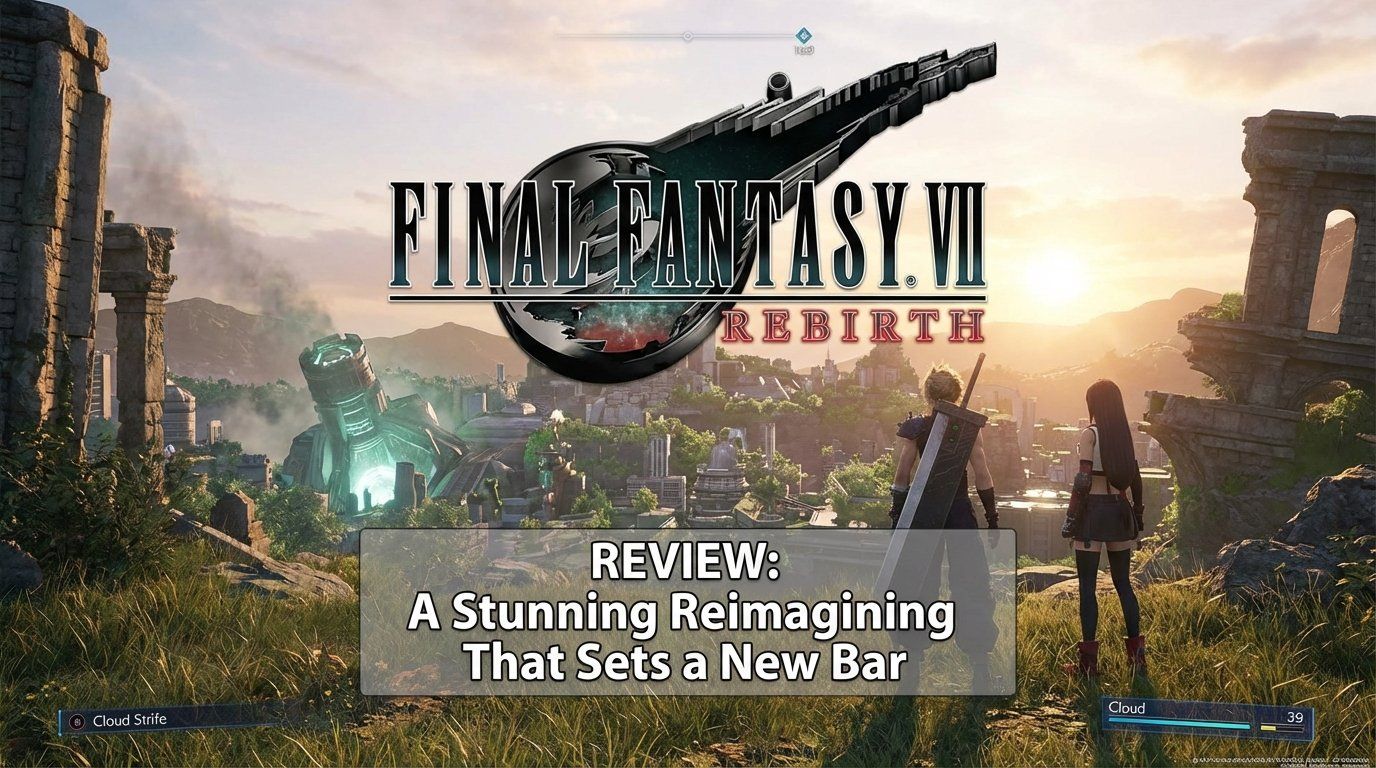
Visually, “Final Fantasy VII Rebirth” is nothing short of breathtaking. Powered by the latest iteration of the Luminous Engine, the game sets a new standard for JRPG presentation in 2026. Character models are hyper-detailed, with expressive animations that bring every emotion to life. From the glint of steel on Cloud’s Buster Sword to the subtle play of light across Aerith’s dress, the attention to detail is staggering.
Environments are equally stunning, boasting a level of fidelity and diversity rarely seen in the genre. Sweeping vistas stretch toward distant horizons, teeming with dynamic weather, wildlife, and bustling NPCs. Lighting and particle effects are harnessed to dazzling effect, particularly during combat and story sequences, where the line between pre-rendered and real-time visuals has all but vanished.
Performance is rock-solid across platforms, with robust options for resolution, frame rate, and accessibility. The PlayStation 5 and PC versions in particular showcase the game’s technical prowess, offering ray-traced reflections, ultra-fast loading, and support for ultrawide displays. It’s a visual feast that never comes at the cost of stability or immersion.
Soundtrack and Audio Design
No “Final Fantasy” review would be complete without celebrating its music, and “Rebirth” delivers one of the most accomplished soundtracks of the series. Composer Nobuo Uematsu returns alongside a talented team, blending iconic themes with bold new arrangements. The score effortlessly shifts from sweeping orchestral movements to intimate piano pieces, heightening every emotional beat and battle alike.
Voice acting sets a new bar for the franchise, with a cast that fully inhabits their roles. The performances feel nuanced and authentic, imbuing even minor characters with depth. The localization team deserves special mention for dialogue that feels natural in both English and Japanese, avoiding the stilted delivery that has sometimes plagued past entries.
Sound design is equally meticulous. Environmental audio immerses players in Gaia’s world, from the distant thunder over the Grasslands to the bustling chatter of market squares. Combat sounds are punchy and satisfying, while the reimagined sound cues for spells, summons, and limit breaks provide both nostalgia and novelty. In a medium where sound is often overlooked, “Rebirth” stands as a shining example of what’s possible when audio is treated as an integral pillar of design.
Conclusion: Should You Play It?
“Final Fantasy VII Rebirth” is more than just a sequel, more than just a remake—it’s a triumphant reimagining that sets a new bar for the genre. Square Enix has crafted a game that honors the legacy of one of gaming’s most beloved stories while pushing boldly into uncharted territory. With its exhilarating combat, expansive world, and emotionally resonant storytelling, “Rebirth” is not only a must-play for fans of the original, but a defining RPG for the current generation.
In a year overflowing with impressive releases, “Rebirth” distinguishes itself through its sheer ambition and polish. Whether you’re a longtime fan eager to see how the journey unfolds, or a newcomer curious about the legend of Cloud and his companions, this is an adventure that demands your attention. Square Enix has proven that some legends don’t just endure—they evolve, surprise, and, ultimately, soar.