

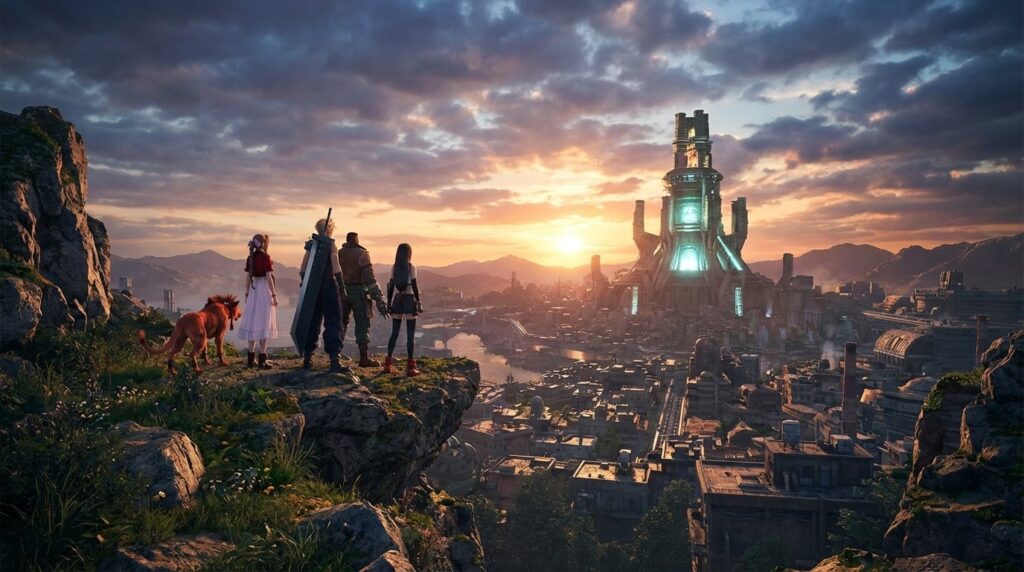
The legacy of Final Fantasy VII looms larger than almost any other title in gaming history. When Square Enix announced its ambitious plan to remake the beloved classic as a trilogy, expectations soared—and so did the pressure. The first entry, Final Fantasy VII Remake, reintroduced us to Midgar with dazzling visuals and bold narrative shifts, but it was only the beginning. Now, in 2026, Final Fantasy VII Rebirth arrives as the highly anticipated second chapter. It not only expands the scope of its predecessor but redefines what a modern RPG can achieve, both for returning fans and a new generation of players.
Rebirth is nothing short of a technical and creative marvel—a game that manages to respect its legendary roots while confidently forging new ground. It bursts free from the industrial confines of Midgar, offering players a sprawling world brimming with life, secrets, and emotional stakes. Square Enix has not simply recreated a classic; they have reimagined it with a level of ambition and polish that puts many of its contemporaries to shame.
In a year already crowded with big-budget releases and genre-defining titles, Final Fantasy VII Rebirth stands out as an experience that feels at once nostalgic and revolutionary. It’s a journey packed with stunning set-pieces, rich character work, and a sense of wonder that is as rare as it is exhilarating. For longtime fans, it’s a love letter; for newcomers, it’s a gateway into one of gaming’s most storied worlds. But does it stick the landing as both a sequel and a standalone epic? Let’s dive into what makes Rebirth a must-play in the modern gaming landscape.
Gameplay: A Seamless Fusion of Old and New
Final Fantasy VII Rebirth’s gameplay represents an evolution of the hybrid combat system introduced in Remake, blending the immediacy of real-time action with the strategic depth of classic turn-based RPGs. The system feels both welcoming and deep, offering a level of flexibility that caters to a wide range of playstyles. If you loved the tactical pausing and command selection of Remake, you’ll find even more ways to experiment and optimize in Rebirth.
What truly sets the gameplay apart is its sense of momentum. Combat flows with a thrilling rhythm, thanks to improved AI, smarter enemy design, and a smoother transition between exploration and battle. The addition of new party abilities and tag-team attacks injects a layer of excitement into each encounter, rewarding creative combinations and teamwork. The game’s world is packed with activities, from side quests and mini-games to optional bosses and collectibles, all of which feel more meaningful and integrated than ever before.
Rebirth excels at making every moment feel significant. Whether you’re strategizing in a high-stakes boss fight or simply exploring the vibrant environments, the game consistently rewards curiosity and experimentation. The result is a gameplay loop that feels both familiar and refreshingly modern—a rare feat in the realm of RPG sequels.
Core Mechanics
At the heart of Rebirth lies its refined Active Time Battle (ATB) system, which seamlessly merges real-time movement with strategic command input. Each character builds ATB gauges through standard attacks, then spends those charges on powerful abilities, magic, or items. This system encourages players to stay on the offensive while carefully managing resources, creating a constant ebb and flow of tactical decision-making.
The Materia system also returns, offering incredible depth for character customization. Players can slot these magical orbs into weapons and armor, unlocking spells, stat boosts, and unique abilities. The variety of Materia—and the freedom to experiment with different builds—ensures that battles rarely feel repetitive. The synergy between character roles, Materia choices, and new synergy skills means there’s always a fresh strategy to explore.
New to Rebirth is an expanded progression system that introduces skill trees for each character. These trees allow players to shape their party’s strengths and weaknesses more granularly, emphasizing certain playstyles or shoring up vulnerabilities. The result is a party that feels uniquely your own, responsive to your preferred approach whether you’re a meticulous planner or a brash brawler.
New Additions and Features
Rebirth’s most significant innovations come in the form of new features that deepen its world and give players more agency. Chief among these is the introduction of the “Synergy” system, which allows characters to combine abilities for devastating effects. These team-based moves are not only visually spectacular but strategically vital, encouraging players to think about party composition and timing in novel ways.
The world map, once a series of static screens, is now a fully realized, explorable continent. Players can ride chocobos, pilot vehicles, and even participate in a host of new mini-games spread across the landscape. These diversions aren’t just distractions—they’re lovingly crafted experiences that reference the original game while expanding its scope. From chocobo racing to a surprisingly addictive card game, the breadth of content is staggering.
Square Enix has also implemented dynamic weather and time-of-day systems, affecting not just visuals but gameplay itself. Certain enemies appear only at night, while some quests and events are tied to specific weather conditions. The world feels alive, responding to the player’s actions and adding a layer of immersion that few RPGs can match in 2026.
Single-Player Campaign
Spanning dozens of hours, the single-player campaign in Rebirth is an epic odyssey that takes Cloud, Aerith, Tifa, Barret, and the rest of the iconic cast far beyond the walls of Midgar. The narrative is expertly paced, balancing high-stakes main story quests with meaningful side content. Gone are the filler fetch quests of Remake; every detour feels purposeful, whether it’s deepening a character relationship or unraveling a new piece of the sprawling mystery at the heart of the story.
The campaign’s structure encourages exploration and engagement with the world. Optional content is woven seamlessly into the main journey, rewarding players who stray from the critical path with unique rewards, hidden lore, and some of the most challenging battles in the game. The result is a journey that never feels padded or repetitive—a rare achievement for a game of this scale.
This chapter also benefits from tighter pacing and a wider variety of environments. One moment you’re navigating a sun-drenched grassland; the next, you’re delving into the depths of a haunted forest or scaling a frozen mountain. Each area is packed with secrets and side stories, many of which pay clever homage to the original game while forging new narrative ground.
Story and Setting
Final Fantasy VII Rebirth boldly reinterprets the beloved narrative of the 1997 classic, deepening character arcs and introducing new mysteries that will keep even the most diehard fans guessing. The story picks up in the immediate aftermath of Remake’s ending, with Cloud and company in pursuit of Sephiroth across a world on the brink of collapse. Square Enix has taken risks with the plot, weaving in alternate timelines, meta-commentary, and unexpected character developments that elevate the narrative beyond simple nostalgia.
The game shines brightest in its character work. Every member of the party is given time to grow, with personal quests and dialogue that flesh out their motivations and histories. Relationships feel authentic, shaped by player choices and the events of the journey. Aerith, in particular, is a revelation in Rebirth—her enigmatic nature and tragic destiny are explored with nuance and emotional weight.
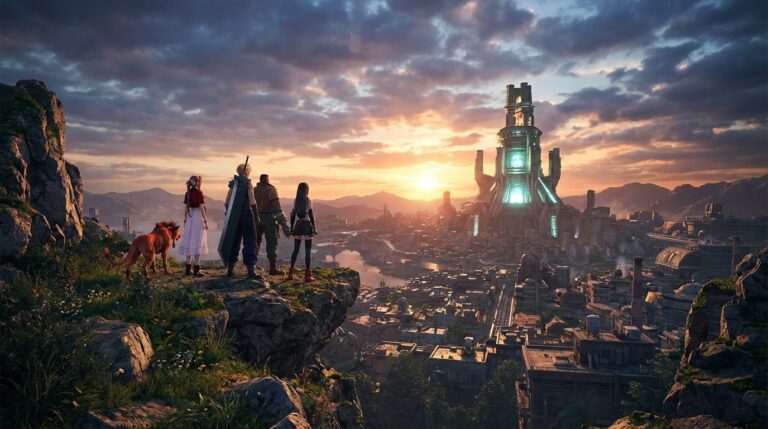
Rebirth’s world is a character in its own right. The cities, villages, and wilds of Gaia are realized with a level of detail and atmosphere that few RPGs can match. Whether confronting the existential threat of Shinra’s machinations or the looming terror of Sephiroth, the stakes never feel less than world-shattering. Yet the game never loses sight of the personal, grounding its cosmic drama in the relationships and struggles of its unforgettable cast.
Level Design
Level design in Rebirth marks a significant leap forward for the series. Gone are the linear corridors of Remake; in their place are sprawling, interconnected regions that encourage exploration and reward curiosity. Each zone is packed with secrets, side objectives, and environmental puzzles, offering a satisfying sense of discovery that recalls the golden era of RPG world maps while feeling thoroughly modern.
Environments are crafted with an artist’s touch, from the tranquil serenity of Cosmo Canyon to the dense, foreboding forests of the Nibel region. Fast travel points and chocobo stables are thoughtfully placed, making backtracking painless and encouraging players to revisit old locations as new abilities unlock hidden paths. The sense of scale is impressive, but it never feels overwhelming thanks to intelligent quest design and intuitive navigation tools.
Dungeons have also seen a significant upgrade, blending intricate layouts with unique mechanics and memorable boss encounters. Each dungeon tells its own story, often culminating in set-pieces that rival anything seen in recent blockbuster action games. The careful balance between open exploration and guided narrative ensures that the adventure remains engaging from start to finish.
Multiplayer and Online Experience
While Final Fantasy VII Rebirth remains a primarily single-player experience, Square Enix has introduced a handful of online features that enhance replayability and foster community engagement. Most notable is the “Community Board,” where players can share strategies, completed challenges, and even custom Materia builds. This asynchronous connectivity adds a social layer without detracting from the narrative immersion.
Cooperative content, while limited, includes time-limited event battles and leaderboard challenges that pit players against powerful bosses for unique rewards. These online activities are finely tuned, offering a significant challenge for seasoned players but remaining entirely optional for those who prefer a solitary adventure.
The implementation is unobtrusive and respectful of the game’s roots. Players never feel forced to engage with online content, but those who do will find a thriving community eager to share secrets, tips, and fan creations. In a world where live-service elements often overshadow core gameplay, Rebirth strikes a commendable balance.
Graphics and Visuals
In 2026, graphical fidelity is a crowded battleground, but Rebirth confidently asserts itself among the year’s visual frontrunners. Powered by next-generation hardware and a refined engine, the game dazzles with its meticulous attention to detail, lifelike character models, and lush, sprawling environments. Every locale, from sunlit meadows to rain-soaked alleyways, is rendered with breathtaking clarity and artistry.
Character animations have been elevated to cinematic levels, capturing subtle emotions and dynamic combat movements with a fluidity rarely seen in RPGs. The use of lighting and particle effects, especially during spellcasting and Limit Breaks, turns battles into kinetic spectacles. Cutscenes blend seamlessly with gameplay, further blurring the line between interactive and authored storytelling.
The technical performance is equally impressive. Load times are virtually nonexistent, and the game runs smoothly even during its most visually demanding moments. Square Enix’s art direction remains unmatched, effortlessly blending fantasy and sci-fi elements into a cohesive and visually arresting world that feels both familiar and new.
Soundtrack and Audio Design
No review of a Final Fantasy game would be complete without praising its music, and Rebirth’s soundtrack is an absolute triumph. Legendary composer Nobuo Uematsu returns alongside a talented team, reimagining iconic themes while introducing new arrangements that stand shoulder to shoulder with the classics. The music swells and shifts in response to gameplay, heightening every emotional beat and battle.
Ambient sound design further immerses players in the world of Gaia. The rustle of leaves, distant chatter in bustling towns, and the roar of monsters in the wild all contribute to a soundscape that feels alive and dynamic. Voice acting, available in multiple languages, is uniformly excellent, bringing depth and authenticity to every member of the cast.
Special mention must be made of the game’s use of spatial audio on next-gen hardware. Whether you’re listening through high-end speakers or headphones, the directional cues and environmental effects add a new dimension to exploration and combat. In a year where audio technology continues to push boundaries, Rebirth’s sound design stands as a benchmark for the genre.
Conclusion: Should You Play It?
Final Fantasy VII Rebirth is more than a worthy successor—it’s a breathtaking reinvention that honors its legendary source material while confidently charting new territory. Square Enix has delivered an experience that is at once vast and intimate, cinematic and interactive, nostalgic and daringly new. Every element, from its refined combat to its rich narrative, reflects a studio at the height of its powers.
In the ever-evolving landscape of 2026, where open worlds and live-service models often dominate the conversation, Rebirth is a shining example of what single-player games can still achieve. Whether you’re a series veteran eager to see beloved moments reimagined or a newcomer ready to embark on an unforgettable journey, this is a game that deserves your time, attention, and admiration.
Final Fantasy VII Rebirth doesn’t just revisit the past—it reinvents it for a new generation. It’s a triumphant return to form for the franchise and a high-water mark for modern RPGs. If you’re looking for a game that will leave you awestruck, moved, and utterly absorbed, look no further. Rebirth is a masterpiece—and an essential play for anyone who loves games.