
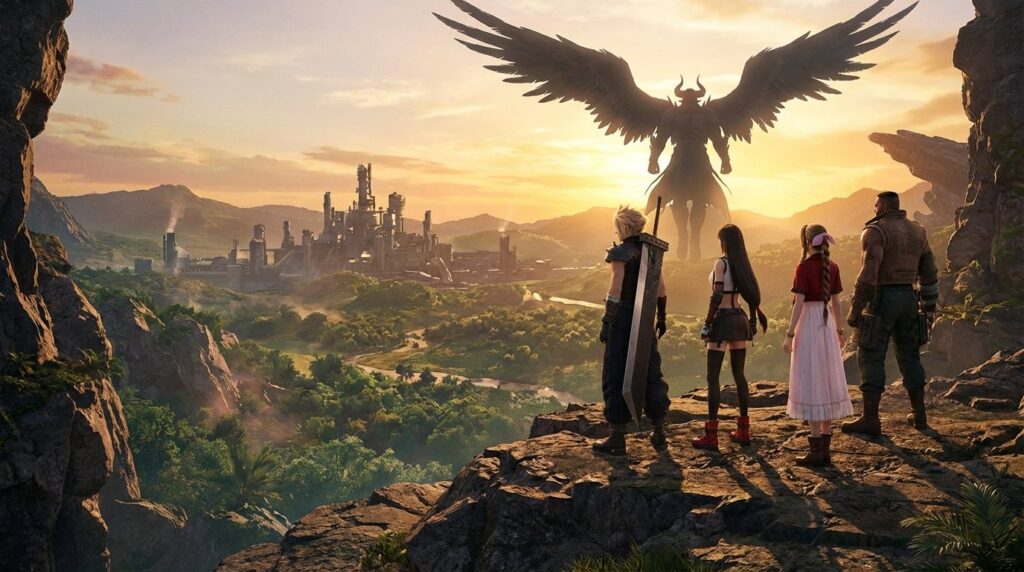
It’s not often that a single game can redefine what we expect from a remake, but with Final Fantasy VII Rebirth, Square Enix has achieved something truly extraordinary. The middle chapter of the ambitious Final Fantasy VII Remake project, Rebirth doesn’t just revisit a beloved classic—it reconstructs it from the ground up, offering new surprises even for veterans who know every twist of the original. In a gaming landscape increasingly driven by nostalgia, Rebirth stands tall as both a love letter and a bold reimagining, blending old and new into a singularly captivating experience.
Released in early 2026, Rebirth arrives at a time when the bar for remakes and RPGs has never been higher. The first installment, Remake, set expectations with its cinematic retelling of Midgar’s saga, but also left fans hungry for what lay beyond its steel confines. Now, with the world of Gaia thrown open, Rebirth seizes the opportunity to expand its universe, deepening character arcs, introducing innovative mechanics, and presenting a world that feels alive in ways unimaginable in 1997. The stakes are higher, the journey broader, and the emotional resonance deeper.
But Rebirth is more than just a technical marvel or a nostalgia trip. It’s a game that dares to challenge the very concept of what a remake can be. With a narrative that deftly balances reverence and reinvention, a sprawling open world teeming with secrets, and a combat system that masterfully fuses action and strategy, Rebirth delivers a journey that feels both familiar and refreshingly new. Whether you’re a longtime fan or a first-time traveller with Cloud and company, this is a game that demands your attention in 2026’s crowded RPG landscape.
Gameplay: Evolution and Reinvention
<img src="https://pressstartgaming.com/images/nano_banana_69d29323b4f68.jpg" alt="Final Fantasy VII Rebirth Review: A Legendary Journey Reimagined gameplay moment” loading=”lazy” />
From the first moments outside the borders of Midgar, Rebirth signals its intent to break free from the linearity of its predecessor. The gameplay is a rich tapestry of exploration, combat, and discovery, expertly balancing the demands of a modern action RPG with the roots of classic turn-based design. The world is vast and inviting, with seamless transitions between towns, wilds, and dungeons that encourage a sense of curiosity and adventure.
Combat remains the beating heart of Rebirth’s gameplay, blending real-time action with the strategic nuance that defines the Final Fantasy series. Players can fluidly swap between party members, unleashing powerful abilities and synergistic attacks that reward both reflexes and tactical planning. The introduction of new synergy skills and expanded materia combinations deepens the combat system, ensuring that battles feel fresh even dozens of hours in.
Exploration is both rewarding and necessary. The world map, now fully realized in 3D, is dotted with secrets, side quests, and environmental puzzles that invite you to linger. Whether chasing chocobos across the grasslands or uncovering the mysteries of ancient ruins, Rebirth encourages players to venture off the beaten path, rewarding curiosity with meaningful discoveries and character development.
Core Mechanics
At its core, Rebirth builds upon the foundation laid by Remake, but with significant refinements that elevate the experience. The Active Time Battle (ATB) system returns, retooled to allow for even smoother transitions between direct control and tactical command. Each character brings a unique playstyle—Tifa’s blistering martial arts, Barret’s heavy artillery, Red XIII’s agile ferocity—making party composition more strategic than ever.
Materia, the series’ iconic magic and ability system, has been expanded with new types and combinations. Experimenting with different materia setups is crucial, as certain encounters demand specific tactics or elemental affinities. The addition of synergy materia, which unlocks cooperative moves between party members, adds a new layer of depth to both combat and party management.
Rebirth also introduces an improved progression system that balances classic RPG stat growth with more flexible character customization. Weapon upgrades have been streamlined, making it easier to tailor your party’s strengths to your preferred playstyle without getting bogged down in menus. The result is a system that rewards experimentation and encourages mastery without ever feeling overwhelming.
New Additions and Features
Square Enix has packed Rebirth with a host of new features that distinguish it from both its predecessor and the 1997 original. Chief among these is the fully realized open world, which allows for a level of freedom and immersion that simply wasn’t possible before. Fast travel, dynamic weather, and a day-night cycle add to the sense that Gaia is a living, breathing world.
The game introduces a robust side quest system, with stories that feel meaningful rather than filler. Many side quests tie directly into the main narrative or offer unique insights into supporting characters, deepening your investment in the world. Minigames, a beloved hallmark of the series, return with new twists—expect to lose hours to the expanded Gold Saucer, chocobo races, and even a fully-fledged card game that rivals recent genre standouts.
Rebirth also features a new “Bonding” system, allowing players to strengthen relationships between party members through dialogue choices and shared experiences. These bonds unlock unique abilities and alter key moments in the story, giving players more agency in how the narrative unfolds. It’s a subtle yet impactful addition that makes each playthrough feel personal.
Single-Player Campaign
At the heart of Rebirth is a sprawling single-player campaign that masterfully balances epic storytelling with player-driven exploration. The journey takes you from the lush grasslands outside Midgar to iconic locations like Junon, Costa del Sol, and Cosmo Canyon, each lovingly reimagined with modern sensibilities. The main quest is lengthy—clocking in at over 50 hours for most players—but never feels padded or repetitive.
Rebirth’s pacing is a significant improvement over Remake’s sometimes meandering structure. Story beats come at a brisk yet manageable pace, interspersed with side content that feels organic rather than obligatory. Major set pieces—boss battles, cinematic sequences, and narrative twists—are spaced to maximize emotional impact, ensuring that the campaign remains engaging from start to finish.
What truly sets the campaign apart is the way it integrates player choice. Decisions made during key moments, both in combat and conversation, can have ripple effects throughout the story, subtly altering character interactions and even the outcome of certain events. It’s a campaign designed for replayability, with enough branching paths and hidden secrets to reward multiple playthroughs.
Story and Setting
Final Fantasy VII’s story has always been one of its greatest strengths, and Rebirth seizes the opportunity to dig even deeper into its complex narrative. The game picks up where Remake left off, following Cloud Strife and his companions as they chase Sephiroth across a world on the brink of collapse. The narrative deftly balances the familiar with the unexpected, weaving in new storylines and characters that expand the scope without diluting the original’s emotional core.
Rebirth isn’t afraid to take risks with its storytelling. While it pays homage to the beats fans remember, it also introduces bold narrative divergences and reinterpretations that keep even the most seasoned players guessing. Themes of identity, memory, and destiny remain front and center, but are explored with greater nuance and maturity, reflecting both the passage of time and advances in game writing since the original’s release.
The cast is as compelling as ever, with standout performances from returning favorites and new faces alike. Character arcs that once felt ancillary are now given room to breathe, and minor roles from the original game receive significant development. The result is a story that feels richer and more human, deepening the player’s connection to both the world and its inhabitants.
Level Design
Rebirth’s level design is a triumph in both scope and detail. Gone are the narrow corridors that sometimes hampered Remake; in their place are expansive, interconnected environments that reward exploration and experimentation. Each region is distinct, with unique visual identities, environmental hazards, and secrets to uncover.
Main story dungeons are particularly impressive, featuring a blend of puzzles, platforming, and combat that keeps players engaged throughout. These areas are thoughtfully constructed, encouraging you to use both your wits and your party’s abilities to progress. Optional dungeons and hidden areas abound, offering challenging side content and rare rewards for those willing to stray from the critical path.
Towns and settlements are more than just pit stops—they’re living communities filled with NPCs, shops, and side stories that flesh out the world. The attention to detail is remarkable, with each locale feeling unique and brimming with personality. Whether you’re navigating the bustling docks of Junon or exploring the serene vistas of Cosmo Canyon, Rebirth’s level design ensures that every step of your journey feels purposeful and memorable.
Multiplayer and Online Experience
While Rebirth remains primarily a single-player experience, Square Enix has introduced a suite of online features that add a new dimension to the adventure. Asynchronous elements, such as sharing discoveries and high scores in minigames, foster a sense of community without detracting from the story-driven focus.
The standout addition is the Gold Saucer’s online arena, where players can pit their party configurations against those of others in AI-driven battles. This mode is surprisingly deep, rewarding creative builds and strategic planning. Leaderboards and seasonal events keep the competition fresh, and while it’s not a replacement for traditional multiplayer, it adds significant replay value for those who crave a competitive edge.
Cooperative events, such as time-limited challenges and global objectives, further enhance the online experience. These features are seamlessly integrated, never feeling intrusive or tacked-on. For those who prefer to journey alone, the online components are wholly optional, but for completionists and social players, they offer meaningful incentive to stay engaged long after the credits roll.
Graphics and Visuals

Rebirth sets a new visual standard not just for the series, but for RPGs as a whole in 2026. Built on the latest iteration of Square Enix’s proprietary engine, the game dazzles with photorealistic environments, meticulously detailed character models, and breathtaking lighting effects. Every region, from the verdant fields to the bustling cities, bursts with life and color, making exploration a visual feast.
Character animations are fluid and expressive, capturing subtle emotions in both cinematic cutscenes and moment-to-moment gameplay. The attention to detail extends to the smallest elements—armor glints in the sun, flora sways in the breeze, and even the most minor NPCs are rendered with care. The result is a world that feels not only believable, but enchanting.
Performance is equally impressive, with consistent frame rates and fast load times on current-gen hardware. Options for performance and quality modes allow players to tailor the experience to their preferences, ensuring that Rebirth looks and runs beautifully whether you prioritize visual fidelity or buttery-smooth action. Accessibility features, including customizable UI and colorblind modes, round out a package that is as inclusive as it is spectacular.
Soundtrack and Audio Design
Few franchises are as synonymous with iconic music as Final Fantasy, and Rebirth does not disappoint. Series veteran Nobuo Uematsu returns alongside a team of talented composers to deliver a soundtrack that is both reverent and contemporary. Classic tracks are lovingly rearranged, while new compositions seamlessly blend with the old, enhancing both the grand set pieces and the quiet moments.
Audio design is equally masterful, with environmental sounds and ambient effects that draw you into the world. From the distant roar of monsters to the hustle and bustle of market streets, every audio cue is meticulously crafted to heighten immersion. Combat is particularly impactful, with satisfying effects for spells, abilities, and weapon strikes that make every encounter feel weighty and dynamic.
Voice acting is top-tier, with nuanced performances that bring the cast to life. Emotional scenes land with real power, thanks in no small part to the talent and direction behind the voice work. The localization is thoughtful and polished, ensuring that Rebirth’s story resonates with players around the globe.
Conclusion: Should You Play It?
In a year teeming with high-profile releases, Final Fantasy VII Rebirth distinguishes itself as a defining achievement—not just for remakes, but for the RPG genre as a whole. It’s a game that honors the legacy of an all-time classic while forging its own identity, inviting both newcomers and veterans to experience the story of Cloud and company in a way that feels fresh, surprising, and deeply moving.
With its masterful blend of engaging gameplay, innovative mechanics, stunning visuals, and an unforgettable soundtrack, Rebirth sets a new benchmark for what fans can expect from a modern RPG. The journey is expansive yet intimate, challenging yet accessible, and—above all else—brimming with heart. Whether you’re chasing nostalgia or seeking your next great adventure, Rebirth is a journey you won’t want to miss.
This is more than just a remake—it’s a reimagining that stands as a testament to the enduring power of storytelling in games. In 2026, Final Fantasy VII Rebirth isn’t just a return to a legendary world; it’s a bold leap forward for the entire medium. Don’t let this one pass you by.