
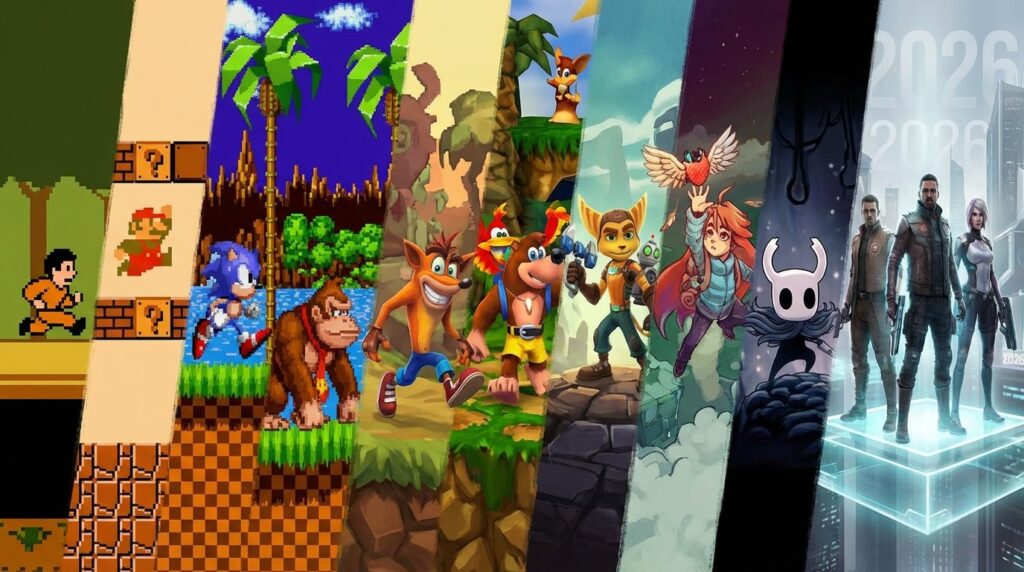
Platformers have been the pulse of gaming innovation for decades, shaping not just how we play, but what we expect from video games. From the pixelated jungles of the Atari era to the jaw-dropping vistas rendered on the Xbox Series consoles, the platformer genre has been a laboratory of creativity, risk-taking, and sheer fun. Whether you grew up leaping over barrels or wall-running through neon-lit cityscapes, platformers have always been about that satisfying blend of timing, skill, and exploration—a formula that’s just as thrilling in 2026 as it was in 1981.
What makes a platformer influential? Some titles set new standards for gameplay mechanics; others dazzle with their storytelling, art style, or soundtracks. The most impactful platformers are those that ripple through the industry, inspiring countless imitators, sequels, and even entire subgenres. They’re games that become shorthand for a particular era, or that redefine what’s possible with a controller in your hand.
To celebrate the genre’s enduring legacy and trailblazing future, we’re counting down the 20 most influential platformers ever released. This isn’t just a nostalgia trip—these are the titles that changed the rules, set trends, and made indelible marks from the Atari age to the Xbox Series generation. Get ready to revisit old favorites, discover hidden gems, and see how your own gaming journey fits into the platforming pantheon.
Ready to jump in? Let’s start our climb through the most game-changing platformers of all time.
Pitfall!
Story
Launched in 1982 for the Atari 2600, Pitfall! follows the intrepid adventurer Harry as he navigates a treacherous jungle rife with quicksand, rolling logs, crocodiles, and scorpions. The story is minimalist, told through the game’s environments and hazards rather than narrative cutscenes—a common approach in the early ’80s. Still, the sense of adventure and treasure hunting is palpable, inviting players to imagine their own daring exploits with every leap and swing.
Gameplay
Pitfall! defined early platforming by introducing players to a side-scrolling world filled with obstacles and time-based challenges. The 20-minute timer and endless quest for treasure created a sense of urgency, while the variety of dangers demanded both memorization and quick reflexes. The game’s swinging vines and underground tunnels pushed the hardware to its limits, creating a dynamic and surprisingly varied adventure.
Why it’s on this list
Pitfall! is widely recognized as the grandfather of platformers, laying the foundation for the genre’s mechanics. Its influence can be seen in everything from Super Mario Bros. to modern indie hits, and it set a template for exploration and risk-vs-reward gameplay that endures to this day.
Graphics and Sound
For its time, Pitfall! was a technical marvel, with large, recognizable sprites and smooth scrolling environments on the Atari 2600. The audio cues, though simple, provided essential feedback for player actions and hazards, heightening the sense of peril.
Legacy and Reception
Pitfall! was a massive commercial and critical success, selling over four million copies and inspiring a generation of developers. Its legacy is evident in the DNA of countless platformers, and it remains a nostalgic touchstone for retro gamers and historians alike.
Super Mario Bros.
Story
When Super Mario Bros. hit the NES in 1985, it introduced gamers to the whimsical world of the Mushroom Kingdom. Mario embarks on a quest to rescue Princess Toadstool from the villainous Bowser, a setup that’s become iconic. The game’s simple but effective storytelling—delivered through colorful visuals and level design—set the standard for narrative-driven platformers.
Gameplay
Super Mario Bros. revolutionized platforming with its precise controls, varied environments, and secret-filled levels. The combination of running, jumping, and power-ups like the Super Mushroom and Fire Flower transformed how players approached obstacles. Each world offered new challenges and surprises, making every playthrough feel fresh and rewarding.
Why it’s on this list
Few games have shaped the industry as profoundly as Super Mario Bros. Its tight mechanics and approachable design set the gold standard for platformers and helped resurrect the gaming industry after the crash of 1983. It’s the blueprint that countless games have followed.
Graphics and Sound
The vibrant, cartoonish graphics were a revelation in 1985, and Koji Kondo’s unforgettable soundtrack became instantly recognizable. From the “Overworld” theme to the underground jingles, every audio cue added charm and identity to the game.
Legacy and Reception
Super Mario Bros. is often cited as one of the greatest video games of all time. It sold over 40 million copies and spawned a franchise that remains a juggernaut in 2026. Its influence is immeasurable, impacting not just platformers, but all of gaming.
Sonic the Hedgehog
Platform | Sega Genesis |
|---|---|
Publisher | Sega |
Genre | Platformer |
Release Date | 06/23/1991 |
Story
In 1991, Sega introduced the world to Sonic, a blue blur with attitude, tasked with saving animal friends from the evil Dr. Robotnik. The narrative, though straightforward, was a breath of fresh air, emphasizing speed and rebellion in contrast to Mario’s more traditional heroics.
Gameplay
Sonic the Hedgehog’s core gameplay loop centers on blistering speed, loop-de-loops, and momentum-based platforming. The game rewarded players for mastering level layouts and using Sonic’s signature spin dash to blaze through obstacles. Its zones were filled with alternate paths, rewarding exploration and replayability.
Why it’s on this list
Sonic redefined what a platformer could be, proving that momentum and speed could coexist with precision platforming. It gave Sega a mascot to rival Mario and inspired a generation of fast-paced platformers that dared to be different.
Graphics and Sound
Sonic’s graphics were a showcase for the Sega Genesis, with bold colors and parallax scrolling that wowed players. The soundtrack, composed by Masato Nakamura, remains legendary for its catchy, energetic tunes.
Legacy and Reception
Sonic the Hedgehog was a smash hit, helping Sega gain a foothold in the console wars. The franchise continues to thrive, and the original’s emphasis on speed and style still echoes throughout platforming games today.
Metroid
Story
Released in 1986 for the NES, Metroid introduced players to Samus Aran, a bounty hunter on a mission to defeat the Space Pirates and Mother Brain on planet Zebes. The game’s twist—that Samus is a woman—was a groundbreaking moment for video game storytelling, challenging gender stereotypes in gaming.
Gameplay
Metroid pioneered non-linear exploration in platformers, blending action with discovery. Players collected power-ups to access new areas, creating a “Metroidvania” template that would become a genre unto itself. Its interconnected world and atmosphere of isolation set it apart from its contemporaries.
Why it’s on this list
Metroid’s open-ended design and atmospheric storytelling have influenced countless games, from indie hits to AAA epics. The concept of “unlocking the map” has become a genre staple, and Metroid’s DNA can be found in a vast array of modern platformers.
Graphics and Sound
Metroid’s moody visuals and haunting soundtrack created a sense of alien danger and solitude. Its sprite work and environments were cutting-edge for the NES, and the music remains iconic among fans.
Legacy and Reception
Though initially a sleeper hit, Metroid’s reputation has grown over the years, spawning a beloved franchise and cementing its place as one of the most influential platformers of all time.
Castlevania: Symphony of the Night
Platform | PlayStation |
|---|---|
Publisher | Konami |
Genre | Action-Adventure |
Release Date | 03/20/1997 |
Story
Debuting on the PlayStation in 1997, Symphony of the Night follows Alucard, the son of Dracula, as he explores his father’s castle to confront evil. The tale is gothic and layered, delivering a blend of classic horror and personal drama that elevated the series’ storytelling.
Gameplay
Symphony of the Night fused RPG mechanics with platforming, introducing experience points, equipment, and magic to the Castlevania formula. The open, sprawling castle encouraged backtracking and discovery, cementing the “Metroidvania” structure alongside Metroid itself.
Why it’s on this list
This game is a touchstone for non-linear platformers, inspiring a wave of indie games and major franchises alike. Its blend of action, exploration, and character progression rewrote what a platformer could be.
Graphics and Sound
Symphony of the Night’s 2D sprite work is lush and detailed, with fluid animations and atmospheric environments. The orchestral soundtrack is hauntingly beautiful, enhancing the game’s dark, mysterious vibe.
Legacy and Reception
Though not a blockbuster at launch, Symphony of the Night has become a cult classic and is now regarded as one of the greatest games ever made. Its influence on the “Metroidvania” genre is undeniable, and its fanbase remains devoted.
Donkey Kong Country
Platform | SNES |
|---|---|
Publisher | Nintendo |
Genre | Platformer |
Release Date | 11/21/1994 |
Story
Arriving in 1994 for the SNES, Donkey Kong Country revitalized Nintendo’s classic ape in a quest to reclaim his stolen banana hoard from the villainous King K. Rool. Simple but memorable, the story set the stage for a jungle adventure packed with personality.
Gameplay
Donkey Kong Country’s tight platforming, tag-team mechanics with Diddy Kong, and inventive level design pushed the genre forward. Each stage was brimming with secrets, collectibles, and unique challenges, making it a joy to explore again and again.
Why it’s on this list
Donkey Kong Country demonstrated just how much platformers could evolve, setting new standards for graphics, gameplay, and polish. Its success proved that the genre still had untapped potential in the mid-’90s.
Graphics and Sound
The game’s pre-rendered 3D graphics were a technical marvel, giving the SNES visuals far beyond what was thought possible. David Wise’s soundtrack is legendary, blending atmospheric tracks with catchy melodies that have endured for decades.
Legacy and Reception
Donkey Kong Country was a commercial juggernaut and a critical darling. Its success revitalized the Donkey Kong brand and inspired a wave of visually ambitious platformers in its wake.
Super Mario 64
Story
Super Mario 64 launched with the Nintendo 64 in 1996, ushering Mario into the third dimension. The plot centers on Mario rescuing Princess Peach from Bowser, but the real magic lies in the castle’s mystery-filled halls and sprawling worlds.
Gameplay
This was the first true 3D platformer, with Mario’s moveset—triple jumps, wall kicks, and more—redefining what players could do. Open-world levels allowed for unprecedented freedom, making each star a puzzle to solve in creative ways.
Why it’s on this list
Super Mario 64 didn’t just influence platformers; it set the template for 3D gaming as a whole. Its camera system, controls, and world design are still referenced by developers in 2026.
Graphics and Sound
The leap to 3D was breathtaking, with colorful environments and expressive animations. Koji Kondo’s score set a playful, adventurous tone that’s impossible to forget.
Legacy and Reception
Super Mario 64 is regularly cited as one of the most important games ever made. Its innovations continue to echo through the industry, from indie projects to blockbuster franchises.
Crash Bandicoot
Story
Naughty Dog’s Crash Bandicoot burst onto the PlayStation in 1996, starring a wacky marsupial on a mission to foil the evil Dr. Neo Cortex. The game’s irreverent humor and cartoonish style made it an instant standout among platformers.
Gameplay
Crash Bandicoot blended linear “corridor” levels with challenging jumps, hazards, and crate-smashing mayhem. The focus on timing and reflexes, along with inventive boss battles, kept players engaged and coming back for more.
Why it’s on this list
Crash Bandicoot proved that Sony could have a platforming mascot to rival Mario and Sonic. Its success helped establish the PlayStation as a dominant force in gaming and inspired a host of imitators.
Graphics and Sound
The game’s 3D graphics were impressive for their time, with expressive character animations and lush environments. The soundtrack matched the game’s zany spirit, providing memorable tunes for every level.
Legacy and Reception
Crash Bandicoot became a defining franchise for Sony, spawning sequels, remakes, and a devoted fanbase. Its blend of humor and challenge continues to influence platformers decades later.
Rayman
Story
Released in 1995 for the Atari Jaguar and later for PlayStation and other platforms, Rayman introduced players to a limbless hero on a quest to restore balance to his magical world. The game’s whimsical story and cast of quirky characters charmed audiences worldwide.
Gameplay
Rayman’s platforming focused on precision, timing, and exploration, with unique abilities unlocked as the game progressed. Its levels were filled with secrets and creative challenges, rewarding curiosity and skillful play.
Why it’s on this list
Rayman brought European flair to the platformer genre, blending artistic visuals with inventive level design. Its impact can be seen in both indie and mainstream platformers well into the 2020s.
Graphics and Sound
Rayman’s hand-drawn graphics were gorgeous and vibrant, setting a new standard for artistic direction. The soundtrack blended whimsy and adventure, perfectly matching the on-screen action.
Legacy and Reception
Rayman became Ubisoft’s flagship platformer, spawning sequels and beloved spin-offs. Its visual and gameplay legacy remains strong, especially with the resurgence of 2D platformers in recent years.
Banjo-Kazooie
Story
Launched on the Nintendo 64 in 1998, Banjo-Kazooie introduced players to a bear and bird duo on a quest to rescue Banjo’s sister from the evil witch Gruntilda. The game’s witty dialogue and quirky cast set a new benchmark for character-driven platformers.
Gameplay
Banjo-Kazooie took 3D platforming to new heights, with expansive worlds, creative puzzles, and a focus on collecting musical notes and Jiggies. The combination of Banjo’s strength and Kazooie’s speed opened up fresh gameplay possibilities, keeping exploration exciting and unpredictable.
Why it’s on this list
Banjo-Kazooie elevated the “collectathon” subgenre, influencing dozens of games with its open-ended worlds and charming humor. It remains a high point in Rare’s storied history and is frequently cited as a masterpiece.
Graphics and Sound
The game’s colorful, detailed environments pushed the Nintendo 64’s hardware, while Grant Kirkhope’s whimsical soundtrack became instantly iconic. The character animations and expressive cutscenes set a new bar for personality in platformers.
Legacy and Reception
Banjo-Kazooie is still celebrated for its inventive design and replay value. It has a devoted fanbase and continues to inspire new platformers, both indie and big-budget.
Super Meat Boy
Story
Debuting in 2010, Super Meat Boy follows the titular hero as he sets out to rescue Bandage Girl from the nefarious Dr. Fetus. The story is tongue-in-cheek and minimalist, letting the tough-as-nails gameplay take center stage.
Gameplay
Super Meat Boy is renowned for its brutally difficult levels, tight controls, and instant respawns. The game demands precision and timing, with hundreds of bite-sized stages that challenge even the most seasoned platforming veterans.
Why it’s on this list
Super Meat Boy helped lead the indie game renaissance, proving that small teams could make games as impactful as big studios. Its design philosophy has influenced a generation of challenging, fast-paced platformers.
Graphics and Sound
The game’s simple yet expressive visuals and energetic chiptune soundtrack perfectly complement its intense action. Every jump, splat, and victory feels earned, thanks to the crisp presentation.
Legacy and Reception
Super Meat Boy was a critical and commercial hit, inspiring a wave of hardcore indie platformers. Its legacy is secure as a landmark title in both indie development and platforming history.
Celeste
Story
Celeste, released in 2018, tells the heartfelt story of Madeline as she climbs the mysterious Celeste Mountain, battling both physical obstacles and her inner demons. The game’s narrative is a powerful exploration of mental health, anxiety, and perseverance.
Gameplay
Celeste’s platforming is precise and demanding, centered on dashes, wall jumps, and momentum-based puzzles. Every level is meticulously crafted, with optional challenges for those seeking even greater tests of skill.
Why it’s on this list
Celeste redefined what a platformer could achieve emotionally, blending narrative and gameplay in a way that resonated deeply with players. It set a new standard for accessibility options and inclusive storytelling.
Graphics and Sound
The game’s retro-inspired pixel art is beautifully animated, while Lena Raine’s evocative soundtrack amplifies the emotional stakes of every climb. The visuals and music work in harmony to create an unforgettable atmosphere.
Legacy and Reception
Celeste was showered with awards and critical acclaim, lauded for its gameplay, story, and representation. Its influence continues to be felt among indie and mainstream developers alike.
Ori and the Blind Forest
Story
Released in 2015 for Xbox One and PC, Ori and the Blind Forest tells a moving tale of loss, hope, and rebirth in a mystical forest. Players guide Ori, a small guardian spirit, through a visually stunning world filled with danger and wonder.
Gameplay
Ori and the Blind Forest blends tight platforming with Metroidvania exploration, requiring players to master new abilities and traverse challenging environments. Its fluid controls and organic level design make every jump feel meaningful.
Why it’s on this list
Ori and the Blind Forest set a new benchmark for emotional storytelling and visual artistry in platformers. Its success helped fuel the resurgence of the Metroidvania genre in the modern era.
Graphics and Sound
The game’s hand-painted visuals and dynamic lighting create a breathtaking world, while Gareth Coker’s sweeping score elevates every moment. It’s a masterclass in using art and music to enhance gameplay.
Legacy and Reception
Ori and the Blind Forest was universally praised, earning multiple Game of the Year nominations and spawning a beloved sequel. Its legacy is secure as a modern classic.
LittleBigPlanet
Story
Debuting on PlayStation 3 in 2008, LittleBigPlanet introduces players to Sackboy as he travels through a whimsical world crafted from everyday objects. The story is playful and creative, encouraging imagination and community.
Gameplay
LittleBigPlanet is as much a platformer as it is a creation tool, offering robust level editors and user-generated content. The core platforming is physics-based and accessible, but the real magic lies in the endless supply of new levels made by the community.
Why it’s on this list
LittleBigPlanet redefined what platformers could be by empowering players to build and share their own worlds. Its “Play, Create, Share” philosophy was revolutionary and helped popularize user-generated content in gaming.
Graphics and Sound
The game’s charming, craft-inspired visuals and quirky soundtrack set it apart from its peers. The tactile look of cardboard, felt, and string creates a unique, inviting atmosphere.
Legacy and Reception
LittleBigPlanet was a smash hit, spawning sequels and inspiring a new wave of creative, community-driven games. Its impact on player creativity and platformer design is still felt in 2026.
Shovel Knight
Story
Released by Yacht Club Games in 2014, Shovel Knight stars a valiant hero on a quest to rescue his beloved Shield Knight from the evil Enchantress. The game’s narrative pays homage to classic NES adventures while adding its own heartfelt twists.
Gameplay
Shovel Knight combines tight, retro-inspired platforming with innovative mechanics like the shovel drop. The game is packed with secrets, upgrades, and memorable boss battles, offering a modern take on 8-bit design.
Why it’s on this list
Shovel Knight was instrumental in sparking the “neo-retro” movement, proving that classic design philosophies could thrive in the modern era. Its Kickstarter success inspired a wave of indie platformers.
Graphics and Sound
The 8-bit-style graphics are lovingly crafted, with expressive sprites and vibrant environments. Jake Kaufman’s soundtrack is a chiptune masterpiece, capturing the spirit of classic platformers.
Legacy and Reception
Shovel Knight was a critical and commercial success, winning awards and spawning expansions. Its influence is evident in both indie and mainstream platformers across the industry.
Limbo
Story
Unveiled in 2010, Limbo is a haunting journey through a monochrome, nightmarish world. Players guide a nameless boy in search of his missing sister, with the story unfolding through environmental storytelling and subtle clues.
Gameplay
Limbo is a minimalist puzzle-platformer, emphasizing trial-and-error and atmospheric tension. Its physics-based puzzles and one-hit deaths create a constant sense of danger and urgency.
Why it’s on this list
Limbo helped legitimize indie games as serious artistic endeavors and paved the way for emotionally-driven platformers. Its influence can be seen in countless atmospheric and narrative-focused games.
Graphics and Sound
The stark, silhouette-based visuals and sparse sound design create an unsettling, immersive atmosphere. The use of light, shadow, and sound is masterful, heightening the sense of dread and discovery.
Legacy and Reception
Limbo was widely acclaimed and became a touchstone for the “art game” movement. Its success encouraged more developers to experiment with minimalism and emotional storytelling.
Braid
Story
Braid, released in 2008, tells the enigmatic story of Tim as he searches for a princess through a series of dreamlike worlds. The narrative is layered and open to interpretation, inviting players to piece together its deeper meanings.
Gameplay
Braid innovated by making time manipulation a core mechanic, allowing players to rewind, pause, and alter the flow of time to solve puzzles. Its platforming is cerebral and rewarding, requiring both logic and dexterity.
Why it’s on this list
Braid is often credited with launching the modern indie boom, demonstrating that small, thoughtful games could have a massive impact. Its unique mechanics and storytelling have influenced countless platformers.
Graphics and Sound
The hand-painted visuals and evocative soundtrack create a dreamlike, melancholic mood. Every world feels distinct, with art and music working in harmony to enhance the game’s themes.
Legacy and Reception
Braid was a critical darling and a commercial success, inspiring a new wave of innovative indie platformers. Its legacy is secure as a trailblazer in both game design and narrative.
Mega Man 2
Story
Released in 1988 for the NES, Mega Man 2 follows the blue bomber as he battles Dr. Wily and his army of Robot Masters. The story, though simple, is delivered with iconic style and memorable boss encounters.
Gameplay
Mega Man 2 perfected the action-platformer formula, with tight controls, non-linear level selection, and an arsenal of unique weapons. Each stage and boss offered distinct challenges, rewarding experimentation and mastery.
Why it’s on this list
Mega Man 2 set the standard for action-platformers, influencing everything from indie hits to major franchises. Its weapon-based progression and boss battles have become genre staples.
Graphics and Sound
The game’s colorful sprites and memorable animations set a new bar for NES visuals. Takashi Tateishi’s soundtrack is a classic, with tracks like “Dr. Wily’s Castle” still beloved today.
Legacy and Reception
Mega Man 2 is regularly cited as the best entry in the series and a landmark in platforming history. Its influence on level design and action mechanics remains strong in 2026.
Ori and the Will of the Wisps
Story
The 2020 sequel to Ori and the Blind Forest, Will of the Wisps continues Ori’s journey in a lush, interconnected world. The narrative deepens the emotional stakes, exploring themes of friendship, sacrifice, and the cycles of nature.
Gameplay
Will of the Wisps refines and expands upon its predecessor’s formula, introducing new abilities, improved combat, and even more expansive exploration. The platforming is fluid and precise, with challenging set pieces and intricate puzzles.
Why it’s on this list
Ori and the Will of the Wisps pushed the boundaries of what a modern platformer could achieve, both technically and emotionally. Its polish and ambition set a new high bar for the genre.
Graphics and Sound
The game’s visuals are even more breathtaking than the original, with vibrant colors, dynamic lighting, and stunning animation. The orchestral score is sweeping and emotional, perfectly underscoring Ori’s journey.
Legacy and Reception
Will of the Wisps was met with universal acclaim, solidifying the Ori series as a modern classic. Its influence can be seen in both indie and AAA platformers released since.
Hollow Knight
Platform | PC, Nintendo Switch, PlayStation 4, Xbox One |
|---|---|
Publisher | Team Cherry |
Genre | Action-Adventure, Metroidvania |
Release Date | 02/24/2017 |
Story
Released in 2017, Hollow Knight drops players into the mysterious world of Hallownest, an ancient kingdom filled with secrets, danger, and lost glory. The game’s lore-rich narrative unfolds gradually, rewarding those who seek out its hidden stories.
Gameplay
Hollow Knight is a masterclass in Metroidvania design, blending tight combat, exploration, and platforming. Its interconnected world is vast and full of secrets, with challenging bosses and a deep upgrade system.
Why it’s on this list
Hollow Knight raised the bar for indie Metroidvanias, proving that small studios could compete with the best in the business. Its design, atmosphere, and challenge have inspired a new generation of platformers.
Graphics and Sound
The game’s hand-drawn art and atmospheric sound design create a haunting, immersive world. Christopher Larkin’s soundtrack is moody and evocative, heightening the sense of mystery and wonder.
Legacy and Reception
Hollow Knight is widely celebrated as one of the best indie games of all time. Its influence is profound, and anticipation for its sequel, Silksong, is a testament to its enduring popularity.
Sackboy: A Big Adventure
Story
Launched for PlayStation 5 in 2020, Sackboy: A Big Adventure spins off from LittleBigPlanet, sending its knitted hero on a globe-trotting quest to stop the villainous Vex and save Craftworld. The story is lighthearted and brimming with charm, making it accessible to players of all ages.
Gameplay
A Big Adventure switches to a 3D platforming format, offering tight controls, creative levels, and a mix of solo and co-op gameplay. It’s packed with inventive mechanics and secrets, making each stage a delight to explore with friends or alone.
Why it’s on this list
This title helped usher in a new era for family-friendly platformers on next-gen consoles, blending nostalgia with modern sensibilities. Its innovative use of hardware features and creative design make it a standout on PlayStation 5 and beyond.
Graphics and Sound
The tactile, craft-inspired visuals are more detailed than ever, with charming animations and vibrant environments. The eclectic soundtrack, featuring both original music and licensed hits, adds energy and whimsy to every level.
Legacy and Reception
Sackboy: A Big Adventure was warmly received, praised for its creativity and accessibility. It’s already influencing the next wave of 3D platformers and cements Sackboy as a PlayStation icon.
From the earliest days of pixelated jungles to the lush, emotional landscapes of modern masterpieces, platformers have been the beating heart of gaming innovation. These 20 titles didn’t just entertain—they altered the course of the industry, inspired new generations of developers, and pushed the boundaries of what video games could be.
Whether you’re a retro enthusiast or a fan of cutting-edge adventures, the legacy of these influential platformers is impossible to ignore. As we leap into the future, it’s clear that the genre’s spirit of creativity, challenge, and wonder will keep platformers at the forefront of gaming for years to come. What new heights will the next generation of platformers reach? Only time—and a few more jumps—will tell.