
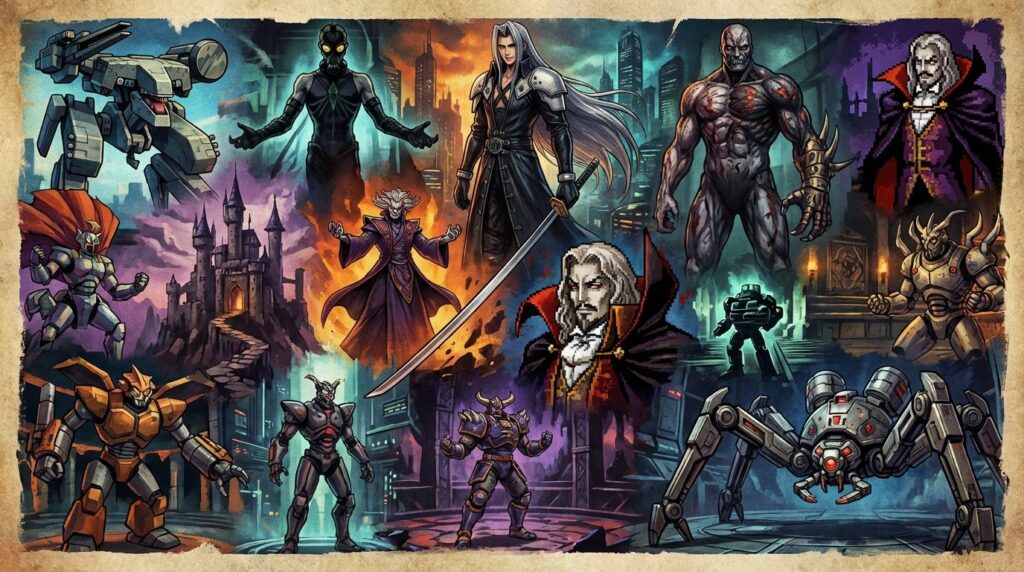
The original PlayStation defined a generation of gamers with its groundbreaking library of titles and unforgettable boss battles. As we look back from 2026, it’s clear that the PS1 era wasn’t just about polygons and nostalgia—it was about pushing the limits of imagination, storytelling, and challenge. The bosses from this era weren’t just obstacles; they were events, legends whispered about on playgrounds and discussed in magazines. They demanded patience, skill, and sometimes a little luck, but beating them was a rite of passage.
While modern gaming delivers jaw-dropping visuals and sprawling open worlds, there’s still something unmatched about the tension, creativity, and sheer spectacle of the PlayStation 1’s greatest boss fights. These encounters were more than just end-of-level hurdles—they were dramatic showdowns that left players breathless, and in some cases, haunted. From surreal horror to epic fantasy, these boss battles have stood the test of time, remaining etched in our memories long after the credits rolled.
So charge up your DualShock, steady those nerves, and dive into the 18 most iconic PlayStation 1 boss battles that, even in 2026, remain unrivaled in their impact, design, and legacy.
Final Fantasy VII – Sephiroth (Safer∙Sephiroth)
Story
Sephiroth’s transformation into Safer∙Sephiroth marks the dramatic climax of Final Fantasy VII, and it’s a showdown that’s become the stuff of legend. After a harrowing journey across continents and through Cloud’s tortured psyche, the party finally confronts the fallen hero-turned-god. Sephiroth’s motivations, driven by the otherworldly Jenova and his own warped sense of purpose, make this battle as much a clash of ideals as it is a fight to the death.
The confrontation is loaded with emotional baggage—the fate of the planet, the loss of Aerith, and Cloud’s struggle with his own identity all come to a head here. The stakes couldn’t be higher, and the narrative tension is palpable throughout the multi-stage boss encounter.
Gameplay
Safer∙Sephiroth is a multi-phase boss that tests every skill you’ve honed throughout the game. He wields devastating attacks like Super Nova, a cinematic move that’s as memorable for its apocalyptic spectacle as for its damage output. Players must carefully manage their party’s health, buffs, and Limit Breaks, all while dealing with status effects and the looming threat of a full-party wipe.
The battle rewards strategic preparation: mastering Materia combinations, timing summons, and knowing when to heal or attack are essential. The sheer scale of the fight, both in terms of mechanics and presentation, sets a standard few RPG finales have matched.
Why it’s on this list
Sephiroth’s final form isn’t just an iconic boss—it’s a cultural touchstone. The epic music (“One Winged Angel”), the stakes, and the emotional context make this showdown unforgettable. It’s a boss fight that transcends its era, still referenced and revered in gaming circles decades later.
Graphics and Sound
For its time, the visual presentation was jaw-dropping, with elaborate spell animations and a shifting, surreal battlefield. The orchestral score, including the now-legendary “One Winged Angel,” elevated the tension to operatic heights, setting a benchmark for video game music.
Legacy and Reception
Safer∙Sephiroth remains a gold standard for RPG bosses, inspiring countless homages and remakes. Even as new entries in the Final Fantasy series push technical boundaries, the original PS1 battle’s impact remains unmatched, and fans still compare every new villain to this ultimate showdown.
Metal Gear Solid – Psycho Mantis
Platform | PlayStation |
|---|---|
Publisher | Konami |
Genre | Stealth Action |
Release Date | 09/03/1998 |
Story
Psycho Mantis is one of the most memorable and mind-bending antagonists in Metal Gear Solid. As a member of FOXHOUND, his psychic abilities and twisted backstory make for a compelling and unsettling encounter. The narrative builds up his powers, and by the time Snake faces him, players are primed for something extraordinary.
The boss fight serves as a turning point in the game’s psychological warfare. Psycho Mantis doesn’t just confront Snake—he invades the player’s space, breaking the fourth wall in ways no other game had dared.
Gameplay
The Psycho Mantis battle is legendary for its meta tricks: he “reads your mind” by referencing your memory card saves, makes your controller vibrate, and even requires players to switch their controller to the second port to avoid his psychic attacks. This forced players out of their comfort zones and into a new layer of interactivity that was revolutionary in 1998.
Traditional attacks are almost useless until you figure out the secret, making the moment of revelation a true “aha!” experience. The fight blends stealth, action, and puzzle-solving into a seamless whole.
Why it’s on this list
No boss fight before or since has so thoroughly shattered the fourth wall and left players questioning the boundaries of their medium. Psycho Mantis is a perfect example of how creative design can elevate a boss battle to iconic status.
Graphics and Sound
Surreal visual effects—screen flickers, “HIDEO” error messages, and distorted voices—heighten the sense of unease. The sound design, including Psycho Mantis’s eerie voice and ambient music, amplifies the psychological tension.
Legacy and Reception
This boss fight is cited in countless retrospectives as one of the most innovative moments in gaming history. Developers and fans alike still reference Psycho Mantis as the gold standard for creative, boundary-pushing design.
Castlevania: Symphony of the Night – Dracula
Platform | PlayStation |
|---|---|
Publisher | Konami |
Genre | Action-Adventure |
Release Date | 03/20/1997 |
Story
Dracula, the eternal nemesis of the Belmont clan, returns in Castlevania: Symphony of the Night as the ultimate adversary. The gothic narrative, steeped in centuries of lore, leads Alucard—the son of Dracula—through a labyrinthine castle filled with monsters, only to face his father in a climactic showdown.
The emotional weight of father versus son, coupled with the knowledge that Dracula’s defeat may not be the end, gives this battle a somber, mythic quality.
Gameplay
Dracula’s fight is a multi-stage battle that forces players to use every weapon, spell, and transformation they’ve mastered. He shifts forms, hurls screen-filling attacks, and tests your reflexes and resource management. The fight is a true test of skill, rewarding mastery of the game’s deep mechanics.
The shifting phases require adaptability, as Dracula’s attacks become more intense and varied. Victory demands both patience and aggressive tactics.
Why it’s on this list
Dracula is the archetypal video game boss, and Symphony of the Night’s version is perhaps the most stylish and challenging incarnation. Few bosses embody the spirit of a series as completely as Dracula does in this game.
Graphics and Sound
The gothic art direction shines here, with lavish sprite work and haunting visual effects. The music, especially during the boss fight, is a pulse-pounding fusion of orchestral and gothic rock that perfectly underscores the high stakes.
Legacy and Reception
Dracula’s final battle is widely regarded as one of the best in the Metroidvania genre, setting a template that inspired decades of successors. It remains a highlight not just of Symphony of the Night, but of the entire Castlevania franchise.
Resident Evil 2 – William Birkin (Final Form)
Story
William Birkin’s transformation into a grotesque monster is the horrifying climax of Resident Evil 2. The scientist’s tragic backstory—infected by his own G-virus—adds a layer of tragic inevitability to the final confrontation. As Leon or Claire, the player must confront Birkin’s mutated, unstoppable form deep within the Raccoon City laboratory.
The tension is thick, amplified by the knowledge that Birkin’s monstrous rampage is the direct result of human hubris and corporate greed.
Gameplay
Birkin’s final form is a relentless, multi-phase boss that demands quick reflexes and careful ammo management. Limited resources heighten the challenge, forcing players to make every shot count. His sweeping attacks, unpredictable movements, and ever-changing forms keep players on edge.
The confined setting—a runaway train—limits movement and raises the stakes, turning the fight into a desperate struggle for survival.
Why it’s on this list
Birkin’s finale is a masterclass in survival horror: claustrophobic, terrifying, and relentless. It’s a boss fight that embodies everything that made Resident Evil 2 a genre-defining experience.
Graphics and Sound
The grotesque transformation sequences pushed PS1 hardware to its limits. Sound design is particularly unnerving, with Birkin’s guttural roars and the pounding train tracks ratcheting up the intensity.
Legacy and Reception
This boss battle is still referenced as a benchmark for horror games. Birkin’s tragic arc and monstrous design have become iconic, influencing countless games in the genre.
Crash Bandicoot – Dr. Neo Cortex
Story
Dr. Neo Cortex is the mad scientist behind Crash’s creation and the ultimate antagonist of the series’ first outing. After a wild journey through Wumpa Island’s perilous environments, Crash finally confronts his creator atop Cortex’s airship.
The narrative stakes are personal—Crash battles not just to stop Cortex’s evil plans, but also to prove his own worth.
Gameplay
The Cortex fight is a precision-focused battle, requiring players to dodge plasma blasts and return fire at just the right moment. Each phase ramps up the difficulty, demanding quick reflexes and pattern recognition.
Unlike many bosses, there’s no room for error—one false move and it’s back to the start of the sequence. This makes the fight both tense and highly rewarding.
Why it’s on this list
Cortex is one of the most recognizable villains in platforming history, and this fight’s blend of humor and challenge perfectly encapsulates the spirit of the Crash series.
Graphics and Sound
The vibrant, cartoonish visuals and bombastic sound effects make every phase of the fight memorable. Cortex’s maniacal laughter and the upbeat music create a uniquely energetic atmosphere.
Legacy and Reception
The showdown with Cortex set the template for future Crash games and remains a nostalgic favorite for platformer fans. It’s a boss fight that still brings cheers—and a few groans—decades later.
Tekken 3 – Ogre (True Ogre)
Story
Ogre, the ancient god of fighting, serves as the ominous final boss in Tekken 3’s story mode. When he transforms into the monstrous True Ogre, the stakes skyrocket. As the culmination of the King of Iron Fist Tournament, the showdown is a battle for the fate of the world—and for the honor of the Mishima family.
True Ogre’s transformation is a dramatic moment, signaling the final test for any would-be Tekken champion.
Gameplay
True Ogre is a brutal, unpredictable boss with a vast array of attacks—fiery breath, long-range claws, and devastating grapples. His size and reach dwarf every other character, and he punishes careless play mercilessly.
Players must master their chosen fighter’s moveset and learn Ogre’s patterns to stand a chance. The fight is a true test of both offensive and defensive prowess.
Why it’s on this list
True Ogre’s imposing presence, unique moves, and the sheer spectacle of the fight make him one of the most unforgettable bosses in fighting game history.
Graphics and Sound
True Ogre’s monstrous design pushes the PS1’s hardware, with detailed textures and impressive effects. The intense background music elevates the fight to mythic proportions.
Legacy and Reception
Tekken 3 remains a high point for the series, and its final boss battle is still widely referenced in discussions of classic fighting games. True Ogre’s legacy endures in the hearts of competitive and casual players alike.
Parasite Eve – Eve (Final Form)
Platform | PlayStation |
|---|---|
Publisher | Square |
Genre | Survival Horror RPG |
Release Date | 09/09/1998 |
Story
Parasite Eve’s story builds towards a genetic apocalypse, with Eve—the sentient mitochondria queen—at the center. The final battle is the culmination of a bizarre, horror-tinged tale that fuses science fiction with supernatural terror.
As Aya Brea, players face Eve’s ultimate form in a surreal, otherworldly setting, fighting to prevent humanity’s annihilation.
Gameplay
The Eve battle is a multi-stage, bullet-hell encounter that demands tactical movement and precise use of Parasite Energy abilities. Eve’s attacks are relentless, filling the screen with deadly projectiles and status effects.
Mastering the real-time combat system is essential, as players must dodge, heal, and strike at exactly the right moments to survive.
Why it’s on this list
Eve’s final form is a tour de force of horror and spectacle. Few boss battles combine narrative, atmosphere, and mechanics as seamlessly, making this fight a standout even decades later.
Graphics and Sound
The battle’s surreal visuals—shifting backgrounds, grotesque mutations, and dazzling effects—are unforgettable. The soundtrack, a haunting blend of opera and techno, perfectly matches the fight’s otherworldly tone.
Legacy and Reception
Parasite Eve’s final boss is often cited as one of the most creative and intense battles in JRPG history. Its blend of horror and action remains influential even in 2026.
Spyro the Dragon – Gnasty Gnorc
Story
Gnasty Gnorc is the bumbling yet formidable villain of Spyro’s first adventure. After turning the dragon population to crystal, he becomes the target of Spyro’s fiery quest for justice.
The narrative is lighthearted, but facing Gnasty in his lair brings a fitting sense of finality and fun to the game’s whimsical world.
Gameplay
Gnasty’s boss fight is a chase sequence, requiring players to use all the skills they’ve learned—charging, flaming, and platforming. The fight is fast-paced, with tricky jumps and narrow escapes.
Timing and precision are key, as missing a beat can send players back to the start of the sequence. It’s a test of both reflexes and memory.
Why it’s on this list
Gnasty Gnorc is a classic villain, and his boss fight is the perfect blend of challenge and charm. It’s a finale that’s both satisfying and accessible, making it beloved by fans of all ages.
Graphics and Sound
The colorful environments, expressive character animations, and catchy music make this battle pop. Gnasty’s taunts and the frantic chase theme add to the excitement.
Legacy and Reception
Spyro’s battle with Gnasty Gnorc set the tone for future entries and cemented the series as a platforming staple. The fight remains a nostalgic highlight for PS1 fans.
Silent Hill – Incubator/Incubus
Platform | PlayStation |
|---|---|
Publisher | Konami |
Genre | Survival Horror |
Release Date | 01/31/1999 |
Story
The psychological horror of Silent Hill crescendos in a surreal, nightmarish battle against the Incubator or Incubus, depending on player choices. This boss represents the culmination of Harry Mason’s desperate search for his daughter and the twisted secrets of Silent Hill.
The ambiguous, disturbing narrative makes the final boss encounter one of the most unsettling in gaming history.
Gameplay
The Incubator/Incubus fight is a tense, resource-draining battle. Players must dodge powerful ranged attacks while managing limited healing supplies and ammunition. The eerie setting and unpredictable attack patterns make every second fraught with danger.
Survival hinges on quick reflexes and careful preparation, as well as the choices made throughout the game.
Why it’s on this list
No boss battle captures the feeling of existential dread quite like Silent Hill’s finale. It’s a fight that lingers in the mind, haunting players long after the credits roll.
Graphics and Sound
The oppressive fog, grotesque monster design, and unsettling music create a uniquely nightmarish atmosphere. The sound design, from distorted cries to the pulse of industrial noise, elevates the horror.
Legacy and Reception
Silent Hill’s final boss is a landmark in psychological horror, influencing everything from Resident Evil to modern indie hits. The encounter is still studied for its atmosphere and storytelling.
Tomb Raider – Atlantean Mutant (Final Boss)
Story
Lara Croft’s globe-trotting adventure culminates in a battle with the Atlantean Mutant, a grotesque creature created by the antagonist Natla. The confrontation takes place in the heart of a crumbling ancient temple, with the fate of the world hanging in the balance.
The narrative stakes are high—Lara faces not just a monstrous foe, but the embodiment of the Atlantean civilization’s darkest secrets.
Gameplay
The Atlantean Mutant is a multi-stage boss that tests players’ mastery of Tomb Raider’s movement and combat systems. Its erratic behavior, powerful attacks, and the collapsing environment make for a nerve-wracking fight.
Dodging, shooting, and timing jumps are all essential, as the mutant relentlessly pursues Lara through hazardous terrain.
Why it’s on this list
The Atlantean Mutant is a perfect embodiment of Tomb Raider’s mix of action and exploration. The fight’s scale and intensity set a standard for cinematic boss battles.
Graphics and Sound
The dramatic setting, detailed monster design, and thunderous sound effects create a memorable, high-stakes atmosphere. The music swells as the fight reaches its climax, adding to the tension.
Legacy and Reception
Tomb Raider’s final boss remains a highlight of the series, remembered for its creativity and challenge. It helped establish Lara Croft as one of gaming’s most iconic heroes.
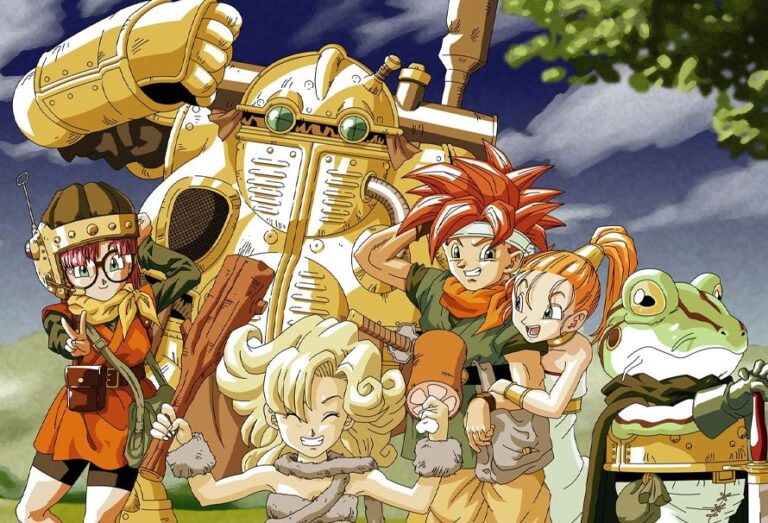
Chrono Cross – Time Devourer
Platform | PlayStation |
|---|---|
Publisher | Square |
Genre | Turn-Based RPG |
Release Date | 11/18/1999 |
Story
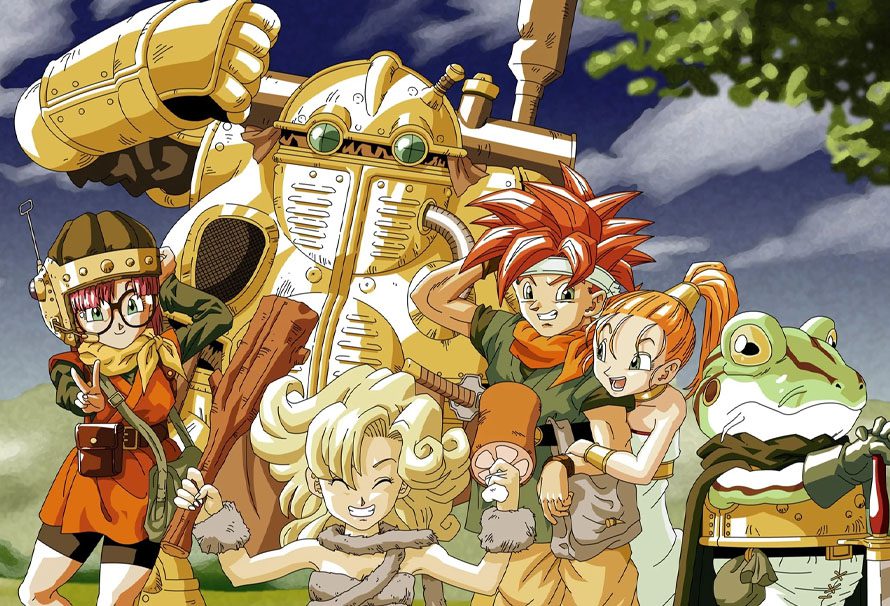
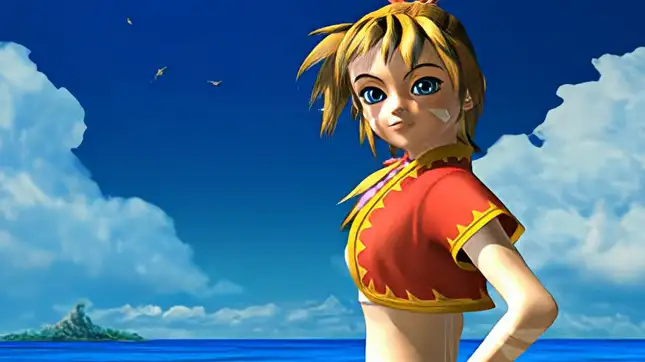
Chrono Cross’s epic narrative of parallel worlds and cosmic stakes comes to a head with the Time Devourer—a being that threatens to consume all timelines. The final confrontation is loaded with emotional resonance, as Serge and his allies fight not just for their world, but for the fate of all reality.
The story’s twists and turns add weight to the encounter, making every moment feel consequential.
Gameplay
The Time Devourer is a complex, multi-form boss that demands mastery of the game’s unique Element system. Players must carefully manage their party’s abilities, exploit color affinities, and execute the “Chrono Cross” at the right moment for the true ending.
The encounter is as much a puzzle as a battle, rewarding players who pay attention to narrative clues and combat strategies.
Why it’s on this list
The Time Devourer is a fittingly cosmic conclusion to Chrono Cross’s ambitious story. Its high-concept mechanics and narrative payoff make it one of the most cerebral and satisfying boss fights on PS1.
Graphics and Sound
The battle’s surreal visuals—otherworldly landscapes and swirling energy—are striking. The soundtrack, especially the haunting final theme, is among the best in RPG history.
Legacy and Reception
Chrono Cross’s final boss is still discussed for its complexity and depth. The fight’s blend of narrative and gameplay innovation helped cement the game’s cult classic status.
Vagrant Story – Guildenstern
Platform | PlayStation |
|---|---|
Publisher | Square |
Genre | Action RPG |
Release Date | 05/15/2000 |
Story
Vagrant Story’s labyrinthine plot leads Ashley Riot to a fateful confrontation with Sydney Losstarot’s nemesis, Guildenstern. The narrative is heavy with intrigue, betrayal, and philosophical questions about power and destiny.
Guildenstern, wielding the dark powers of Lea Monde, becomes a monstrous avatar of ambition and corruption, making this final battle a true test of will and skill.
Gameplay
The fight against Guildenstern is a tactical, high-stakes duel. Players must exploit weapon and armor affinities, time combos, and manage risk points. The boss’s wide array of magical and physical attacks challenges players to stay agile and think several moves ahead.
The encounter is as much about resource management and strategy as reflexes, making every victory hard-earned.
Why it’s on this list
Guildenstern’s battle is the culmination of a deeply immersive narrative and one of the most challenging turn-based/real-time hybrids on the PS1. Its depth and intensity are still unmatched.
Graphics and Sound
Vagrant Story’s gothic art style and cinematic camera work shine during this fight. The haunting score and atmospheric effects elevate the tension to another level.
Legacy and Reception
Guildenstern’s boss fight is often cited as a high point in RPG storytelling and design. The encounter’s depth has influenced a generation of tactical RPGs and action games.
Mega Man X4 – Sigma (Final Form)
Story
Sigma’s final form in Mega Man X4 is the ultimate test for X and Zero. After a series of betrayals and battles against the Repliforce, the corrupted Sigma emerges as a towering, monstrous threat determined to eradicate humanity.
The personal stakes for both heroes are high, with Sigma’s machinations threatening everything they’ve fought to protect.
Gameplay
Sigma’s boss fight is a blistering, multi-stage gauntlet filled with devastating attacks and tight platforming sequences. Each phase tests a different aspect of the player’s skills, from precise dodging to exploiting boss weaknesses.
Resource management, split-second timing, and mastery of weapon systems are all essential to survive Sigma’s relentless onslaught.
Why it’s on this list
Sigma is one of gaming’s greatest recurring villains, and his X4 incarnation is a highlight of the series. The fight’s intensity, spectacle, and challenge are unforgettable.
Graphics and Sound
The vibrant sprite work and energetic animations make Sigma’s transformations a visual treat. The pulse-pounding music keeps adrenaline levels high throughout the battle.
Legacy and Reception
Mega Man X4’s final fight with Sigma is still considered one of the franchise’s best, inspiring speedrunners and fans alike. Its reputation endures as one of the toughest and most memorable PS1 boss battles.
Dino Crisis – T-Rex
Platform | Playstation |
|---|---|
Publisher | Capcom |
Genre | Survival Horror |
Release Date | 07/01/1999 |
Story
Dino Crisis fuses survival horror with Jurassic terror, and the T-Rex is the ultimate predator haunting Regina’s every step. The final face-off with this relentless beast is the culmination of hours of tension and close calls.
The narrative has built up the T-Rex as an unstoppable force, making the final confrontation a true adrenaline rush.
Gameplay
The T-Rex battle is a frantic, high-stakes encounter. Players must use environmental traps, heavy weaponry, and clever movement to survive. The fight is as much about evasion as offense, with the T-Rex’s sheer power making every mistake costly.
Resource scarcity and tight spaces add to the feeling of desperation, making victory especially satisfying.
Why it’s on this list
The T-Rex is one of the most iconic monsters in PS1 history. Its boss battle is a spectacle of fear, action, and catharsis.
Graphics and Sound
The detailed dinosaur animations and roars push the PS1 to its limits. The sound of the T-Rex’s footsteps and snarls keep players on edge, while the music ramps up the tension to near-unbearable levels.
Legacy and Reception
Dino Crisis’s T-Rex battle has cemented itself as a classic, often remembered as one of the best monster boss fights of its generation.
Legend of Dragoon – Melbu Frahma
Platform | PlayStation |
|---|---|
Publisher | Sony Computer Entertainment |
Genre | Turn-Based RPG |
Release Date | 12/02/1999 |
Story
The Legend of Dragoon’s epic fantasy narrative builds to a titanic clash with Melbu Frahma, the ancient Wingly emperor. His desire for immortality and domination forces Dart and his allies into a desperate battle to save the world.
Every story thread—betrayals, lost loves, and personal sacrifices—ties together in this final showdown.
Gameplay
Melbu Frahma’s battle is a multi-phase gauntlet, with each form more dangerous than the last. Players must master the game’s unique “Addition” combat system, time attacks perfectly, and manage powerful Dragoon transformations.
The sheer length and intensity of the fight make it a test of endurance as well as skill.
Why it’s on this list
Melbu Frahma is the ultimate JRPG villain: mysterious, cruel, and endlessly powerful. His final boss battle is a marathon that rewards both strategy and determination.
Graphics and Sound
The elaborate spell effects, shifting environments, and orchestral soundtrack make this fight a feast for the senses. Melbu’s transformations are particularly impressive for the PS1 hardware.
Legacy and Reception
Legend of Dragoon’s final boss is still beloved by RPG fans, and the battle’s scale and drama remain unmatched in the genre’s history.
Suikoden II – Luca Blight
Platform | PlayStation |
|---|---|
Publisher | Konami |
Genre | Turn-Based RPG |
Release Date | 12/17/1998 |
Story
Luca Blight, the “Mad Prince,” is the most feared villain in Suikoden II—his cruelty and ambition drive the game’s darkest moments. The battle against him is not just the end of a war, but the exorcism of a nation’s nightmare.
His sheer brutality and the devastation he leaves in his wake make this fight deeply personal for the player’s army.
Gameplay
The confrontation with Luca Blight is a multi-part epic, requiring the player to use several parties in succession before the final duel. Each phase is grueling, testing both strategic planning and combat skills.
Luca’s resilience and unpredictability make him a terrifying adversary, demanding the player’s best characters and tactics.
Why it’s on this list
No villain embodies pure evil like Luca Blight, and his boss battle is the perfect payoff for hours of narrative buildup. Defeating him feels less like victory and more like survival.
Graphics and Sound
The battle is accompanied by a somber, intense soundtrack and dramatic sprites. The rain-soaked battlefield and Luca’s chilling dialogue elevate the fight to legendary status.
Legacy and Reception
Luca Blight’s boss fight is consistently ranked among the greatest in RPG history. Its scale, emotion, and sense of closure are still unmatched.
Alundra – Melzas
Platform | PlayStation |
|---|---|
Publisher | Working Designs |
Genre | Action RPG |
Release Date | 12/31/1997 |
Story
Alundra’s dark fantasy tale culminates in a battle with Melzas, the ancient demon tormenting the dreams of the villagers. The story’s themes of faith, suffering, and hope all converge in this final confrontation.
Melzas, hidden beneath a façade of divinity, reveals his true monstrous form in a fight that tests both Alundra’s strength and resolve.
Gameplay
Melzas’s battle is a multi-phase puzzle and action gauntlet, demanding mastery of the game’s Zelda-like mechanics. Players must dodge, solve environmental puzzles, and exploit Melzas’s weaknesses across multiple forms.
The fight is a showcase of everything learned throughout the game, blending challenge and creativity.
Why it’s on this list
Melzas is a uniquely sinister villain, and his boss fight is a perfect capstone to Alundra’s challenging adventure. Its mix of action and puzzle-solving remains fresh even in 2026.
Graphics and Sound
The atmospheric pixel art and haunting soundscape create a sense of epic finality. Melzas’s transformations and attack patterns are visually striking and memorable.
Legacy and Reception
Alundra’s final boss is a cult favorite, earning praise for its design and narrative impact. The fight’s blend of action, puzzle, and story has influenced countless indie games since.
Wild Arms – Mother
Platform | PlayStation |
|---|---|
Publisher | Media.Vision |
Genre | Turn-Based RPG |
Release Date | 12/20/1996 |
Story
Wild Arms weaves a tale of heroes battling the ancient evil known as Mother, a Lovecraftian entity threatening the Wild West-inspired world of Filgaia. The final battle is a desperate bid to prevent Mother’s resurrection and the world’s destruction.
The narrative’s mix of western tropes and sci-fi mystique adds a unique flavor to the showdown.
Gameplay
Mother’s boss fight is a challenging, multi-form encounter that tests the player’s mastery of the game’s turn-based combat and resource management. Her attacks are devastating, requiring careful planning and the use of each party member’s unique abilities.
The fight’s escalating difficulty and narrative-driven twists keep players engaged to the very end.
Why it’s on this list
Mother is one of the most memorable RPG villains of the PS1 era. The scale, atmosphere, and tension of her final battle are still talked about with reverence by fans.
Graphics and Sound
The battle’s visual effects—shifting backgrounds, monstrous transformations—are dramatic. The soundtrack, blending wild-west and sci-fi elements, is unforgettable.
Legacy and Reception
Wild Arms’s final boss is a cult classic, influencing both JRPGs and western-themed games. Its blend of grit and grandeur still holds up in 2026.
As we look back from the vantage point of 2026, it’s clear that the PlayStation 1’s iconic boss battles have lost none of their power. These encounters defined not just their games, but entire genres, pushing players to their limits and leaving indelible marks on gaming culture. Whether you faced down cosmic horrors, megalomaniacal villains, or unstoppable monsters, these boss fights remain unmatched in their creativity, challenge, and emotional impact.
For many, these battles are more than just memories—they’re milestones. They taught us perseverance, rewarded our skill, and reminded us why we fell in love with gaming in the first place. The PlayStation 1 may be a relic of the past, but its greatest boss fights still stand tall, casting long shadows over everything that’s come since. If you haven’t revisited these legends, now is the perfect time to relive the moments that made PlayStation—and gaming itself—truly iconic.