
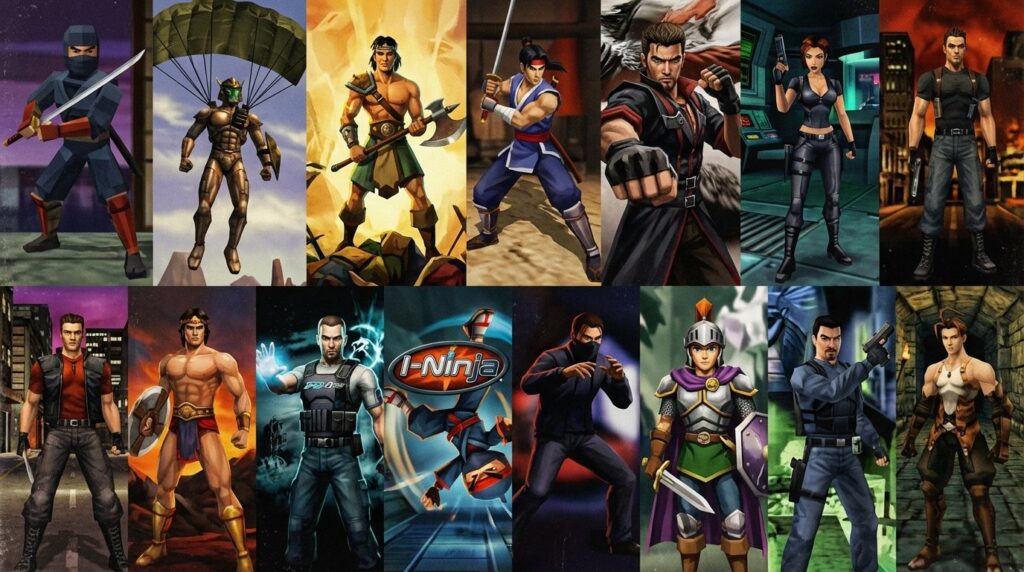
The PlayStation 1 and PlayStation 2 eras were absolute goldmines for action games, giving birth to franchises and gameplay innovations that still echo through the industry in 2026. But with so many blockbusters and iconic series, plenty of amazing action games slipped through the cracks, overshadowed by the likes of Metal Gear Solid, Devil May Cry, and God of War. Some of these hidden gems were cult classics, others were ahead of their time, and a few simply got lost in the shuffle of bigger releases. If you’re a gamer hungry for fresh thrills or nostalgic for the days of analog sticks and memory cards, there’s a treasure trove of forgotten PS1 and PS2 action titles just waiting to be rediscovered.
Whether you’re a fan of explosive shootouts, stylish swordplay, or heart-pounding platforming, this list dives deep into the vaults to spotlight 14 forgotten action games that deserve a second chance in 2026. From gritty cyberpunk adventures to wild genre mashups, these games delivered the kind of adrenaline-fueled action and creative gameplay that modern titles sometimes struggle to match. Dust off your old consoles or fire up that emulator—these lost gems are primed for a comeback!
Syphon Filter
Story
Released in 1999, Syphon Filter dropped players into a high-stakes world of counter-terrorism as special agent Gabe Logan. The game’s narrative unfolded across globe-trotting locations, with Logan racing against time to stop a deadly viral outbreak engineered by a shadowy terrorist organization. The story mixed espionage intrigue, double-crosses, and techno-thriller suspense, keeping players hooked with unexpected twists.
Syphon Filter’s cutscenes and in-game dialogue leaned heavily into the ‘90s action movie vibe, giving the storyline a sense of urgency and cinematic flair. Characters like Lian Xing and Mara Aramov added layers to the narrative, making it more than just another shoot-‘em-up. The blend of bio-terror and government conspiracy themes helped set Syphon Filter apart from contemporaries.
Gameplay
Syphon Filter’s gameplay was a stylish blend of third-person shooting, stealth, and gadget-based puzzles. Players navigated diverse environments ranging from city streets to underground labs, using a substantial arsenal of weapons and high-tech tools like night vision goggles and tasers. The controls offered a unique take on movement and aiming for the era, with lock-on targeting and strafing that rewarded both precision and quick reflexes.
The level design mixed open action with stealth segments, giving players freedom to approach objectives in various ways. The infamous taser—capable of shocking enemies until they burst into flames—became a fan-favorite tool and an enduring meme. Player choice, combined with challenging AI and creative mission objectives, kept the gameplay fresh throughout the campaign.
Why it’s on this list
Syphon Filter is on this list because it was a pioneer of PS1-era action, blending genres before hybrid gameplay became standard. While it spawned sequels and even a PSP revival, the original has been largely forgotten amid the rise of bigger franchises. In 2026, its innovative mechanics and gripping story are more than worth a fresh look.
Graphics and Sound
By late-‘90s standards, Syphon Filter pushed the PS1 hardware with detailed environments and dynamic lighting effects. Character models were a little blocky, but the game’s atmospheric sound design—gunfire, alarms, radio chatter—created a tense, immersive experience. The score ramped up the action during shootouts and boss battles, further enhancing the cinematic feel.
Legacy and Reception
Syphon Filter was critically acclaimed at launch, praised for its gameplay depth and narrative ambition. It’s often cited as a precursor to more modern stealth-action games, but its legacy has faded as the genre evolved. For gamers willing to forgive some dated visuals, Syphon Filter remains a milestone in the history of action games and a must-play for fans of hard-hitting, story-driven shooters.
The Bouncer
Story
The Bouncer launched as an early PS2 title in 2000, starring Sion Barzahd and his crew of nightclub bouncers pulled into a dangerous conspiracy after a mysterious woman named Dominique is kidnapped. The story takes cues from anime and Hong Kong cinema, with over-the-top villains, cyber-enhanced mercenaries, and a city ruled by a sinister megacorporation.
Narrative choices impacted character development and which playable hero took center stage. The cinematic, cutscene-heavy storytelling was ambitious for its time, blending real-time action with flashy, movie-like sequences that made every chapter feel like a blockbuster.
Gameplay
The Bouncer fused beat-‘em-up brawling with RPG elements, allowing players to pick between three characters, each with unique fighting styles and special moves. Combat was fast, chaotic, and accessible, with combos, throws, and crowd-control maneuvers that felt satisfying and impactful. Between stages, players earned points to upgrade stats and unlock new abilities.
Levels played out like interactive action movies, with branching paths and the chance to replay scenes from different perspectives. While the game was relatively short, its replayability and party brawler feel made it perfect for quick, adrenaline-fueled sessions with friends.
Why it’s on this list
The Bouncer is a textbook example of a game that was hyped at launch but quickly faded into obscurity. Despite its flaws—namely, a brief campaign and simplistic mechanics—it embodies the experimental spirit of early PS2 action games. In 2026, its unique mix of storytelling, style, and brawling action feels nostalgic and surprisingly fresh.
Graphics and Sound
For a launch title, The Bouncer was visually stunning, with detailed character models, dynamic facial animations, and environments that showed off the PS2’s power. The soundtrack pulsed with techno beats and dramatic orchestration, while voice acting—though cheesy by today’s standards—added to the game’s charm.
Legacy and Reception
Initial reviews were mixed, praising the visuals and atmosphere but criticizing the short length and limited depth. Over time, The Bouncer has become a cult curiosity, remembered fondly by those who experienced its wild narrative and flashy fights. It’s a relic of a time when Square was willing to take risks outside the RPG genre, and it deserves another round in the spotlight.
WinBack: Covert Operations
Story
WinBack: Covert Operations, released in 1999 on the PS2, follows Jean-Luc Cougar, a secret agent tasked with infiltrating a laser-equipped military complex seized by terrorists. The story unfolds in classic action-thriller fashion, with betrayals, time-sensitive objectives, and a race to prevent mass destruction.
The narrative kept stakes high, putting the player in a constant state of urgency as Jean-Luc navigates through a labyrinthine facility. Characters are introduced throughout the mission, each adding intrigue and raising the tension as the plot thickens.
Gameplay
WinBack’s gameplay is best remembered for pioneering the cover-based shooting system. Players could snap to walls, peek around corners, and strategically take out enemies, a mechanic that would later become standard in games like Gears of War. The blend of stealth, action, and tactical gunfights gave WinBack a unique identity.
Levels required quick thinking and planning, as alarms could trigger reinforcements and time limits forced players to move efficiently. The arsenal included pistols, shotguns, and high-tech gadgets, making each encounter a test of both aim and resourcefulness.
Why it’s on this list
WinBack is often overlooked despite inventing gameplay mechanics that shaped the third-person shooter genre. Its influence is undeniable, but the game itself has drifted into obscurity, overshadowed by later, more polished titles. In 2026, it’s worth revisiting to experience the roots of modern cover shooters.
Graphics and Sound
The visuals were functional, with crisp environments and character models that got the job done, if not spectacularly. The sound design amped up the tension, with alarms, gunfire, and a moody soundtrack underscoring the action. Voice work was minimal but effective in conveying the stakes.
Legacy and Reception
WinBack received solid reviews but never attained blockbuster status. Its true legacy lies in its innovations, which inspired generations of shooters. For action fans and history buffs alike, playing WinBack in 2026 is like opening a time capsule to see where so many modern gameplay systems began.
Extermination
Story
Extermination, released in 2001, is a survival action game set in an Antarctic research base overrun by a mysterious, mutating virus. Players control Marine Dennis Riley as he unravels the origins of the outbreak and battles grotesque bio-weapons. The story is a mix of military thriller and sci-fi horror, reminiscent of classic films like The Thing.
Through in-game documents and radio chatter, Extermination weaves a tense tale of isolation, desperation, and betrayal. The plot’s twists and atmosphere keep the player on edge, never knowing what lurks around the next freezing corridor.
Gameplay
Extermination blends classic survival horror with third-person shooting, resource management, and environmental puzzles. Players must scavenge for ammo, customize weapons, and manage infection levels as they fight through the base. The game’s signature mechanic is the infection system—taking damage can infect Dennis, forcing players to find decontamination showers or risk death.
Combat is tense, with limited resources and persistent threats, while exploration rewards players with upgrades and narrative clues. The combination of action, survival, and light RPG elements provides a satisfying, challenging experience.
Why it’s on this list
Despite being a launch window title for the PS2, Extermination faded into obscurity as Resident Evil and Silent Hill dominated the genre. Its innovative infection mechanic and blend of action and horror make it a fascinating relic for fans seeking a fresh survival challenge in 2026.
Graphics and Sound
Extermination made strong use of atmospheric lighting, chilly environments, and detailed monster designs. While not the most technically impressive, its visuals created a constant sense of dread. The soundtrack and sound effects—creaking metal, distant howls, and tense music—ramped up the suspense.
Legacy and Reception
Extermination received mixed reviews, overshadowed by bigger horror franchises. Yet it’s remembered by fans for its unique mechanics and chilling setting. As a forgotten precursor to modern survival action games, it’s well worth another look for anyone craving retro scares and innovative gameplay.
Urban Reign
Story
Urban Reign, released in 2005, drops players into the gritty underworld of Green Harbor, a city torn apart by gang warfare. Players control Brad Hawk, a street fighter hired to protect a gang leader and unravel a criminal conspiracy. The story is pure action-movie cheese—betrayals, double-crosses, and non-stop brawls.
The narrative unfolds through brief cutscenes and dialogue exchanges, serving primarily as a backdrop for the game’s relentless, tournament-style street fighting. Despite its simplicity, the story provides plenty of excuses for over-the-top action and a parade of memorable bosses.
Gameplay
Urban Reign is a 3D beat-‘em-up focused on fast, brutal combat and tag-team mechanics. Players can pick up and use environmental weapons, unleash devastating combos, and team up with a second fighter for coordinated attacks. The game boasts a huge roster of playable characters, each with unique moves and fighting styles.
With over 100 missions and a steep difficulty curve, Urban Reign offers serious challenge and replayability. Multiplayer versus and co-op modes add even more value, making it perfect for couch competition. The crisp controls and responsive combat set it apart from other brawlers of the era.
Why it’s on this list
Urban Reign never got the attention it deserved, lost in the shuffle of bigger action titles. Its deep combat system and multiplayer options make it a standout for fans of the genre. In 2026, the game remains a blast, especially for those who crave arcade-style mayhem with friends.
Graphics and Sound
Visually, Urban Reign delivered detailed character models, gritty backdrops, and fluid animations. The soundtrack featured hard-hitting hip-hop beats and intense fight music that kept the adrenaline pumping. Punches and kicks landed with satisfying impact, enhancing the visceral feel of every fight.
Legacy and Reception
Urban Reign was a critical sleeper, earning praise for its deep mechanics but flying under the radar commercially. It’s now a cult favorite among beat-‘em-up aficionados. For anyone seeking a forgotten gem with serious fighting chops, Urban Reign is a must-play reminder of the PS2’s wild experimental era.
Mark of Kri
Story
Mark of Kri, released in 2002, tells the tale of Rau Utu, a warrior tasked with protecting ancient secrets from evil sorcerers. The story is steeped in Polynesian mythology, blending dark fantasy with a coming-of-age quest as Rau faces betrayal, loss, and the burden of destiny.
Cutscenes are styled after animated storybooks, giving the narrative a unique visual flair. The game’s world is rich with lore, and Rau’s journey is both epic and personal, making the story memorable even years later.
Gameplay
Mark of Kri’s gameplay is a creative mix of stealth and sword-fighting action. Players use a unique right-stick targeting system to lock onto multiple enemies and perform combo attacks. Stealth is encouraged, with the ability to scout ahead using Rau’s pet bird, Kuzo, and silently dispatch foes before launching into open combat.
Combat is fluid and cinematic, rewarding timing and strategy over button-mashing. Level design encourages exploration and tactical play, with a variety of environments and enemy types to keep things engaging from start to finish.
Why it’s on this list
Mark of Kri was an ambitious experiment in both gameplay and storytelling. Despite critical acclaim, it never achieved mainstream popularity and has become a hidden gem. In 2026, its innovative controls and art direction are still impressive, making it a perfect pick for players seeking something off the beaten path.
Graphics and Sound
The game’s art style is gorgeous, blending hand-drawn textures with stylized 3D models. Animation is smooth, and environments are colorful and atmospheric. The music draws on Polynesian influences, while voice acting and sound effects give every action emotional weight.
Legacy and Reception
Critics hailed Mark of Kri for its originality and depth, but it struggled commercially. It spawned a lesser-known sequel, but the franchise faded away. Today, it stands as a testament to the creative risks of the PS2 era, and revisiting it is a reminder of just how bold and inventive action games can be.
Ghosthunter
Story
Ghosthunter, released in 2003, casts you as detective Lazarus Jones, who accidentally unleashes a horde of vengeful spirits during a routine investigation. To set things right, he teams up with the ghost of a murdered girl and a mysterious AI, tracking down supernatural threats across haunted prisons, swamps, and abandoned mansions.
The story blends horror, humor, and detective drama, balancing scares with a pulpy, comic-book tone. Cutscenes and in-game dialogue flesh out a world where technology and the supernatural collide, making for a memorable and surprisingly emotional narrative.
Gameplay
Ghosthunter is a third-person action game with a twist: capturing ghosts is just as important as blasting them. Players use specialized weapons and gadgets to weaken, ensnare, and imprison spirits. Combat is fast and frantic, but the ghost-catching mini-games add a layer of strategy and timing.
Exploration and puzzle-solving break up the action, while the game’s structure encourages players to hunt for secrets and upgrades. Boss battles are intense and often require creative use of your ghost-hunting arsenal, keeping the gameplay from ever feeling stale.
Why it’s on this list
Ghosthunter was overshadowed by bigger horror and action franchises, but its inventive premise and fun mechanics make it a standout. In 2026, it’s a fresh blend of action, horror, and sci-fi that deserves a second look, especially for fans of supernatural adventures.
Graphics and Sound
For its time, Ghosthunter boasted impressive visuals, with detailed environments and eerie lighting effects. The design of the ghosts was especially creative, ranging from tragic spirits to grotesque monsters. The soundtrack oscillated between creepy ambient tracks and pulse-pounding action music, while solid voice acting brought characters to life.
Legacy and Reception
Ghosthunter received positive reviews for its style and gameplay, but poor marketing meant it never became a household name. Today, it’s remembered fondly by genre fans as a lost classic. For anyone looking for a forgotten PS2 action game with a paranormal twist, Ghosthunter is a must-play.
Stolen
Story
Stolen, released in 2005, puts players in the shoes of master thief Anya Romanov as she takes on high-tech heists in a futuristic metropolis. The story is a sleek, cyber-noir caper, with Anya navigating corporate intrigue, corrupt cops, and rival criminals as she pulls off the ultimate score.
Narrative is delivered through in-game comms and stylish cutscenes, creating a slick atmosphere reminiscent of classic heist films. Anya’s character and the world’s tech-heavy setting give the story a cool, modern edge.
Gameplay
Stolen is a stealth-action game emphasizing sneaking over combat. Players use an array of gadgets—thermal vision, hacking tools, and grappling hooks—to bypass security, disable cameras, and outwit guards. The game penalizes open conflict, rewarding careful planning and silent execution.
Levels are sprawling and non-linear, allowing multiple approaches to each objective. Mastering the tools and learning guard patterns provides a rewarding challenge, making every successful theft feel like an accomplishment.
Why it’s on this list
Stolen was released during a flood of stealth games but never got the recognition it deserved. Its unique gadgets and high-tech setting make it stand out among its peers. In 2026, it’s a hidden gem for players who enjoy cerebral action and high-stakes sneaking.
Graphics and Sound
Visually, Stolen captures the neon-lit, rain-soaked vibe of a cyberpunk city. Character models and environments are stylish, and the lighting effects set the perfect mood. The soundtrack is a mix of moody electronic tunes and tense, stealthy beats, while subtle sound cues alert the player to danger.
Legacy and Reception
Critics were mixed at launch, citing some rough edges in controls and AI, but fans appreciated the game’s ambition and aesthetic. Over time, Stolen has become a cult favorite, especially among stealth aficionados. It’s a prime candidate for rediscovery by players in search of something different.
Psi-Ops: The Mindgate Conspiracy
Story
Psi-Ops: The Mindgate Conspiracy, released in 2004, follows Nick Scryer, a soldier with amnesia and psychic abilities, as he infiltrates a rogue terrorist organization. The narrative is packed with twists, conspiracies, and psychic showdowns, creating a globe-trotting action thriller.
As Nick regains his memories, he uncovers a web of betrayal and supernatural threats. The story’s blend of military action and sci-fi keeps the stakes high and the momentum rolling, with memorable villains and a sense of escalating danger.
Gameplay
Psi-Ops is an action shooter with a difference—Nick’s psychic powers are as crucial as his arsenal of firearms. Players can use telekinesis to throw enemies, set objects on fire with pyrokinesis, possess minds, and unleash blasts of psychic energy. The gameplay encourages creative problem-solving and over-the-top action.
Combat is dynamic, with powers interacting with the environment and creating opportunities for spectacular takedowns. The game’s physics engine lets players experiment and improvise, making every encounter unique. Puzzles and boss fights make full use of Nick’s abilities, keeping the gameplay varied and exciting.
Why it’s on this list
Psi-Ops was celebrated for its innovative mechanics but never achieved mainstream success. Its blend of psychic powers and action remains unmatched, and in 2026, it still feels ahead of its time. For anyone craving superpowered action with a twist, Psi-Ops deserves a comeback.
Graphics and Sound
Psi-Ops showcased detailed environments, impressive physics effects, and smooth animation. The visual effects for psychic powers were especially satisfying. The soundtrack delivered the right mix of suspense and adrenaline, while solid voice acting helped bring the story to life.
Legacy and Reception
Though critically acclaimed, Psi-Ops didn’t sell as well as it deserved. Its innovative gameplay influenced later titles, and it’s since become a cult classic. For those who missed it or want to relive the psychic carnage, there’s never been a better time to revisit Psi-Ops.
Drakan: The Ancients' Gates
Story
Drakan: The Ancients’ Gates, released in 2002, casts players as Rynn, a warrior seeking to free her kidnapped brother with the help of her dragon companion, Arokh. The story is an epic fantasy adventure, filled with ancient prophecies, evil sorcerers, and a war for the fate of the world.
Narrative unfolds through lush cutscenes and in-game dialogue, immersing players in a world of magic, betrayal, and heroism. The bond between Rynn and Arokh gives the story emotional weight and sets it apart from other fantasy tales.
Gameplay
Drakan combines third-person swordplay with aerial dragon-riding combat. Players can explore vast landscapes on foot or soar through the skies, switching seamlessly between Rynn and Arokh. Ground combat features swords, bows, and magic, while dragon battles unleash devastating firepower against armies and monsters.
Exploration is a major focus, with hidden secrets, side quests, and environmental puzzles. The mix of ground and air gameplay keeps things fresh, and the game’s scale was impressive for its era.
Why it’s on this list
Drakan was overshadowed by bigger RPGs and action games, but its dragon-riding mechanics and epic adventure make it stand out. In 2026, its unique gameplay and rich fantasy world are still a thrill to experience, especially for fans of open-ended action.
Graphics and Sound
Drakan pushed the PS2 hardware with expansive environments and detailed character models. The dragons are particularly well-animated, and the world is full of vibrant colors and atmospheric effects. The orchestral soundtrack and environmental sounds bring the fantasy setting to life.
Legacy and Reception
While it was praised for its ambition and gameplay, Drakan didn’t achieve blockbuster status. Over time, it’s become a beloved cult classic. For anyone who dreams of soaring on dragonback, Drakan is a forgotten gem that delivers on its promise of adventure.
Run Like Hell
Story
Run Like Hell, released in 2002, is a sci-fi action thriller set on a deep space mining station overrun by deadly aliens. Players step into the shoes of Nick Conner, a former war hero racing to survive and uncover the truth behind the invasion.
The narrative pays homage to classic sci-fi horror, with tense encounters, betrayals, and a desperate fight for survival. Cinematic cutscenes and a star-studded voice cast (including Lance Henriksen) elevate the storytelling.
Gameplay
Run Like Hell blends third-person shooting with survival elements, emphasizing fast movement and quick reflexes. Players must scavenge for weapons and ammo while avoiding alien ambushes and solving environmental puzzles. The game’s pacing alternates between frenetic action and suspenseful exploration.
Dynamic enemy AI and scripted events keep players on edge, while boss battles test both shooting skills and strategic thinking. The game rewards both aggression and caution, making every encounter feel dangerous.
Why it’s on this list
Despite a high-profile release, Run Like Hell was quickly forgotten as other sci-fi shooters took center stage. Its blend of horror and action, cinematic presentation, and tense gameplay make it well worth another try in 2026.
Graphics and Sound
The game was visually impressive for its time, with detailed space station environments and chilling alien designs. The soundtrack mixed orchestral and electronic elements, heightening the tension. Voice acting was a highlight, adding depth to the characters and story.
Legacy and Reception
Run Like Hell received mixed reviews, criticized for its linearity but praised for atmosphere and presentation. It’s since gained a small but dedicated fanbase. For those who missed it—or want to relive its pulse-pounding action—Run Like Hell is a perfect candidate for rediscovery.
Project Eden
Story
Project Eden, released in 2001, is a squad-based action-adventure set in a towering cyberpunk megacity. Players control a team of four agents investigating a mysterious outbreak in the city’s lower levels, uncovering a web of genetic experiments gone horribly wrong.
The narrative unfolds through in-game dialogue, mission briefings, and environmental storytelling. The game’s world is dark and atmospheric, full of intrigue and corporate secrets. Each character brings their own backstory and personality to the team dynamic.
Gameplay
Project Eden is unique in allowing players to switch between four characters, each with specialized abilities—hacking, heavy weapons, climbing, and engineering. The gameplay mixes third-person shooting with environmental puzzles, requiring teamwork and strategic thinking to overcome obstacles.
Levels are sprawling and interconnected, encouraging exploration and problem-solving. Combat is tense, but the focus is on using each agent’s skills to progress. The co-op mode lets friends control different team members, making for a collaborative experience rarely seen in PS2 action games.
Why it’s on this list
Project Eden’s squad-based gameplay was ahead of its time, but it was overshadowed by flashier shooters and action titles. Its blend of teamwork, action, and cyberpunk atmosphere feels fresh even in 2026. It’s a must-play for fans of cooperative play and sci-fi mysteries.
Graphics and Sound
The game’s environments are richly detailed, capturing the oppressive scale of a city built vertically into the sky. Lighting and sound design add to the atmosphere, with a moody electronic soundtrack and plenty of ambient noise. Voice acting and character banter give the team a memorable personality.
Legacy and Reception
Project Eden received positive reviews for its innovation but was largely forgotten in the wake of bigger releases. Over time, it’s become a cult favorite among co-op and puzzle fans. For anyone looking for a unique twist on action-adventure, Project Eden is ripe for rediscovery.
Blood Will Tell
Story
Blood Will Tell, released in 2004, is based on Osamu Tezuka’s classic manga Dororo. Players control Hyakkimaru, a swordsman whose body parts have been stolen by demons. The story follows his quest to reclaim his humanity, aided by the thief Dororo, as they travel across war-torn Japan battling supernatural foes.
The narrative is rich with tragedy, redemption, and folklore, capturing the spirit of the original manga. Cutscenes and dialogue bring the characters and setting to life, while each recovered body part reveals more about Hyakkimaru’s past.
Gameplay
Blood Will Tell is a third-person action game with hack-and-slash combat and light RPG elements. Hyakkimaru wields a variety of weapons, including swords hidden in his prosthetic arms and guns concealed in his legs. Players face off against demons, bosses, and human enemies, using combos, special attacks, and upgrades.
Exploration plays a key role, with hidden secrets and side quests rewarding keen eyes. Boss fights are the highlight, each requiring strategy and pattern recognition to overcome. The game’s unique premise—fighting to reclaim lost body parts—adds emotional stakes to every battle.
Why it’s on this list
Blood Will Tell was a niche release that never found a wide audience. Its unique source material, inventive combat, and emotional story make it a true hidden gem. In 2026, it stands out as a must-play for anyone seeking a distinctive action experience with heart.
Graphics and Sound
The game features stylized visuals inspired by Tezuka’s manga, blending traditional Japanese art with dark fantasy. The soundtrack fuses traditional instruments with modern beats, while voice acting captures the characters’ personalities and struggles.
Legacy and Reception
Blood Will Tell was praised for its originality and story but struggled to find commercial success. Over time, it has become a cult classic among action and manga fans. For those who missed it, Blood Will Tell is a powerful reminder of the PS2’s willingness to take creative risks.
Robotech: Battlecry
Story
Robotech: Battlecry, released in 2002, brings the classic mecha anime to life, casting players as ace pilot Jack Archer in a new story set during the First Robotech War. The narrative is packed with space dogfights, alien invasions, and heroics, capturing the spirit of the original series.
Through animated cutscenes and radio chatter, the game immerses players in a world of transforming mechs and intergalactic conflict. Jack’s journey sees him rise through the ranks, facing impossible odds and forging bonds with his fellow pilots.
Gameplay
Battlecry is a fast-paced action shooter, with players piloting Veritech fighters that can transform between jet, guardian, and battloid modes. Combat takes place both in the air and on the ground, with each form offering different weapons and tactics. Missions range from escort and defense to all-out assault, providing plenty of variety.
The game emphasizes skillful maneuvering, quick reflexes, and mastery of each transformation. Unlockable upgrades and bonus missions keep players coming back for more, while the faithful adaptation of mecha mechanics is a dream come true for Robotech fans.
Why it’s on this list
Despite its strong source material, Battlecry was overshadowed by bigger action franchises. Its solid mechanics and faithful anime adaptation make it a standout for mecha enthusiasts. In 2026, it’s a perfect pick for anyone craving explosive, robot-fueled action.
Graphics and Sound
Battlecry uses cel-shaded graphics to recreate the look of the anime, with vibrant colors and smooth animation. Explosions and special effects are eye-catching, while the soundtrack channels the energy of classic mecha battles. Voice acting and sound effects round out the immersive experience.
Legacy and Reception
The game received solid reviews from fans and critics but never reached mainstream heights. Over time, it’s become a cult favorite, especially among anime and mecha aficionados. For those looking for a forgotten PS2 action gem, Robotech: Battlecry is a blast from the past.
Red Ninja: End of Honor
Story
Red Ninja: End of Honor, released in 2005, tells the story of Kurenai, a young woman seeking revenge after her family is murdered by a ruthless warlord. Set in feudal Japan, the story is a dark tale of betrayal, vengeance, and redemption, blending historical drama with ninja mystique.
Narrative is delivered through cinematic cutscenes and in-game dialogue, immersing players in a world of shadowy conspiracies and deadly assassins. Kurenai’s personal journey gives the story emotional depth and urgency.
Gameplay
Red Ninja is a stealth-action game focused on acrobatics, silent kills, and creative use of the tetsugen—a razor-wire weapon that can decapitate, trip, or strangle foes. Players must navigate rooftops, infiltrate enemy strongholds, and eliminate targets without being detected.
The game rewards careful planning and agility, allowing multiple approaches to each mission. Mastering the tetsugen and Kurenai’s acrobatic moves is key to success, and the open-ended level design encourages experimentation.
Why it’s on this list
Red Ninja was overshadowed by bigger stealth franchises, but its unique protagonist, setting, and mechanics set it apart. In 2026, it’s a rare example of a ninja action game with a strong female lead and inventive gameplay, making it a prime candidate for rediscovery.
Graphics and Sound
The game features stylized visuals inspired by traditional Japanese art, with atmospheric lighting and detailed environments. The soundtrack blends traditional Japanese instruments with modern compositions, while sound effects and voice acting enhance the immersive experience.
Legacy and Reception
Red Ninja received mixed reviews, with praise for its ideas but criticism of its execution. Despite this, it’s gained a cult following for its bold approach and memorable style. For fans of stealth and ninja action, Red Ninja: End of Honor is a lost classic worth revisiting.
Conclusion
The PlayStation 1 and PlayStation 2 generations were overflowing with creativity, giving rise not only to blockbuster franchises but also to a wealth of inventive action games that slipped under the radar. As gaming in 2026 continues to push boundaries with cutting-edge technology, now is the perfect time to look back and rediscover the forgotten gems that helped shape the genres we love today.
Whether you’re in the mood for psychic warfare, dragon-fueled adventures, gritty street brawls, or cyberpunk heists, these 14 overlooked titles deliver thrills, surprises, and gameplay innovations that still hold up decades later. So fire up your old consoles, grab a controller, and give these action-packed classics the second chance they truly deserve!