
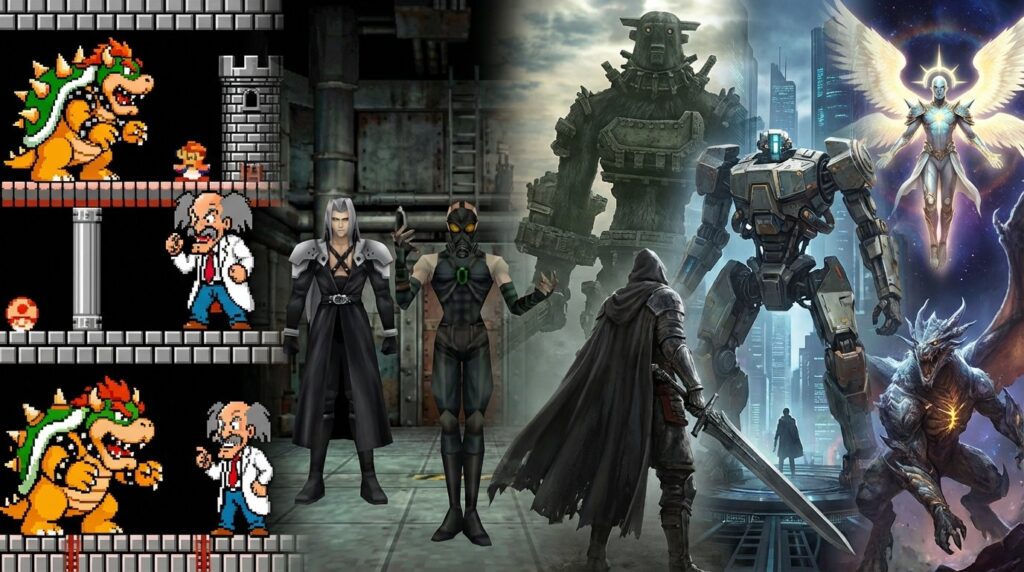
From the pulse-pounding moments of old-school arcades to the breathtaking cinematic showdowns of next-gen consoles, boss battles have always been the heart of gaming. These epic encounters test not only your skills but your nerves, patience, and creativity. A truly iconic boss fight does more than challenge your reflexes—it leaves you with a memory that lingers long after the credits roll, sparking playground debates and online discussions for years.
Boss battles have evolved alongside technology, growing from simple pattern-memorization duels into sprawling, multi-phase spectacles. Retro legends like Ganon and Bowser set the standard, while modern juggernauts such as Malenia and The Nameless King pushed the envelope of what’s possible, both narratively and mechanically. Whether you grew up with 8-bit nightmares that haunted your sleep or jaw-dropping, photorealistic enemies that define current-gen blockbusters, boss fights remain the ultimate test of a gamer’s mettle.
Today, we’re counting down 17 of the most iconic boss battles that defined gaming. These are the showdowns that made us rage, cheer, and occasionally throw our controllers in frustration and awe. From pixelated icons to next-gen titans, these legendary encounters are burned into the DNA of gaming itself.
Shadow of the Colossus
Platform | PlayStation 2 |
|---|---|
Publisher | Sony Computer Entertainment |
Genre | Action-Adventure |
Release Date | 10/18/2005 |
Story
Shadow of the Colossus plunges players into a hauntingly beautiful world where you, as the silent Wander, embark on a quest to resurrect a lost love by defeating sixteen towering colossi. The game’s minimalist storytelling heightens the sense of mystery, with each colossus exuding both majesty and melancholy. As you journey through the desolate Forbidden Land, every victory feels bittersweet, blurring the lines between heroism and sacrilege.
The bond between the protagonist and his horse Agro adds emotional weight to the journey. The narrative unfolds mostly through the environment and subtle cues, making each boss encounter a revelation. The deeper you delve, the more the story’s tragic undertones come to the forefront, culminating in a devastating finale that redefines what a boss battle can mean for a player’s soul.
Gameplay
Every boss in Shadow of the Colossus is a puzzle as much as a battle. Armed with only a sword and a bow, you must figure out each colossus’s weakness, scale their gigantic bodies, and cling for dear life as they shake you off. The thrill of hanging onto a fur-covered limb hundreds of feet above the ground is unmatched.
What sets these battles apart is their scale and creativity. Each colossus demands a different strategy: some roam wide plains, others swim in murky lakes or soar through the skies. The controls are intentionally weighty, making every climb and jump feel risky and real. Mastery comes from observation, patience, and daring execution.
Why it’s on this list
Shadow of the Colossus redefined boss battles by making every enemy a level unto itself. Instead of hordes of cannon fodder, you’re up against sixteen epic encounters that are equal parts action and cerebral challenge. Few games have turned boss fights into such emotional, memorable set pieces.
Graphics and Sound
Upon its original PlayStation 2 release and subsequent remasters, Shadow of the Colossus stunned with its sweeping landscapes and gorgeously animated colossi. The scale is jaw-dropping, with a haunting soundtrack that swells at just the right moments. The minimalist sound design accentuates the isolation and grandeur, while the orchestral score elevates every confrontation into an operatic struggle.
Legacy and Reception
Lauded as one of the greatest games of all time, Shadow of the Colossus’s boss battles have influenced countless developers. Its design philosophy—fewer, more meaningful encounters—continues to inspire the industry. The game remains a touchstone for artistic ambition in gaming, with its boss battles frequently cited as some of the most iconic ever created.
Dark Souls – Ornstein and Smough
Platform | PlayStation 3, Xbox 360, PC |
|---|---|
Publisher | Bandai Namco Entertainment |
Genre | Action RPG |
Release Date | 09/22/2011 |
Story
In the brutal world of Dark Souls, few boss fights are as legendary as the tag-team of Dragonslayer Ornstein and Executioner Smough. Encountered deep within Anor Londo, these two guardians protect the way to the Lordvessel, standing as a climactic hurdle in the journey to link the fire. Their lore is rich, with Ornstein serving as the captain of Gwyn’s Four Knights and Smough infamous for his sadistic tendencies.
The duel with Ornstein and Smough is a narrative turning point, symbolizing the transition from mere survival to true mastery. Their imposing presence and intertwined histories add layers to a story already shrouded in mystery, making their defeat feel like a monumental achievement in the world of Lordran.
Gameplay
This fight is infamous for forcing players to adapt on the fly. Ornstein is nimble and strikes with lightning-fast spear attacks, while Smough is a hulking brute wielding a colossal hammer. Together, they create an unpredictable dance of death, punishing any lapse in concentration.
Defeating one triggers a transformation in the other—if Ornstein falls first, Smough grows even larger, and vice versa. This twist keeps players on their toes and demands mastery of dodging, spacing, and resource management. It’s a merciless test of skill, patience, and adaptability.
Why it’s on this list
Ornstein and Smough embody the essence of Dark Souls: relentless challenge, deep lore, and the euphoria of hard-earned victory. Their fight is a rite of passage, spawning countless memes, tribute videos, and controller-throwing stories. Few boss duos are as iconic or as feared.
Graphics and Sound
The ornate architecture of Anor Londo sets a grand stage, while the bosses’ distinct designs and fluid animations make each blow feel weighty and real. The soundtrack—an ominous, swelling orchestration—heightens the tension, making every dodge and counterstrike feel epic.
Legacy and Reception
This battle is often cited as one of the hardest and most memorable boss fights in gaming history. It has inspired countless imitators and remains a benchmark for co-op boss design. Ornstein and Smough’s legacy is cemented in the annals of gaming, ensuring their place in every “greatest bosses” conversation.
The Legend of Zelda: Ocarina of Time – Ganondorf/Ganon
Platform | Nintendo 64 |
|---|---|
Publisher | Nintendo |
Genre | Action-Adventure |
Release Date | 11/21/1998 |
Story
The final confrontation with Ganondorf, and his monstrous alter ego Ganon, in The Legend of Zelda: Ocarina of Time, stands as a crowning moment in Nintendo’s storied franchise. After a journey through time and the depths of Hyrule, Link faces off against the King of Evil in a battle that is both personal and epic.
The duel is loaded with narrative significance. Ganondorf’s transformation into Ganon marks the climax of his dark ambition, forcing Link to summon every ounce of courage and skill. The fate of Hyrule hangs in the balance, with Princess Zelda watching as the legendary hero faces his nemesis one last time.
Gameplay
The fight unfolds in two iconic phases. First, Link must reflect Ganondorf’s energy attacks back at him in a tense game of magical tennis, dodging debris as the castle crumbles. Once Ganondorf is defeated, the castle collapses, leading to the final showdown against the bestial Ganon. Stripped of his sword, Link must use cunning, exploiting Ganon’s weakness to light and landing the final blow.
With shifting arenas, evolving attack patterns, and the constant threat of defeat, these battles test mastery of both combat mechanics and puzzle-solving. The stakes have never felt higher.
Why it’s on this list
This climactic encounter set the gold standard for final boss battles in adventure games. Ganondorf and Ganon’s transformations, combined with the multi-stage fight structure, have been emulated across countless titles. The emotional weight and cinematic flair make it a defining moment in gaming.
Graphics and Sound
For its time, Ocarina of Time’s visuals were groundbreaking, with dramatic lighting and imposing character models. The boss themes, especially the menacing organ music, are instantly recognizable, while sound effects amplify the intensity of every blow.
Legacy and Reception
Ocarina of Time is routinely cited as one of the greatest games ever made, and its final boss battle is a key reason why. The confrontation with Ganondorf and Ganon remains a touchstone for epic storytelling and design, influencing generations of developers and leaving an indelible mark on gaming culture.
Metal Gear Solid – Psycho Mantis
Platform | PlayStation |
|---|---|
Publisher | Konami |
Genre | Stealth Action |
Release Date | 09/03/1998 |
Story
Metal Gear Solid’s encounter with Psycho Mantis is legendary for its fourth-wall-breaking brilliance. As Solid Snake infiltrates Shadow Moses Island, he faces the psychic member of FOXHOUND, who claims to read minds and control others. This boss fight is not just a battle of bullets, but a battle of wits between player and game.
Psycho Mantis’s backstory, marked by trauma and isolation, gives the fight a disturbing psychological edge. His motivations are complex, and his taunts feel personal, making the showdown as much an interrogation as a combat encounter.
Gameplay
Psycho Mantis famously “reads your mind,” predicting your moves and manipulating the environment. The only way to defeat him is to physically swap your controller to the second port, breaking his psychic connection. This ingenious mechanic shattered the fourth wall and left players stunned.
The fight is full of surreal tricks—screen flickers, controller vibrations, and even commentary on your memory card data. These elements elevate the encounter into pure gaming legend, with the actual combat demanding sharp reflexes once you’ve solved the puzzle.
Why it’s on this list
No boss fight has ever so directly challenged the player’s expectations of what a game could do. Psycho Mantis is the ultimate meta-boss, and his battle is cited as one of the most innovative moments in interactive entertainment. It’s a masterclass in blending narrative, gameplay, and technology.
Graphics and Sound
Despite the PlayStation’s technical limitations, the fight uses visual and audio tricks to maximum effect. The screen “glitches,” Mantis’s distorted voice, and eerie music create an unforgettable atmosphere, turning a standard boss room into a psychological thriller.
Legacy and Reception
Psycho Mantis’s boss fight is routinely listed among the greatest gaming moments of all time. It’s been referenced, parodied, and paid homage to in countless other games. This battle didn’t just define a franchise—it redefined the possibilities of the medium itself.
God of War (2018) – Baldur
Story
Kratos’s journey through Norse mythology reaches its apex in his battles with Baldur, the invulnerable son of Odin and Freya. The story paints Baldur as both antagonist and tragic figure, cursed with immortality and driven mad by his inability to feel pain or pleasure.
Baldur’s clashes with Kratos are deeply personal, blending family drama with mythic stakes. The narrative explores themes of fate, parenthood, and the consequences of godhood, making every punch and counterstrike pulse with emotional resonance.
Gameplay
Baldur’s boss fights are multi-phase, cinematic brawls that showcase God of War’s refined combat engine. Players must read his attack patterns, dodge with precision, and exploit the environment. The fights are relentless, with Baldur adapting his tactics and unleashing elemental fury.
The final confrontation is a masterclass in pacing and spectacle. Quick-time events blend seamlessly with real-time combat, ramping up the intensity as the battle shifts from snowy forests to mythic realms. The dynamic camera heightens the immersion, making you feel every blow.
Why it’s on this list
Baldur’s battles are the emotional and gameplay centerpiece of God of War (2018). They blend narrative and mechanics in a way few games have achieved, setting a new bar for cinematic boss fights. The stakes are epic, but the story remains deeply human.
Graphics and Sound
God of War (2018) is a technical marvel, with photorealistic graphics and fluid animations. The dynamic lighting and detailed character models bring Baldur’s rage to life, while Bear McCreary’s sweeping score and thunderous sound effects underscore every moment of the fight.
Legacy and Reception
Baldur’s boss fights were universally praised, cementing God of War’s status as a modern classic. The encounters influenced future action games, inspiring a new wave of story-driven, cinematic boss battles. The game’s critical and commercial success ensured its place in the pantheon of iconic boss fights.
Final Fantasy VII – Sephiroth
Story
Sephiroth, the silver-haired antagonist of Final Fantasy VII, is more than just a boss—he’s a force of nature. His descent from celebrated SOLDIER to cosmic threat forms the backbone of the game’s sprawling narrative. The final confrontation in the Planet’s core is the culmination of Cloud’s journey and the fate of the world itself.
Sephiroth’s transformation into Safer∙Sephiroth, complete with angelic wings and apocalyptic power, raises the stakes to celestial heights. The emotional baggage from previous encounters, including Aerith’s demise, makes this battle intensely personal for both the characters and the player.
Gameplay
The final boss battle is a multi-stage affair, with Sephiroth unleashing devastating attacks like Supernova, capable of annihilating entire parties in a single hit. Players must utilize every trick—Limit Breaks, Materia combos, and strategic item use—to survive.
The fight is a test of endurance, strategy, and resource management. Every turn counts, and the tension mounts as Sephiroth morphs between forms, each more lethal than the last. The cinematic flare and over-the-top attacks elevate the showdown to legendary status.
Why it’s on this list
Sephiroth’s final battle is the quintessential JRPG boss fight. It’s epic in scale, drenched in emotion, and powered by one of the most iconic villain themes in gaming history. No other boss encapsulates the grandeur and drama of the genre quite like him.
Graphics and Sound
For its era, Final Fantasy VII’s visuals were groundbreaking, and the boss battle’s effects—especially the infamous Supernova—were jaw-dropping. The haunting “One-Winged Angel” theme, with its Latin chorus and driving orchestration, remains one of gaming’s most recognizable tracks.
Legacy and Reception
Sephiroth has become one of the most enduring villains in gaming, with his boss fight serving as a template for countless RPGs. The battle is regularly cited in “best of” lists and was faithfully reimagined in Final Fantasy VII Remake, proving its timeless appeal.
Super Metroid – Mother Brain
Platform | Super Nintendo Entertainment System (SNES) |
|---|---|
Publisher | Nintendo |
Genre | Action-Adventure |
Release Date | 03/19/1994 |
Story
Super Metroid’s final showdown with Mother Brain is a masterclass in building tension and delivering catharsis. After traversing the labyrinthine depths of Zebes, Samus Aran faces her nemesis once more, this time in a dramatic, multi-phase clash.
The fight is laden with narrative significance. The Baby Metroid’s sacrifice is one of the most emotional moments in gaming, highlighting the bond between hunter and hatchling. This battle is the emotional crescendo of Samus’s journey, tying together themes of revenge, mercy, and sacrifice.
Gameplay
The encounter with Mother Brain starts with a classic turret battle, then transforms into a desperate struggle against her monstrous second form. Players must dodge laser blasts, acid pools, and devastating brain-rattling attacks. The stakes are raised as Samus is nearly killed—only to be saved by the Baby Metroid, who empowers her with the Hyper Beam.
The final phase is pure, cathartic chaos: with newfound power, players unleash overwhelming force, turning the tables on Mother Brain in a spectacular reversal. The tight controls and escalating difficulty make this battle one for the ages.
Why it’s on this list
Mother Brain represents the perfect fusion of gameplay, narrative, and emotion. The Baby Metroid’s intervention is still referenced as one of gaming’s greatest twists. This boss battle is a defining moment for both the Metroid series and the medium as a whole.
Graphics and Sound
Super Metroid’s 16-bit visuals are timeless, with fluid animations and atmospheric effects. The eerie soundtrack and heart-pounding sound cues amplify the sense of dread and triumph, culminating in a memorable, explosive finale.
Legacy and Reception
Mother Brain’s battle is frequently cited as a high-water mark for boss design and storytelling. It influenced countless games, setting the standard for climactic showdowns. Super Metroid’s legacy is secure, with this boss fight anchoring its reputation as a classic.
Bloodborne – Ludwig, the Accursed / Ludwig, the Holy Blade
Story
Bloodborne’s “The Old Hunters” DLC introduces players to Ludwig, once a proud hunter and now a twisted beast. The battle’s story is steeped in tragedy—Ludwig’s transformation from revered hero to grotesque monster encapsulates the horror at the heart of Bloodborne’s world.
The fight is a descent into madness, with Ludwig’s tormented psyche reflected in his monstrous form. As the battle progresses, Ludwig regains a shred of his former self, drawing the legendary Holy Moonlight Sword and challenging the player in a duel of honor and nightmare.
Gameplay
Ludwig is a relentless, two-phase boss. The first phase is chaotic, with unpredictable attacks, wild charges, and a cacophony of limbs and teeth. The player must stay agile, reading tells and exploiting brief windows for counterattack.
In the second phase, Ludwig becomes more methodical, wielding the Holy Blade with devastating precision. The fight demands mastery of dodging, timing, and Bloodborne’s aggressive combat mechanics. Every victory feels truly earned.
Why it’s on this list
Ludwig is often considered the pinnacle of FromSoftware’s boss design. The fight encapsulates everything that makes Bloodborne special: challenging gameplay, deep lore, and haunting atmosphere. It’s a test of both skill and nerve, and a highlight of modern action-horror.
Graphics and Sound
Bloodborne’s gothic aesthetic is in full force, with grotesque creature design and nightmarish environments. The soundtrack, especially during the second phase, is both tragic and triumphant, heightening the emotional stakes of the encounter.
Legacy and Reception
Ludwig’s battle has become a fan favorite and is often discussed as one of the greatest boss fights in Soulsborne history. Its mix of horror, tragedy, and challenge has inspired countless tributes and solidified Bloodborne’s place among the elite.
Resident Evil 4 – Osmund Saddler
Story
Resident Evil 4’s narrative builds towards a final clash with Osmund Saddler, the sinister leader of the Los Illuminados cult. After a harrowing journey through infected villages, ancient castles, and secret labs, Leon S. Kennedy finally faces the mastermind behind the Las Plagas outbreak.
Saddler’s transformation into a monstrous abomination is the ultimate expression of Resident Evil’s blend of sci-fi horror and action. The stakes are personal—rescuing Ashley and stopping the spread of the parasite—making the showdown unforgettable.
Gameplay
The final battle is a frantic scramble across collapsing platforms, with Saddler unleashing devastating tentacle attacks and summoning minions. Players must dodge, shoot weak points, and make use of every weapon and resource in their arsenal.
The encounter is designed to test everything learned throughout the game—precise aiming, resource management, and quick reflexes. The environment is hazardous, with explosive barrels and precarious ledges raising the tension even higher.
Why it’s on this list
Saddler’s fight is the perfect blend of horror, action, and spectacle. It encapsulates Resident Evil 4’s revolutionary gameplay shift, serving as a benchmark for modern survival horror boss design. The sense of urgency and danger is palpable from start to finish.
Graphics and Sound
Resident Evil 4’s visuals pushed the GameCube and later platforms to their limits, with grotesque creature models and atmospheric environments. The boss battle’s sound design is filled with unsettling screeches and explosive effects, keeping players on edge until the final rocket launcher shot.
Legacy and Reception
Saddler’s boss fight helped define the modern era of Resident Evil, influencing countless action-horror games. Resident Evil 4 remains a classic, and its climactic showdown is a big reason why fans keep returning to this masterpiece.
Portal – GLaDOS
Story
Portal’s final confrontation with GLaDOS, the malevolent AI, is a masterstroke of dark comedy and psychological warfare. As Chell, you navigate Aperture Science’s labyrinthine test chambers, only to discover that your “guide” is a sadistic, passive-aggressive supercomputer.
The battle is laced with razor-sharp wit and reveals the true depths of GLaDOS’s insanity. As she taunts and manipulates you, her carefully curated façade crumbles, making the showdown as much about unraveling her character as escaping her clutches.
Gameplay
Unlike traditional boss fights, the battle with GLaDOS is a puzzle at heart. Players must use the portal gun to redirect missiles, incinerate core components, and avoid deadly neurotoxin. The fight ramps up as GLaDOS becomes increasingly desperate, forcing quick thinking and spatial reasoning.
The unique structure makes this encounter unforgettable. There’s no health bar or swordplay—just pure logic, timing, and environmental manipulation. The escalating chaos and GLaDOS’s increasingly frantic dialogue keep the pressure high.
Why it’s on this list
GLaDOS’s battle redefined what a boss fight could be, eschewing brute force for brains and wit. Her personality, humor, and the inventive mechanics make this one of the most memorable and beloved boss encounters ever.
Graphics and Sound
Portal’s sterile aesthetic is a perfect backdrop for GLaDOS’s clinical menace. The fight’s visual clarity allows the puzzle elements to shine, while the voice acting (by Ellen McLain) and unforgettable closing song, “Still Alive,” cement GLaDOS as a true icon.
Legacy and Reception
Portal’s final boss is routinely cited as one of the most innovative and entertaining in gaming. GLaDOS has become a cultural phenomenon, influencing everything from game design to internet memes. The fight’s legacy is as enduring as its humor.
The Legend of Zelda: Breath of the Wild – Calamity Ganon
Story
Breath of the Wild’s narrative is a sweeping epic of loss, hope, and heroism. After awakening from a century-long slumber, Link must confront Calamity Ganon, the ancient evil that has devastated Hyrule. The showdown in Hyrule Castle is a culmination of everything players have learned and discovered.
Calamity Ganon is a force of nature, representing the cycle of destruction and rebirth. His monstrous form and the ruined castle create a sense of urgency and finality, making the confrontation both mythic and intimate.
Gameplay
The battle is multi-phased, with Calamity Ganon unleashing a barrage of attacks inspired by the game’s divine beast bosses. Players must use every tool at their disposal—swords, shields, bows, and even paragliders—to survive.
The fight rewards preparation and experimentation, allowing for a variety of strategies. The final phase, against Dark Beast Ganon, is a cinematic spectacle, giving players the thrill of victory on an epic scale.
Why it’s on this list
Calamity Ganon’s boss fight is the perfect capstone to Breath of the Wild’s open-world adventure. It’s flexible, challenging, and visually stunning, bringing together the game’s themes and mechanics in a triumphant finale.
Graphics and Sound
Breath of the Wild’s painterly art style and dynamic lighting bring Hyrule Castle and Calamity Ganon to life. The swelling orchestral score and dramatic sound effects add weight to every clash, making the final battle unforgettable.
Legacy and Reception
Breath of the Wild set new standards for open-world design, and its final boss is a fitting climax. Calamity Ganon’s defeat is celebrated as a high point in modern gaming, cementing the game’s status as an all-time classic.
Street Fighter II – M. Bison
Story
M. Bison, the ruthless dictator and leader of Shadaloo, is the ultimate challenge in Street Fighter II. As you battle your way through a global cast of fighters, Bison stands as the final test, his psychic powers and brutal martial arts making him a fearsome foe.
Bison’s presence looms over the tournament, and his motivations—world domination and the pursuit of ultimate power—make him the quintessential fighting game villain. His defeat marks the end of a grueling journey and the beginning of a legend.
Gameplay
Bison’s boss fight is notorious for its difficulty. He attacks with Psycho Crusher, Scissor Kicks, and relentless aggression, punishing any mistake. His unpredictable AI and devastating combos elevate the tension, requiring mastery of your chosen fighter.
The fight is a true test of skill, demanding quick reflexes, precise timing, and the ability to read your opponent’s moves. Bison’s relentless offense and minimal openings make every victory feel like a hard-fought triumph.
Why it’s on this list
M. Bison is the gold standard for fighting game bosses. His iconic moves, intimidating presence, and challenging AI set the template for future arcade and home console fighters. He’s a rite of passage for any fighting game fan.
Graphics and Sound
Street Fighter II’s vibrant pixel art and fluid animations brought Bison’s menacing persona to life. The thumping boss theme and crisp sound effects underscored every critical moment, making the battle both visually and aurally memorable.
Legacy and Reception
M. Bison remains one of the most recognizable villains in gaming. His boss fight helped define the fighting game genre and is still referenced in competitive scenes today. Street Fighter II’s impact is immeasurable, with Bison’s legacy at its core.
Sekiro: Shadows Die Twice – Isshin, the Sword Saint
Story
Sekiro: Shadows Die Twice tells the tale of Wolf, a shinobi on a mission to save his young lord and break the cycle of immortality. The final battle with Isshin, the Sword Saint, is the culmination of this journey—a duel for the ages against a legendary warrior resurrected at the peak of his power.
Isshin’s story is one of honor, regret, and the burdens of legacy. His respect for Wolf adds emotional depth to the encounter, turning the fight into a true test of mastery and will.
Gameplay
Isshin is arguably FromSoftware’s most demanding boss, with lightning-fast attacks, multiple phases, and devastating counters. The fight demands total mastery of Sekiro’s parry and posture system, punishing any lapse in focus.
The multi-phase battle ramps up with each transition, introducing new weapons, stances, and even lightning attacks. Every encounter with Isshin is a heart-pounding test of timing, reaction, and nerve—only true shinobi can endure.
Why it’s on this list
Isshin, the Sword Saint, is the ultimate gauntlet for action game fans. His fight is the purest expression of Sekiro’s mechanics and design philosophies, earning universal acclaim as one of the toughest and most rewarding boss battles ever created.
Graphics and Sound
Sekiro’s feudal Japanese aesthetic is on full display, with intricate character animations and atmospheric environments. The boss theme is an adrenaline-pumping orchestration, heightening the tension and drama of each phase.
Legacy and Reception
Isshin’s boss fight is widely regarded as a modern classic, praised for its fairness, challenge, and cinematic flair. It’s a defining moment for both Sekiro and the action genre, inspiring respect and fear among gamers everywhere.
Mega Man 2 – Dr. Wily
Story
The original Mega Man games are legendary for their challenging bosses, and none loom larger than Dr. Wily. In Mega Man 2, Wily’s final forms push players to their limits, representing the culmination of the Blue Bomber’s quest to stop the mad scientist’s world domination schemes.
Wily’s penchant for deception and relentless innovation is on full display, as he reveals new robotic monstrosities in a last-ditch effort to defeat Mega Man. The narrative stakes are high, with the fate of the world hanging in the balance.
Gameplay
The fight with Dr. Wily is a gauntlet of multi-phase challenges. Players must use all the weapons they’ve acquired, each boss phase requiring a specific strategy or tool. The final form, a mysterious alien, can only be defeated with the right weapon, testing both memory and resourcefulness.
The encounter is a masterclass in pattern recognition, quick reflexes, and adaptability. Every mistake is punished, but every victory feels like a testament to skill and perseverance.
Why it’s on this list
Dr. Wily set the template for multi-phase, strategic boss battles. His fights demand mastery of every mechanic the game has to offer, making him an enduring symbol of old-school challenge and ingenuity.
Graphics and Sound
Mega Man 2’s crisp 8-bit visuals and catchy chiptunes are legendary. Wily’s lair is packed with visual flair, and the boss theme is an adrenaline rush, driving players to one final confrontation.
Legacy and Reception
Dr. Wily remains one of gaming’s most iconic villains, and his boss fights are still celebrated for their inventiveness and difficulty. Mega Man 2’s showdown with Wily is a rite of passage for retro fans and continues to inspire boss design today.
Kingdom Hearts – Ansem, Seeker of Darkness
Platform | PlayStation 2 |
|---|---|
Publisher | Square Enix |
Genre | Action RPG |
Release Date | 03/28/2002 |
Story
Kingdom Hearts weaves together the worlds of Disney and Final Fantasy, culminating in a final battle against Ansem, Seeker of Darkness. As the embodiment of the Heartless, Ansem’s confrontation with Sora is the emotional and narrative climax of the game’s interdimensional odyssey.
Ansem’s quest to unlock Kingdom Hearts and plunge the world into darkness is tinged with tragedy and ambition. The fight is loaded with symbolism and stakes, as Sora battles not just for his friends, but for the fate of every world.
Gameplay
Ansem’s boss fight is a multi-stage, interdimensional spectacle. Players face shifting arenas, relentless attack patterns, and a barrage of dark energy. The encounter requires sharp reflexes, command of Sora’s abilities, and strategic use of magic and summons.
The transition between phases keeps players on their toes, with environmental hazards and Ansem’s monstrous Guardian adding to the challenge. The fight is a true test of everything learned throughout the journey.
Why it’s on this list
Ansem’s showdown is a perfect fusion of action, spectacle, and emotion. It set a new standard for cinematic boss battles in RPGs, blending fast-paced gameplay with dramatic storytelling and unforgettable visuals.
Graphics and Sound
Kingdom Hearts dazzled with its vibrant visuals and fluid animations. The boss battle’s effects—dark energy, swirling portals, and massive transformations—are visually stunning. Yoko Shimomura’s orchestral score, especially “Guardando nel buio,” amplifies the tension and grandeur.
Legacy and Reception
Ansem’s battle is a cornerstone of the Kingdom Hearts series, setting expectations for future entries and earning a place in gaming history. The encounter is beloved by fans and continues to be referenced as a high point in action-RPG design.
Elden Ring – Malenia, Blade of Miquella
Story
Elden Ring’s sprawling narrative is filled with memorable encounters, but none are as infamous or awe-inspiring as Malenia, Blade of Miquella. Hidden deep in the Haligtree, Malenia is both a tragic figure and a peerless warrior, her curse of rot making her fight a desperate struggle for survival.
Malenia’s backstory is woven throughout the world, her connection to Miquella and her role in the Shattering lending the fight immense weight. Facing her is not just a test of strength, but an encounter with the deepest lore of the Lands Between.
Gameplay
Malenia is a two-phase juggernaut, boasting lightning-fast attacks, devastating combos, and a unique healing mechanic—she regains health with every hit she lands, making aggression a double-edged sword. Her Waterfowl Dance attack is notorious for annihilating even the most prepared players.
The second phase, Goddess of Rot, introduces new moves and relentless pressure. Mastery of dodging, spacing, and timing is essential. Every victory is hard-earned, with each attempt teaching new lessons in patience and precision.
Why it’s on this list
Malenia is already legendary for her difficulty, beauty, and tragic story. She’s become a litmus test for Elden Ring mastery, inspiring awe, rage, and admiration in equal measure. No boss fight in recent memory has captured the imagination of gamers quite like hers.
Graphics and Sound
Elden Ring’s lush visuals and haunting environments make the Haligtree and Malenia’s arena unforgettable. The boss theme, with its soaring vocals and pounding percussion, is a perfect accompaniment to the fight’s intensity.
Legacy and Reception
Malenia’s battle is a modern classic, embraced by speedrunners, lore hunters, and challenge seekers alike. She’s already cemented her place among the pantheon of iconic bosses, with the fight widely regarded as one of the best of the decade.
Doom (1993) – Cyberdemon
Story
The original Doom was a revolution in first-person shooters, and its showdown with the Cyberdemon is a landmark moment. As the unnamed space marine, players blast through the forces of Hell, only to face this towering, rocket-launching abomination at the end of Episode 2.
The Cyberdemon’s introduction is pure adrenaline, as the doors open and the hulking, horned demon emerges. It’s a primal clash of man versus monster, embodying the spirit of Doom’s no-holds-barred action.
Gameplay
The battle with the Cyberdemon is simple but brutally effective. It’s a frantic dance of dodging rockets, weaving through pillars, and unloading every weapon you have. The demon’s immense health and lethal firepower make every mistake a potential death sentence.
The fight is pure test of reflexes, movement, and weapon mastery. There are no gimmicks—just you, your arsenal, and one of gaming’s most fearsome foes.
Why it’s on this list
The Cyberdemon is the archetypal FPS boss: massive, intimidating, and unforgettable. Its battle set the standard for end-of-episode showdowns and is still referenced in shooters to this day.
Graphics and Sound
Doom’s pixelated sprites and gritty environments gave the Cyberdemon an outsized presence. The booming sound of its rocket launcher and the iconic boss theme ramp up the tension, making the fight a sensory overload.
Legacy and Reception
The Cyberdemon remains a touchstone for boss design, with its influence seen in countless games. Doom’s legacy as an FPS pioneer is inseparable from this iconic encounter, which continues to thrill new generations of players.
Cuphead – The Devil
Platform | PC, PlayStation 4, Xbox One, Nintendo Switch |
|---|---|
Publisher | Studio MDHR |
Genre | Run-and-Gun |
Release Date | 09/29/2017 |
Story
Cuphead’s hand-drawn journey through a world of cartoon chaos culminates in a battle with The Devil himself. After defeating a rogue’s gallery of imaginative bosses, Cuphead and Mugman face the ultimate test in the Devil’s casino lair.
The story is a playful riff on classic animation and Faustian bargains, with the Devil embodying both menace and slapstick humor. The stakes are sky-high, with the souls of our heroes and their friends hanging in the balance.
Gameplay
The Devil’s boss fight is a multi-phase, bullet-hell extravaganza. Players must dodge waves of projectiles, avoid transforming obstacles, and survive a relentless gauntlet of attacks. The encounter is a true test of pattern recognition, timing, and sheer determination.
Each phase introduces new mechanics and escalating chaos, demanding mastery of Cuphead’s tight controls and unique abilities. The margin for error is razor-thin, making every victory a cause for celebration.
Why it’s on this list
The Devil’s boss fight is the ultimate love letter to old-school challenge and creativity. It captures everything that makes Cuphead special: gorgeous animation, brutal difficulty, and a sense of triumph in the face of overwhelming odds.
Graphics and Sound
Cuphead’s visuals are a marvel, with every frame lovingly hand-animated in 1930s cartoon style. The battle against the Devil is a riot of color, motion, and expressive character design. The jazzy, frenetic soundtrack adds to the intensity, making the fight both a visual and auditory spectacle.
Legacy and Reception
The Devil’s boss fight has become an instant classic, earning praise for its artistry and challenge. Cuphead’s success cemented the return of hand-drawn animation in gaming, and its final battle is already legendary among fans of tough-as-nails platformers.
Undertale – Sans
Platform | PC, PlayStation 4, Nintendo Switch |
|---|---|
Publisher | Toby Fox |
Genre | RPG |
Release Date | 09/15/2015 |
Story
Undertale subverts RPG conventions at every turn, and its “Genocide Route” culminates in a battle with Sans, the wisecracking skeleton with a mysterious past. After a journey defined by player choice, facing Sans is both a narrative reckoning and a meta-commentary on consequence.
Sans’s motivations are deeply personal—he fights not to save the world, but to stop the player from erasing it. The battle is filled with dark humor, breaking the fourth wall and acknowledging the player’s actions throughout the game.
Gameplay
Sans’s boss fight is notorious for its brutal difficulty. He attacks first—breaking RPG norms—and unleashes a barrage of bone attacks, gravity shifts, and bullet-hell patterns. The fight tests reflexes, memory, and pure determination, with no chance to heal between rounds.
The encounter is relentless, with Sans using every trick in the book to keep the player off-balance. It’s a unique blend of puzzle, action, and platforming, making it unlike any other RPG boss fight.
Why it’s on this list
Sans’s battle is an internet legend, referenced and memed across gaming culture. It’s a perfect encapsulation of Undertale’s wit, challenge, and subversive spirit, ensuring its place among the most iconic boss fights ever.
Graphics and Sound
Undertale’s minimalist visuals belie the intensity of the Sans fight. The simple, expressive animations and the now-iconic “Megalovania” theme create an atmosphere of pure adrenaline and excitement.
Legacy and Reception
The Sans boss fight is a cultural phenomenon, inspiring fan art, remixes, and endless discussion. Undertale’s unique approach to storytelling and gameplay has influenced countless indie games, with Sans’s battle standing as its crowning achievement.
Conclusion
Boss battles aren’t just the climactic endpoints of our favorite games—they’re the crucibles where legends are forged. From the pixelated terrors of the arcade era to the emotionally charged, cinematic showdowns of modern epics, these encounters have shaped the medium and inspired generations of players and creators alike.
Whether you’ve toppled colossi, parried legendary swordsmen, or outwitted sadistic AIs, the thrill of a truly iconic boss fight is universal. These 17 battles stand as monuments to the creativity, ambition, and sheer fun that define gaming. So next time you’re facing down an impossible foe, remember: you’re not just playing a game—you’re part of a tradition as old and epic as gaming itself. Game on!