
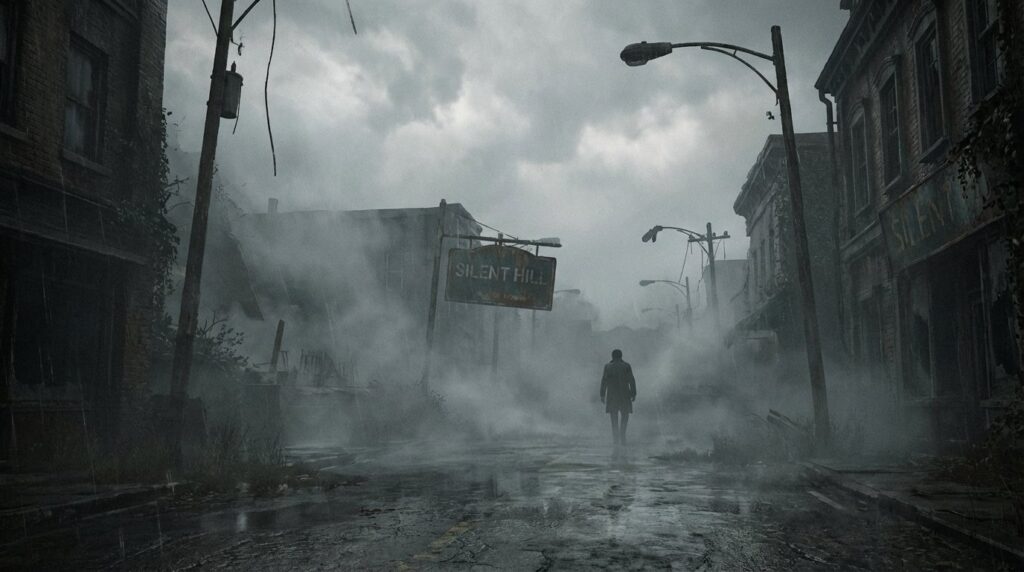
Few series in horror gaming carry the weight and legacy of Silent Hill. For over two decades, its fog-shrouded streets and psychological terrors have haunted the minds of players, setting a benchmark for atmospheric storytelling. Now, in 2026, Konami and Bloober Team invite us back to the heart of darkness with the highly anticipated Silent Hill 2 Remake. This isn’t just a graphical overhaul—it’s a bold resurrection of a classic that defined a genre, aiming to recapture the suffocating dread and emotional complexity that made the original a masterpiece.
With high expectations and a loyal fanbase watching closely, the remake faces the daunting task of honoring its source material while reimagining it for a new generation. Silent Hill 2 remains legendary for its nuanced narrative, evocative symbolism, and the kind of psychological horror that lingers long after the credits roll. The remake arrives at a time when horror games have seen a renaissance, with technological advances allowing for more immersive and unsettling experiences than ever before. The question is: does this new vision of Silent Hill 2 retain the soul of its predecessor, or does it lose itself in the fog?
As we step once more into James Sunderland’s tortured journey, it’s immediately clear that this is no simple nostalgia trip. The Silent Hill 2 Remake is a meticulous, reverent reconstruction, but it’s also unafraid to make bold choices. Whether you’re a die-hard veteran of the series or a newcomer to the misty streets, this is a game that demands your attention—and perhaps, your courage.
Gameplay: Terror Reborn
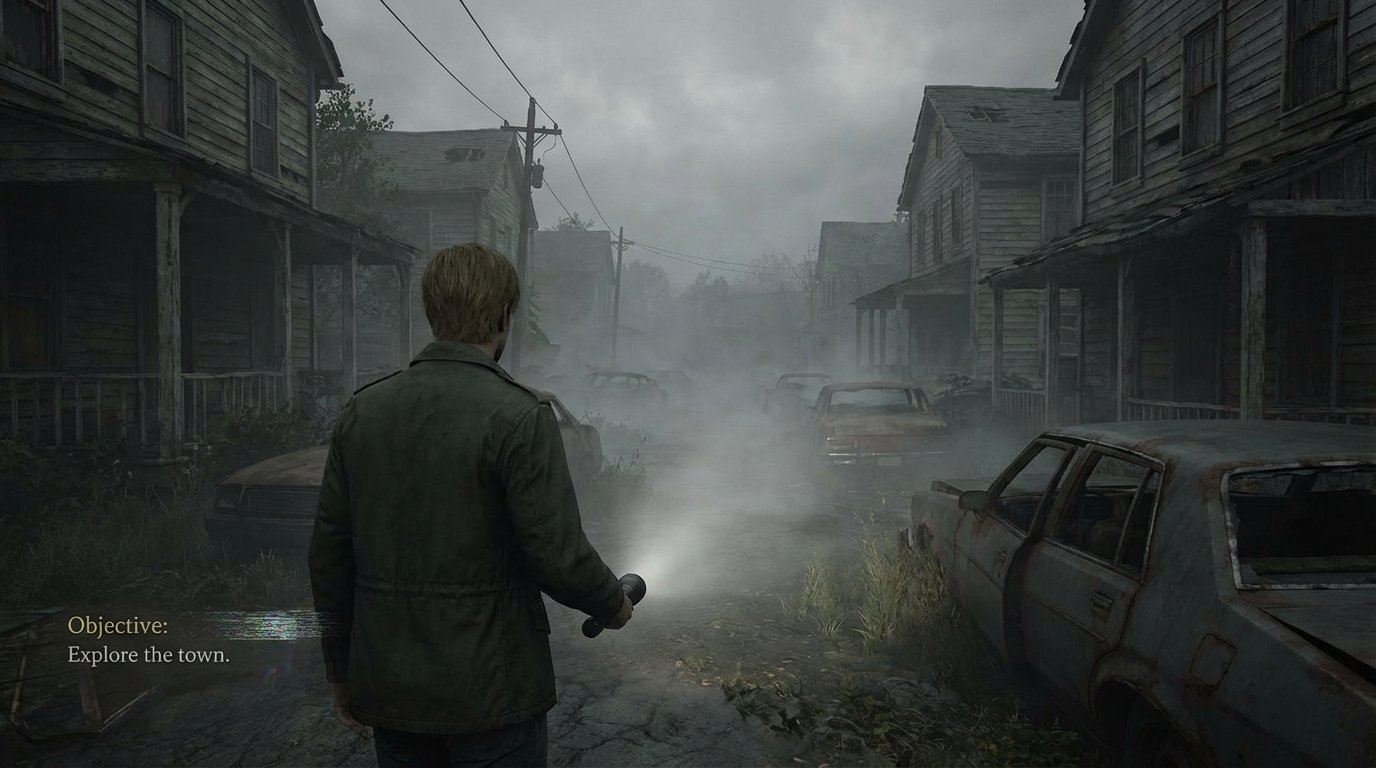
At its core, Silent Hill 2 Remake is a third-person survival horror experience, blending exploration, puzzle-solving, and tense combat. The remake preserves the deliberate pacing and atmospheric tension that the series is known for, while introducing nuanced improvements that make the experience more palatable for modern audiences. The sense of vulnerability and isolation is as palpable as ever, with every footstep echoing through deserted corridors and fog-laden streets.
The combat system has been entirely reworked compared to the original, shifting away from the clunky, sometimes awkward feel of early 2000s controls. The remake introduces more fluid movement, a dynamic dodge mechanic, and improved melee and ranged combat options. Yet, true to the spirit of Silent Hill, James is not a seasoned fighter; the game emphasizes resource management and avoidance over brute force, ensuring that each encounter feels meaningful and dangerous.
Puzzles remain a highlight, challenging players with cryptic clues and environmental storytelling rather than cheap jump scares. The remake strikes a careful balance between respecting the original’s enigmatic design and providing quality-of-life improvements for modern players, such as an updated hint system and more intuitive inventory management.
Core Mechanics
Silent Hill 2 Remake stays faithful to its psychological horror roots, using a combination of environmental manipulation, enemy placement, and James’s own physical and mental state to keep players on edge. The infamous radio static returns, warning of nearby threats, but now it’s more dynamic, reacting not just to enemies but also to certain environmental cues and narrative triggers.
Health management is more nuanced, with visual and auditory cues indicating James’s condition. The inventory system is streamlined, allowing for quick access to healing items, weapons, and key objects without breaking immersion. Save points remain scarce and strategically placed, maintaining the ever-present tension between risk and safety that defines great survival horror.
Exploration has been enriched with subtle environmental storytelling. Players are rewarded for thorough investigation, uncovering documents, cryptic graffiti, and personal artifacts that shed light on both the town’s history and James’s psyche. This deepens the sense of place and rewards curiosity, making each return trip through familiar locations feel fresh and foreboding.
New Additions and Features
While the Silent Hill 2 Remake is rooted in the DNA of the original, it isn’t afraid to innovate. The most striking new feature is the “Dual Realities” system, allowing players to shift between James’s subjective perception of the world and a more objective reality. This mechanic is woven into both puzzles and narrative beats, often blurring the line between nightmare and reality in ways that feel authentically Silent Hill.
AI-driven enemy behavior brings a new level of unpredictability. Monsters now patrol dynamically, react to sound, and occasionally ambush the player based on environmental cues. This ensures that no two encounters are quite the same, keeping veteran players on their toes and heightening the sense of dread.
Accessibility options have also been greatly expanded, including customizable controls, scalable difficulty for both puzzles and combat, and a suite of visual and auditory aids. These additions are a welcome step forward, ensuring that more players can experience the horror and heartbreak of Silent Hill without unnecessary barriers.
Single-Player Campaign
The campaign remains an intense, emotionally charged journey that can take anywhere from 10 to 15 hours to complete, depending on exploration and difficulty level. The remake closely follows the structure of the original, but with expanded scenes, new side stories, and optional areas that enrich the narrative tapestry. Veterans will find familiar beats, but the added content deepens the experience without feeling like unnecessary padding.
Each chapter of James’s journey is meticulously crafted, unfolding at a pace that allows both horror and introspection to flourish. The game wisely resists the temptation to overexplain, instead trusting players to piece together the fragmented narrative through exploration and environmental clues. This approach rewards careful observation and encourages replayability, especially given the multiple endings influenced by player choices and subtle behavioral cues.
Replay value is further bolstered by unlockable challenges, costumes, and a new “Nightmare Mode” that remixes enemy placements and puzzle solutions for a more harrowing experience. These additions provide ample incentive for both newcomers and series veterans to revisit the campaign and uncover every dark secret lurking in the fog.
Story and Setting
Silent Hill 2’s narrative has always been its strongest pillar—a deeply psychological tale of grief, guilt, and self-destruction. The remake handles this legacy with care, preserving the ambiguity and emotional resonance that made James Sunderland’s story so affecting. The script has been subtly revised for modern sensibilities without losing its haunting poetry, and the new voice cast delivers performances that are both understated and chilling.
The town of Silent Hill itself is more than just a backdrop; it’s a character in its own right, shifting and mutating to reflect James’s unraveling psyche. The remake leans into this, using environmental storytelling and visual cues to mirror his emotional state. Familiar locations like Rosewater Park, Brookhaven Hospital, and the Lakeview Hotel are recreated in painstaking detail, each dripping with atmosphere and symbolism.
Side characters such as Angela, Eddie, and Maria are given more depth through expanded dialogue and optional encounters. Their stories intertwine with James’s in new and sometimes surprising ways, reinforcing the game’s central themes of loss and redemption. The result is a narrative experience that feels both faithful and fresh, capable of unsettling even those who thought they knew every twist and turn.
Level Design
The remake’s level design is a masterclass in tension and pacing. While the broad strokes of the original layouts remain intact, every area has been reimagined to take advantage of modern hardware. Environments are larger, denser, and more interconnected, with fewer loading screens and a greater emphasis on seamless exploration. The fog and darkness are not just visual effects but gameplay elements, concealing threats and altering navigation in real time.
Backtracking, often a point of contention in older titles, is handled more elegantly here. Shortcuts, hidden passages, and environmental changes keep return visits engaging and unpredictable. The game’s signature puzzles are integrated more organically into the environment, encouraging players to pay close attention to their surroundings rather than relying on arbitrary item hunts.
Notably, the remake introduces several entirely new locations and alternate routes, expanding the scope of Silent Hill while maintaining its oppressive, claustrophobic atmosphere. These additions are seamlessly woven into the experience, providing surprises even for seasoned fans and ensuring that exploration always carries a sense of risk and reward.
Multiplayer and Online Experience
True to the spirit of the original, Silent Hill 2 Remake remains a primarily single-player experience. However, the developers have introduced an innovative asynchronous online feature called “Echoes.” Players can leave behind cryptic messages, hints, or even haunting audio fragments for others to discover, reminiscent of systems popularized by Soulslike games. These echoes can provide guidance or mislead, adding a subtle layer of community-driven tension to the solitary journey.
There is no traditional co-op or competitive multiplayer, a decision that preserves the intimate, isolating horror that defines Silent Hill. However, leaderboards, challenge runs, and time trials provide a sense of friendly competition for those seeking to push their skills to the limit. Weekly community events and developer-curated challenges have already begun to foster a dedicated online community, sharing theories, secrets, and speedrun strategies.
While some may lament the absence of a full-fledged multiplayer mode, the online features are thoughtfully integrated and never intrusive. They enhance the atmosphere without detracting from the core experience, ensuring that Silent Hill 2 Remake remains a personal, psychological journey first and foremost.
Graphics and Visuals
Silent Hill 2 Remake is a technical marvel, leveraging cutting-edge technology to deliver visuals that are both beautiful and disturbing. The game runs on Unreal Engine 5, with real-time ray tracing, dynamic lighting, and volumetric fog that create an atmosphere as thick and oppressive as any in the genre. Every environment drips with detail, from the peeling wallpaper in abandoned apartments to the shimmering, otherworldly surfaces of the nightmare realm.
Character models are rendered with astonishing fidelity, capturing subtle facial expressions and body language that convey volumes of emotion. The monster designs, already iconic, have been reimagined with grotesque new details that make them even more unsettling up close. The transition between the “real” world and the Otherworld remains seamless, with visual cues that leave players questioning what is real and what is hallucination.
Performance is consistently strong across platforms, with the PlayStation 6 and high-end PCs offering the best experience. The game supports a wide range of graphical settings, ensuring that players on various hardware can enjoy both fidelity and smooth frame rates. Accessibility features such as colorblind modes and adjustable motion blur demonstrate a welcome commitment to inclusivity in horror gaming.
Soundtrack and Audio Design
Akira Yamaoka’s legendary score returns, now re-recorded and expanded for the remake. The soundtrack is a masterwork of unease, blending haunting melodies with industrial noise and ambient soundscapes that burrow deep under your skin. New tracks are interwoven seamlessly with the classics, ensuring that both old and new fans are treated to an unforgettable aural experience.
Audio design is equally impressive, making expert use of 3D spatial audio to heighten immersion. Every creak, whisper, and distant footstep is rendered with pinpoint accuracy, guiding (or misleading) players as they navigate the fog. The iconic radio static has never sounded more menacing, and environmental audio cues are used to brilliant effect, keeping players constantly on edge.
Voice acting is another standout, with a new cast delivering nuanced performances that elevate the already rich script. The delivery is restrained where it needs to be, explosive when the story demands, and always deeply human—even when the characters themselves are anything but. Combined with the impeccable soundtrack, Silent Hill 2 Remake’s audio is a crucial pillar of its immersive terror.
Conclusion: Should You Play It?
Silent Hill 2 Remake is a triumph—a reverent, unflinching reimagining of one of gaming’s greatest horror stories. It’s a game that understands the delicate balance between nostalgia and innovation, preserving the soul of the original while embracing the advancements of 2026’s gaming landscape. Every aspect, from gameplay and visuals to narrative and audio, has been meticulously crafted to immerse, unsettle, and move the player.
Whether you are a longtime fan seeking to revisit the nightmare with fresh eyes or a newcomer eager to experience one of horror’s defining works, Silent Hill 2 Remake stands as an essential, unforgettable journey. It’s a haunting return to foggy town—a place you may never truly leave, even after you’ve put down the controller.