
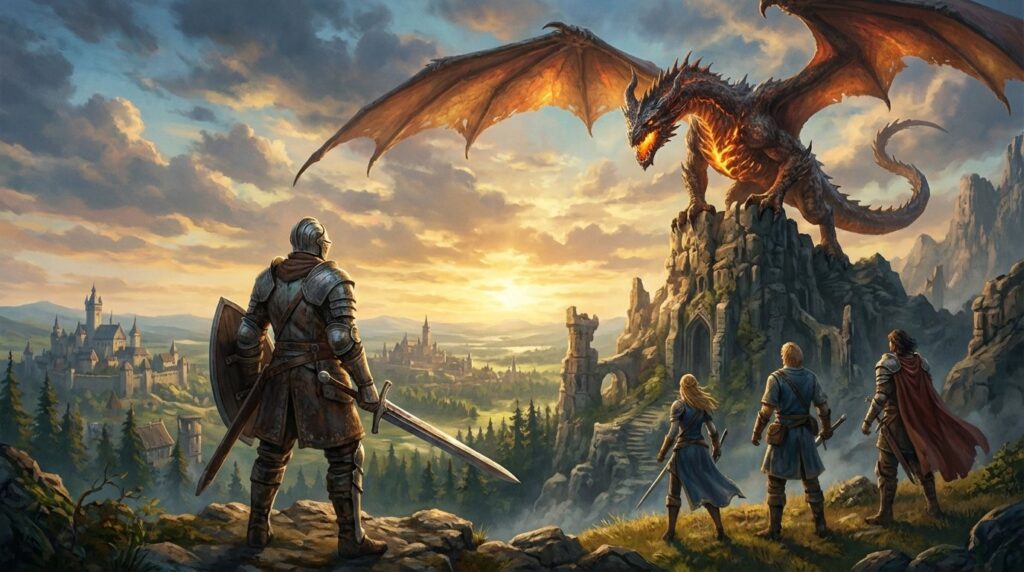
It’s not often a cult classic returns to the main stage with the force and confidence of a blockbuster, but Capcom’s Dragon’s Dogma 2 arrives on the 2026 scene determined not just to recapture lightning in a bottle, but to electrify the entire open-world RPG genre. Thirteen years after the original’s release, the sequel emerges into a gaming landscape crowded with open worlds, yet manages to carve out a unique identity—one forged in the fires of ambition, risk, and a willingness to experiment where others play it safe.
From its grand announcement to months of tantalizing previews, Dragon’s Dogma 2 has been shrouded in both hope and skepticism. Could Capcom deliver on its promise to expand upon the beloved pawn system, deepen the fantasy world, and finally give the series the recognition it always deserved? As the credits roll and the dust settles, it’s clear that not only has Capcom realized its vision, but it may have set a new benchmark for emergent gameplay and narrative flexibility in the process.
Dragon’s Dogma 2 isn’t just a sequel; it’s a statement. In an era where open-world fatigue threatens even the most cherished franchises, Capcom’s latest feels like a breath of fresh, dragon-scorched air. It’s a game that demands your attention, rewards your curiosity, and—most importantly—reminds us why open-ended adventures matter in the first place.
Gameplay: Emergent Adventure Unleashed
At the heart of Dragon’s Dogma 2 lies a gameplay loop that is as intoxicating as it is unpredictable. The moment-to-moment experience is driven by a deep sense of agency: every path you take, every fight you pick, and every decision you make reverberates through a world that feels alive and reactive. Unlike its predecessor, the sequel doubles down on emergent encounters, ensuring that no two playthroughs are truly alike.
Whether you’re clinging to the back of a towering cyclops, orchestrating ambushes with your pawn companions, or stumbling onto hidden ruins teeming with secrets, the sheer variety of activities is staggering. Exploration is both rewarding and dangerous, with the world’s day-night cycle and dynamic weather introducing new challenges and opportunities. Dragon’s Dogma 2 encourages curiosity, never handholding, always trusting the player to carve their own legend.
Combat, meanwhile, is fluid and impactful. Each clash with monsters or bandits feels weighty, with a physicality that recalls the best action RPGs. The game’s robust vocation (class) system lets you experiment with playstyles, from nimble daggers to devastating arcane spells, all of which can be swapped and tweaked as your journey evolves.
Core Mechanics
Dragon’s Dogma 2 refines and expands upon the core mechanics that made the original a cult hit. The innovative pawn system returns, allowing players to create, customize, and share AI-controlled companions who observe, learn, and adapt based on both your actions and the wider community’s collective knowledge. This system remains a standout, imbuing your party with a sense of personality and unpredictability that feels genuinely unique in the RPG space.
Stamina management is once again at the forefront—every action, from sprinting across open plains to grappling with monsters, drains your resources, forcing players to weigh risk versus reward in every encounter. The game also introduces more nuanced climbing and traversal mechanics, making verticality a crucial part of exploration and combat. Scaling the back of a dragon or leaping across a crumbling bridge isn’t just cinematic—it’s tactically vital.
Another core pillar is the game’s commitment to consequence. Choices made in conversation, quest resolution, and even seemingly mundane travel decisions can have long-lasting impacts, altering the political landscape, unlocking new storylines, or leading to unforeseen dangers. Dragon’s Dogma 2 respects player agency in a way few RPGs attempt, creating a world that truly feels shaped by your hand.
New Additions and Features
Capcom hasn’t rested on the laurels of its original formula. Dragon’s Dogma 2 introduces several significant new features that elevate the experience. Chief among these is the expanded vocation system, which now offers deeper customization, hybrid classes, and unique abilities that can be unlocked through hidden mentors scattered across the world. The result is a system that rewards experimentation and creative builds, allowing players to tailor their approach to any challenge.
The world itself is now far larger and more diverse, with new biomes ranging from windswept highlands to sun-baked deserts and mist-shrouded forests. Dynamic world events—such as rampaging monsters, natural disasters, and faction skirmishes—occur organically, influencing travel and quest outcomes. These events inject a sense of unpredictability and urgency, pulling players off the beaten path and into the wild unknown.
Perhaps the most striking addition is the improved AI, both for enemies and pawns. Pawns now remember prior mistakes, adapt to your playstyle, and even offer contextual advice in critical moments. Enemies, meanwhile, employ smarter tactics, using the terrain and their abilities to deadly effect. These enhancements make every encounter more strategic and engaging, demanding constant adaptation from the player.
Single-Player Campaign
The single-player campaign in Dragon’s Dogma 2 is a sprawling, multi-threaded narrative that eschews linearity in favor of player-driven discovery. Rather than funneling you through a preset sequence of events, the game invites you to chase rumors, follow your instincts, and stumble into adventure. Main story beats are interwoven with a staggering array of side quests, faction intrigues, and emergent events, ensuring that your journey feels personal and unpredictable.
What sets the campaign apart is its willingness to let players fail or succeed on their own terms. Questlines can be permanently altered—or even closed off—based on your actions, adding real weight to your choices. The result is a sense of ownership over the narrative that’s rare in modern RPGs. Dragon’s Dogma 2 trusts you to find your own way, and the journey is all the richer for it.
Despite its nonlinearity, the campaign doesn’t lack for memorable moments. From epic battles against mythic beasts to tense political negotiations and haunting moral dilemmas, the game consistently delivers high-stakes drama. The pacing can occasionally feel uneven—especially when emergent events pull you away from the main plot—but the sense of immersion is never broken.
Story and Setting
Dragon’s Dogma 2 builds on the rich, enigmatic lore of the original, weaving a tale of destiny, betrayal, and the eternal struggle between mortals and dragons. You once again assume the role of the Arisen, a chosen hero marked by fate, thrust into a world teetering on the brink of chaos. The narrative is both grand in scope and intimate in execution, balancing epic world-shaking events with smaller, deeply personal stories.
The setting is a marvel of worldbuilding, drawing inspiration from European folklore, dark fantasy, and Capcom’s own unique sensibilities. Each region is teeming with history, from crumbling castles haunted by ancient grudges to bustling cities rife with political intrigue. Lore is delivered both through environmental storytelling and well-written dialogue, rewarding attentive players with a deeper understanding of the world’s mysteries.
Crucially, Dragon’s Dogma 2 avoids the trap of overexplanation. Many plotlines leave room for interpretation, inviting players to piece together the broader mythology at their own pace. The result is a setting that feels alive, mysterious, and worth exploring long after the main campaign ends.
Level Design
Level design in Dragon’s Dogma 2 is a masterclass in open-world construction. Rather than relying on endless checklist-style objectives, the game’s environments are crafted to encourage organic exploration and discovery. Landmarks draw the eye, subtle pathways beckon, and hidden secrets reward the curious. Each region feels distinct, with unique traversal challenges, enemy types, and environmental hazards that demand new strategies.
Dungeons, ruins, and strongholds are more intricate and dangerous than ever before. Many feature branching paths, environmental puzzles, and interconnected shortcuts, making them as much about navigation as combat. The sense of danger is palpable—venturing too far from civilization, especially at night, can quickly turn a routine journey into a desperate fight for survival.
Capcom has also paid special attention to verticality. Cliffs, towers, and mountain passes aren’t just scenic—they’re integral to both exploration and combat. Climbing and leaping have a tangible sense of risk and reward, and many secrets can only be uncovered by those willing to push the boundaries of the map.
Multiplayer and Online Experience
While Dragon’s Dogma 2 remains primarily a single-player experience, its asynchronous online elements are more robust than ever. The pawn-sharing system has evolved into a thriving ecosystem, with players exchanging highly customized companions, rating their usefulness, and even leaving notes and recommendations for others. This indirect form of multiplayer fosters a sense of community without sacrificing the game’s immersive, solitary atmosphere.
New to the sequel is the “World Events” system, where certain global threats—like a dragon’s rampage or a massive invasion—can be tackled collaboratively. Players’ actions and contributions are tracked server-wide, and milestones unlock unique rewards or alter the world state for everyone. It’s a smart, non-intrusive way to make the world feel connected without resorting to forced co-op or MMO trappings.
For those seeking more direct interaction, limited-time co-op dungeons and challenges allow friends to team up and tackle particularly formidable threats. These segments are well balanced, rewarding, and never feel tacked on, managing to enhance the core experience rather than dilute it.
Graphics and Visuals
Dragon’s Dogma 2 is a visual powerhouse, leveraging Capcom’s latest iteration of the RE Engine to stunning effect. The world is rendered with an attention to detail that borders on obsessive: sunlight filters through ancient forests, storms roll across the horizon, and the ruins of forgotten civilizations loom with silent menace. Character models are expressive and meticulously animated, lending emotional weight to both quiet moments and bombastic setpieces.
Creature design is particularly impressive, with monsters that are both terrifying and awe-inspiring. The animation work shines during battles, as creatures react believably to attacks, grapple with pawns, or even flee when outmatched. Environmental effects—like fog, fire, and rain—aren’t just visual flourishes; they actively impact gameplay and strategy.
Performance is generally strong across platforms, with only occasional dips during the most chaotic scenes. Capcom’s commitment to accessibility is evident in the wide array of graphical options, ensuring the game looks and runs well on both high-end PCs and current-gen consoles. In a year crowded with visually ambitious titles, Dragon’s Dogma 2 stands tall as one of the most atmospheric and immersive worlds yet crafted.
Soundtrack and Audio Design
The soundtrack of Dragon’s Dogma 2 is a triumph, blending sweeping orchestral themes with haunting melodies that perfectly capture the game’s tone. Composer Tadayoshi Makino returns, expanding on the original’s motifs while introducing new tracks that range from triumphant battle anthems to melancholic nocturnes. Music swells dynamically during key moments, elevating everything from grand boss fights to quiet moments of reflection under the stars.
Audio design is equally impressive. Environmental sounds are richly layered, from the distant roar of a dragon to the subtle rustle of leaves in the wind. The world feels alive with activity, and careful listeners will pick up on cues that signal danger, hidden secrets, or changes in the weather. Voice acting is strong across the board, with pawns delivering lines that are both informative and endearing, further reinforcing the sense of camaraderie.
Special mention must be made of the game’s use of spatial audio, which heightens immersion and can be tactically useful during exploration and combat. The result is an audio landscape that not only enhances the game’s atmosphere but also serves as a valuable tool for the attentive player.
Conclusion: Should You Play It?
Dragon’s Dogma 2 is more than just a long-awaited sequel—it’s a triumphant realization of Capcom’s open-world ambitions. In a landscape filled with sprawling RPGs, it stands out for its commitment to player agency, emergent storytelling, and a world that feels genuinely alive. The expanded pawn system, dynamic world events, and refined mechanics set a new standard for what open-world adventures can achieve.
While not without its flaws—occasional pacing issues, a sometimes overwhelming sense of freedom, and a learning curve that may daunt newcomers—these are minor quibbles in the face of its achievements. Dragon’s Dogma 2 is a game that trusts its players, rewards curiosity, and delivers moments of awe and wonder at every turn.
For veterans of the original, this is the sequel you’ve spent over a decade dreaming of. For newcomers, it’s a chance to discover one of the most distinctive and rewarding RPGs of the modern era. In 2026, Dragon’s Dogma 2 doesn’t just justify its existence—it demands your attention. Capcom has delivered an adventure for the ages, and it’s one that no fan of open-world fantasy should miss.