
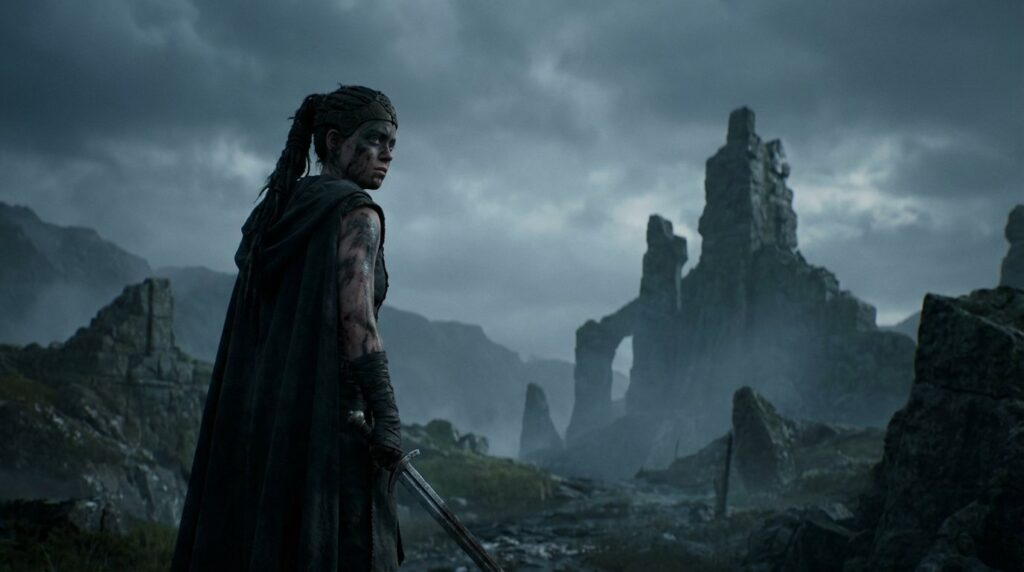
Few games have lingered in the collective gaming consciousness quite like 2017’s Hellblade: Senua’s Sacrifice. Ninja Theory’s bold fusion of psychological horror, Norse mythology, and a raw, unblinking look at mental health set a new bar for narrative-driven experiences. Nine years later, its sequel, Hellblade II: Senua’s Saga, arrives in a vastly different gaming landscape—one where the lines between interactive storytelling and cinematic artistry are increasingly blurred. The pressure on Senua’s return is immense, not just to surpass the original, but to redefine what a narrative action game can be in 2026.
Hellblade II is not content to repeat past triumphs. Instead, it doubles down on the series’ unique strengths: immersive audio design, visceral combat, and a hauntingly intimate portrayal of psychosis. But this time, Ninja Theory leverages the full power of next-gen hardware, delivering a journey that’s both grander in scale and deeper in introspection. With the industry’s renewed focus on mental health representation and the relentless march of graphical fidelity, Senua’s Saga arrives at an inflection point for the medium.
From the opening moments, Hellblade II demands attention. Its world is more beautiful, more brutal, and more unpredictable than ever. Every step Senua takes through Icelandic wilds and mythic nightmares is fraught with danger—both from without and within. Yet, beneath its technical prowess and narrative ambition, the game remains an intensely personal odyssey. It’s a rare sequel that both honors its heritage and boldly forges new territory.
Does Hellblade II deliver on its promise, or does the specter of expectation weigh too heavy? Let’s descend into the darkness and see what lies beneath the surface.
Gameplay: A Dance With Shadows and Steel
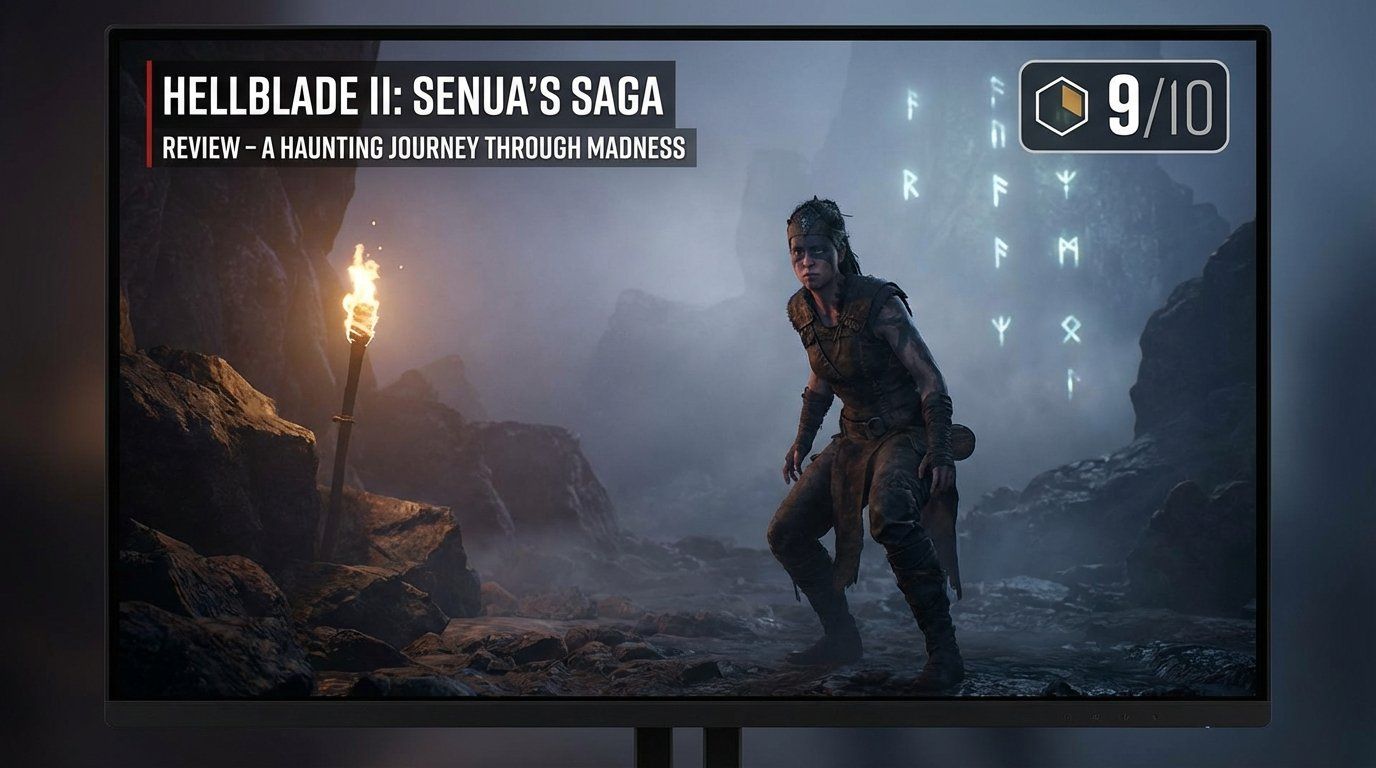
At its core, Hellblade II sticks to the series’ signature blend of methodical combat, environmental puzzle-solving, and atmospheric exploration. The action is deliberate and intimate—eschewing the button-mashing excess of mainstream action games for something more tactile and personal. Each encounter is a confrontation not just with enemies, but with Senua’s fractured psyche. The result is a gameplay loop that’s as much about surviving her inner demons as it is about toppling external threats.
Combat remains close-quarters and intense, with a heavy emphasis on timing, spacing, and reading your opponents. Senua’s movements are weighty, her strikes purposeful, and the feedback from each clash is deeply satisfying. The lack of traditional HUD elements pulls you deeper into the world, forcing you to rely on audio cues and Senua’s own reactions. It’s a risky design choice, but one that pays dividends in immersion.
Puzzle sections return, often requiring players to view the world through Senua’s unique perspective. These sequences are less about brute logic and more about intuition—spotting patterns, aligning symbols, or manipulating the environment in ways that echo her mental state. While occasionally obtuse, these puzzles serve as effective palate cleansers between bouts of violence, grounding the experience in introspection and thematic resonance.
Core Mechanics
Hellblade II’s mechanical core is a refined evolution rather than a radical departure from its predecessor. The combat system is anchored by a parry-dodge-attack loop, with enemies that demand patience and observation rather than reckless aggression. New layers of depth have been introduced: stamina management now plays a more prominent role, forcing players to balance offense and defense lest they leave Senua vulnerable to devastating counters.
The psychological focus manifests in both gameplay and world design. The voices in Senua’s head—the “Furies”—are not just narrative devices, but gameplay aides and obstacles. They warn of unseen threats, sow doubt, or encourage bold action, depending on the situation. This constant stream of auditory input turns every encounter into a tense negotiation between trust and paranoia.
Environmental interaction has also been expanded. Senua can now use elements of her surroundings to her advantage, setting traps or manipulating terrain to turn the tide of battle. These mechanics are woven organically into the flow of play, enhancing the sense of agency without resorting to overt tutorialization or clumsy prompts.
New Additions and Features
Where Hellblade II truly distinguishes itself is in its new features and expanded systems. Chief among them is the introduction of a dynamic weather and lighting system, which doesn’t just serve as window dressing but actively impacts gameplay. Sudden storms or shifts in light can obscure enemies, alter puzzle solutions, or trigger hallucinations that change the very fabric of reality. It’s a bold innovation that keeps players on edge, never quite certain what’s real and what’s imagined.
Another significant addition is the “Resonance” mechanic, which ties Senua’s mental state to in-game performance. Success in combat and puzzles boosts her confidence, granting subtle buffs and heightened perception. Conversely, repeated failures or exposure to traumatic events can trigger episodes of disorientation, distorting the world and even altering enemy behavior. This system adds tangible stakes to Senua’s psychological journey, making her struggles feel immediate and personal.
The game also introduces more varied enemy types and boss encounters, each with unique patterns and vulnerabilities. These are not just tests of skill, but narrative events that reveal new facets of Senua’s story and the world around her. The boss battles, in particular, are standout moments—equal parts spectacle and character study, pushing both player and protagonist to their limits.
Single-Player Campaign
Hellblade II remains a resolutely single-player experience, with a campaign that spans 12 to 15 hours on a first playthrough. The pacing is deliberate, avoiding the bloat that plagues so many modern titles. Every chapter is purposeful, with little in the way of filler. The journey is linear, but peppered with optional areas and environmental storytelling for players willing to look deeper.
The campaign structure mirrors Senua’s descent into (and ascent from) madness. Each region presents distinct challenges, both mechanical and psychological. The sense of progression is palpable—not just in Senua’s abilities, but in her understanding of herself and the world. The absence of traditional RPG systems (like skill trees or loot) keeps the focus squarely on narrative and atmosphere.
What sets Hellblade II’s campaign apart is its commitment to immersion. Cutscenes flow seamlessly into gameplay, and there are no loading screens to break the spell. The result is a journey that feels unbroken, unflinching, and deeply personal. By the time the credits roll, players are likely to feel as battered and transformed as Senua herself.
Story and Setting
Ninja Theory’s storytelling has matured considerably since 2017, and Hellblade II is their most ambitious narrative yet. The tale picks up some years after the original, with Senua venturing deeper into the mythic wilds of Iceland, seeking not just to confront the Norse gods, but to reconcile her own fractured identity. The writing walks a delicate tightrope between mythic grandeur and intimate human drama, never losing sight of Senua’s vulnerability.
The setting is a character in its own right. Iceland’s volcanic vistas, treacherous forests, and ancient ruins are rendered with breathtaking fidelity, blending historical authenticity with supernatural menace. The game’s world feels alive, haunted by spirits and memories that bleed into the present. Myth and reality intermingle until the distinction becomes meaningless—a reflection of Senua’s internal struggles.
Perhaps most importantly, Hellblade II continues its sensitive portrayal of psychosis. Senua’s hallucinations, delusions, and the ever-present voices are handled with empathy and nuance, drawing on extensive consultation with mental health professionals. The narrative never exploits her condition for cheap thrills; instead, it invites players to share in her confusion, fear, and resilience. In an industry still grappling with responsible representation, it’s a standout achievement.
Level Design
Levels in Hellblade II are carefully crafted to reflect Senua’s psychological state. Early areas are sprawling and oppressive, with twisted landscapes that confound navigation and perception. As Senua’s resolve strengthens, the environments become more coherent and open, mirroring her gradual mastery over her inner demons. This dynamic approach to level design keeps exploration engaging and thematically resonant.
Puzzles are seamlessly integrated into the environment, rarely feeling out of place or contrived. Whether aligning runes in a storm-lashed grove or deciphering cryptic illusions in a crumbling ruin, each challenge feels like a natural extension of the world. The designers have also made clever use of verticality and hidden pathways, rewarding curiosity with lore snippets, visual storytelling, and the occasional surprise encounter.
While the game’s linear structure may disappoint those seeking open-world sprawl, it’s a deliberate choice that serves the story. There’s a sense of forward momentum and narrative urgency that might have been lost in a more sprawling design. Instead, every location is memorable, focused, and rich with atmosphere.
Multiplayer and Online Experience
Hellblade II remains a firmly single-player experience, with no traditional multiplayer modes or online features. This decision may surprise some, given the industry’s current infatuation with live-service elements and co-op play, but it’s entirely in keeping with the game’s vision. The journey is intended to be solitary, mirroring Senua’s isolation and inner turmoil.
That said, Ninja Theory has included some light asynchronous features. Players can leave symbolic “echoes”—visual or audio cues—in the world, which may appear for others as fleeting hallucinations or whispers. These are subtle, unobtrusive touches that add a sense of communal experience without breaking immersion. There are also online leaderboards for speedrun completions and puzzle-solving, but these are optional and tucked away from the main flow of the campaign.
For those hoping for co-op or PvP elements, Hellblade II is likely to disappoint. But for players seeking a focused, narrative-driven adventure, the absence of multiplayer is a strength rather than a weakness. It’s a testament to Ninja Theory’s commitment to their artistic vision, even in a market saturated with online-first experiences.
Graphics and Visuals
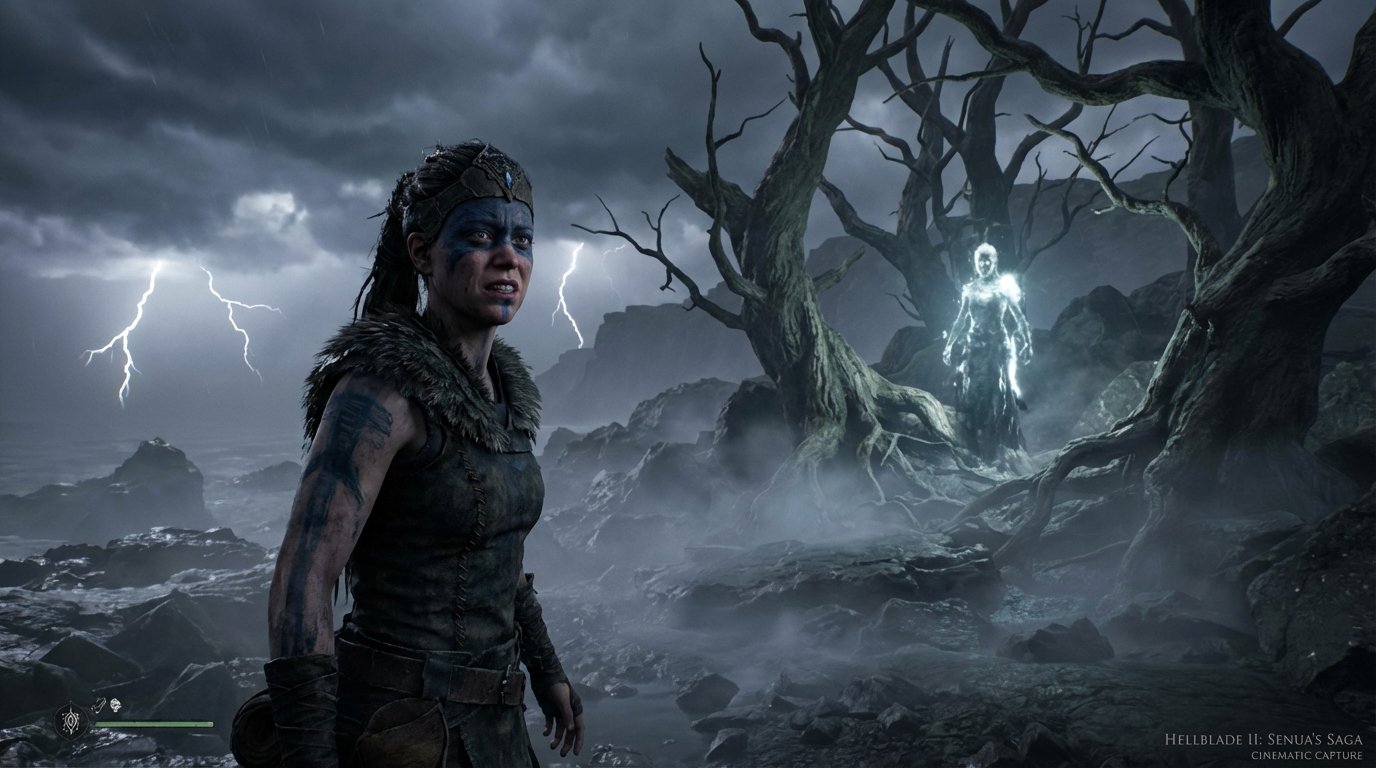
Hellblade II is, without exaggeration, one of the most visually stunning games of this generation. Built on the latest Unreal Engine iteration, the game sets a new benchmark for character animation, facial capture, and environmental detail. Senua herself is rendered with an astonishing level of nuance—every flicker of emotion, every bead of sweat, and every haunted glance is captured with cinematic precision. The result is a protagonist who feels more alive and expressive than almost any in gaming.
The environments are equally impressive. From windswept fjords to smoldering volcanic plains, each locale is a masterclass in lighting, texture work, and atmospheric effects. The dynamic weather system ensures that no two journeys are exactly alike; a sudden downpour or aurora-lit night can transform familiar ground into something wholly new and unsettling. The game’s use of color and contrast is particularly striking, evoking a sense of mythic grandeur without sacrificing realism.
Performance is rock-solid on current-gen consoles and high-end PCs, with virtually no loading times or technical hiccups. The photogrammetry and motion-capture work, especially during key emotional moments, is unparalleled. In a year packed with visually ambitious releases, Hellblade II stands at the very forefront.
Soundtrack and Audio Design
If there’s a single element that elevates Hellblade II above its peers, it’s the audio design. The binaural recording technique returns, with the voices in Senua’s head swirling and whispering in 3D space. Play with headphones, and you’ll find yourself continually glancing over your shoulder, so convincing is the illusion of presence. These voices are not just gimmickry—they are integral to both gameplay and storytelling, creating an unnerving, immersive experience that few games can match.
The soundtrack, composed by returning maestro David García, is a haunting blend of Nordic folk, industrial ambiance, and mournful strings. The music ebbs and flows with the action, underscoring moments of triumph, terror, and heartbreak with equal deftness. Choral elements and throat singing add an otherworldly edge, grounding the narrative in its mythic roots while pushing emotional beats to their zenith.
Environmental audio is equally meticulous: the crackle of fire, the distant rumble of thunder, the crunch of snow underfoot. Every sound is layered and spatialized to draw you deeper into Senua’s world—and, by extension, her mind. In an era where many games lean on bombast and spectacle, Hellblade II’s audio is a masterclass in restraint and psychological nuance.
Conclusion: Should You Play It?
In a gaming landscape crowded with open worlds, battle passes, and multiplayer behemoths, Hellblade II: Senua’s Saga stands apart as a singular, uncompromising vision. It’s a game that demands your full attention—a journey as harrowing as it is beautiful, as intimate as it is epic. Ninja Theory has crafted a sequel that not only honors the groundbreaking work of the original, but pushes the boundaries of interactive storytelling in meaningful, sometimes uncomfortable ways.
This is not a game for everyone. Its deliberate pacing, unrelenting focus on psychological struggle, and refusal to offer easy catharsis will frustrate some. But for those willing to trust in Senua’s journey, Hellblade II offers one of the most potent and affecting experiences in recent memory. It is a technical marvel, a narrative triumph, and a testament to the power of games to explore the darkest—and most hopeful—corners of the human condition.
In 2026, as the medium continues to evolve, Hellblade II feels like a necessary step forward—a reminder that there is still uncharted territory at the intersection of art, empathy, and play. If you have even a passing interest in narrative-driven games, do not let this one pass you by. Senua’s saga is one you will not soon forget.