

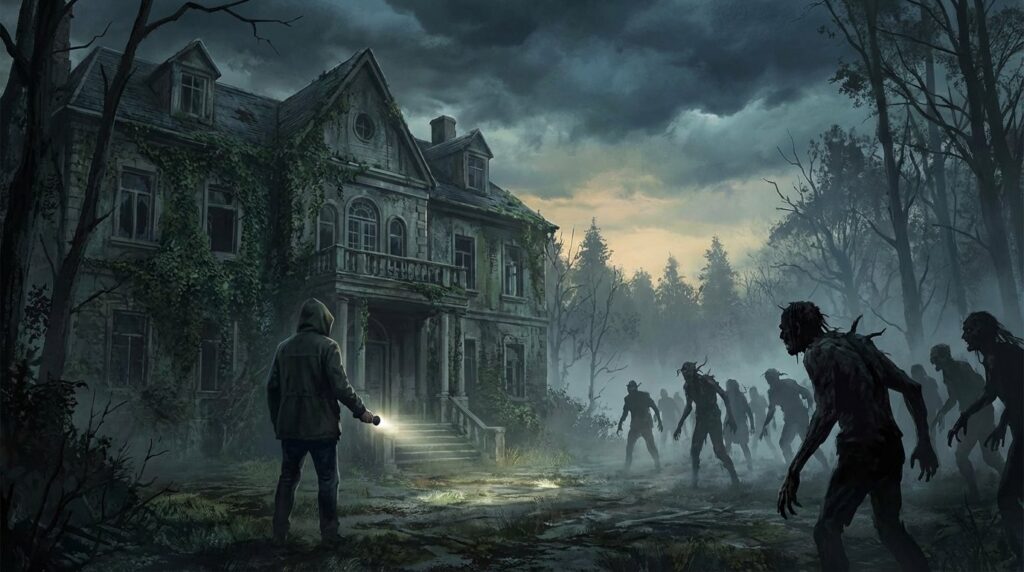
The Resident Evil franchise has, over the past three decades, mutated and evolved almost as dramatically as the monstrosities that prowl its haunted corridors. Few series in gaming can claim such a storied legacy or as many reinventions—each new installment forced to answer an impossible question: how do you honor a legacy while pushing forward? “Resident Evil Requiem,” Capcom’s latest entry, is the boldest answer to date. Released in an era when survival horror is enjoying a renaissance, Requiem isn’t just a return to form; it’s an ambitious synthesis, a love letter to the entire franchise that refuses to let nostalgia dictate its every move.
Set in the wake of the events of Village, “Requiem” arrives at a moment when fans’ expectations are sky-high. Capcom has spent the last few years balancing stunning remakes with experimental new stories, and the pressure to deliver a mainline title that both innovates and satisfies is immense. The result is a game that is at once familiar and daring—a carefully constructed survival horror experience designed to challenge veterans and entice newcomers. From the opening moments, it’s clear that “Requiem” is determined to make players feel vulnerable, hunted, and utterly engrossed.
But what truly sets “Resident Evil Requiem” apart in the crowded 2026 landscape is its willingness to twist the formula, melding classic slow-burn tension with inventive gameplay ideas and modern technical prowess. Whether you’re a longtime fan or a curious outsider, prepare for a journey that explores not just the roots of horror, but its future. Let’s delve into what makes this latest chapter in the saga both a requiem for old nightmares and a birth cry for new ones.
Gameplay: Survival Horror Reforged
At its core, “Resident Evil Requiem” is a masterclass in tension and resource management. The game doubles down on what made the series iconic: scarce ammunition, limited healing items, and the ever-present dread of what lurks around the next corner. The pacing is deliberate, with quiet exploration punctuated by moments of sheer terror, ensuring that players are never truly at ease. This is survival horror as it was meant to be—relentless, challenging, but never unfair.
Combat is as nerve-wracking as ever, with every encounter feeling consequential. Enemies are unpredictable, sometimes bursting through walls or stalking you between rooms, keeping you on your toes. The clunky-yet-satisfying gunplay is refined to a razor’s edge, rewarding precision and punishing recklessness. Yet, the game never devolves into mindless shooting; instead, it encourages players to weigh every bullet and every escape route, echoing the best moments of the classic entries.
Puzzles return as a crucial component, cleverly woven into the environment rather than presented as arbitrary obstacles. From elaborate lock mechanisms to environmental conundrums that require keen observation, “Requiem” demands both patience and ingenuity. The integration of these puzzles into the narrative and setting is tighter than ever, adding to the immersion and sense of place.
Core Mechanics
“Requiem” reimagines the series’ core mechanics with a deft hand. Inventory management, a Resident Evil staple, is more strategic than ever thanks to the expanded crafting system. Players must decide what to carry, what to leave behind, and how to combine scavenged materials to create vital resources. The new quick-access wheel streamlines weapon switching without sacrificing tension, ensuring that frantic moments never descend into frustrating menu navigation.
The game’s movement and aiming systems have been fine-tuned for the current generation. Gone are the days of tank controls, but there remains a purposeful weight to character movement—turning, running, and aiming all feel deliberate, heightening the sense of vulnerability. Context-sensitive actions, like barricading doors or crawling through vents, add a layer of environmental interaction that is both intuitive and atmospheric.
Enemy AI is another standout. Creatures exhibit complex behaviors: some hunt in packs, others stalk silently, adapting to your playstyle as the game progresses. This unpredictability means that no two encounters feel the same, even on repeat playthroughs. The classic “safe room” is still present but isn’t always as inviolable as before, adding a new layer of anxiety to what was once a sanctuary.
New Additions and Features
Capcom has not rested on its laurels with “Requiem,” introducing several key features that push the survival horror formula forward. Chief among these is the new “Echoes” system, which allows players to relive fragmented memories scattered throughout the environment. These haunting vignettes provide crucial narrative context and occasionally offer gameplay hints, but they also blur the line between reality and hallucination, keeping players guessing about what is truly happening.
A revamped companion mechanic sees certain sections paired with an AI-controlled character. Unlike previous outings, these companions are neither dead weight nor overpowered; their presence offers new tactical options and emotional resonance, but they’re also vulnerable, requiring protection and cooperation. The interplay between protagonist and companion is dynamic and often affects how scenarios play out, lending a branching quality to both story and gameplay.
For those seeking a challenge, the “Adaptive Terror” difficulty leverages machine learning to tweak enemy placement and resource availability based on your playstyle. This means that every run can feel distinct, with the game subtly adjusting to keep you on edge. It’s an innovation that feels fresh and fitting for the franchise’s legacy of replayability.
Single-Player Campaign
“Resident Evil Requiem” offers a dense, atmospheric campaign that clocks in at around 15–20 hours for a first playthrough—a substantial offering in the modern gaming era. The pacing is superb, alternating between tense exploration, pulse-pounding action, and moments of narrative introspection. Every section of the campaign feels meaningful, with little in the way of padding or filler content.
The campaign is meticulously structured, with branching paths and multiple endings that encourage replayability. Key decisions—both in terms of narrative and resource management—have tangible consequences, affecting which characters survive and how the final act unfolds. This gives the campaign a personal touch, as players see the results of their choices play out in harrowing fashion.
Boss encounters are among the series’ best. Rather than relying solely on bullet-sponge monsters, “Requiem” presents multi-phase battles that test both your combat skills and your puzzle-solving abilities. Learning enemy patterns, exploiting environmental hazards, and managing limited supplies are all crucial to survival, making each boss fight a memorable set piece rather than a simple damage contest.
Story and Setting
Set several years after the events of “Village,” “Resident Evil Requiem” returns to the series’ gothic roots while introducing a fresh narrative arc. The story follows a new protagonist, Dr. Eliza Blackwood, a virologist drawn into a spiraling conspiracy after a mysterious outbreak devastates a remote European town. Familiar faces make appearances, but the focus remains squarely on Eliza’s struggle to survive and uncover the truth behind a new strain of the virus.
What makes Requiem’s story so compelling is its balance of personal stakes and grand, apocalyptic threats. The game deftly weaves together threads from previous entries while remaining accessible to newcomers. Longtime fans will appreciate the subtle callbacks and lore expansions, but the narrative never devolves into fan service for its own sake. Eliza’s journey is harrowing, often forcing players to question her sanity and motivations as the line between reality and nightmare blurs.
The setting is a highlight in itself: a sprawling, decaying town surrounded by dense forests, labyrinthine underground labs, and decrepit mansions. Each location is steeped in atmosphere and history, with environmental storytelling that rewards exploration. From cryptic diary entries to haunting remnants of the town’s former residents, “Requiem” excels at making its world feel lived-in and tragic.
Level Design
Capcom’s level designers have outdone themselves with “Requiem.” The environments are intricate, interconnected, and filled with secrets. The main hub—a crumbling town square—serves as the anchor, with multiple branching paths leading to distinct districts and hidden areas. Shortcuts, locked doors, and environmental hazards abound, evoking memories of the series’ best labyrinthine layouts.
Verticality plays a larger role than in previous games, with multi-story buildings, underground passages, and rooftop escapes offering a variety of tactical options. Environmental puzzles are seamlessly integrated, often requiring players to backtrack and reconsider previously explored areas with newfound abilities or items. This metroidvania-style design keeps the world feeling cohesive and encourages thorough exploration.
Lighting and sound are used masterfully to guide players’ attention while maintaining a constant sense of unease. Darkness is oppressive, with only your flashlight and occasional lanterns piercing the gloom. The judicious placement of save rooms, item boxes, and typewriters provides just enough respite without ever letting tension fully dissipate.
Multiplayer and Online Experience
While the single-player campaign is the main attraction, “Resident Evil Requiem” also introduces a robust suite of multiplayer options. The flagship mode, “Outbreak Protocol,” pits teams of four players against waves of mutated horrors in a cooperative survival scenario. Unlike previous attempts at multiplayer, this mode is tightly balanced and leans heavily into the series’ survival mechanics—limited resources, unpredictable enemy spawns, and a constant need for teamwork ensure that every match is fraught with tension.
Competitive players will find “Extraction,” a PvPvE mode where rival teams race to secure vital samples from a monster-infested map. Encounters with both AI-controlled threats and human opponents add a strategic layer, demanding quick thinking and ruthless efficiency. The stakes escalate as time ticks down, forcing players to weigh risk versus reward with every decision.
Online connectivity is smooth and reliable, a welcome improvement over some of Capcom’s earlier forays into multiplayer. Matchmaking is swift, lag is minimal, and cross-platform play ensures a healthy player base. Seasonal events and rotating challenges keep the experience fresh, with exclusive cosmetic rewards for dedicated participants. Importantly, the multiplayer modes feel complementary to the main game rather than tacked-on distractions.
Graphics and Visuals
Leveraging the latest iteration of the RE Engine, “Resident Evil Requiem” is a visual powerhouse. The environments drip with atmosphere, from rain-soaked cobblestones to the flickering shadows of candlelit halls. Character models are hyper-detailed, capturing subtle facial expressions and the weariness of survivors pushed to their limits. Enemy designs are grotesque yet disturbingly lifelike, each abomination a testament to Capcom’s mastery of visual horror.
Lighting is a standout feature, with dynamic shadows and real-time reflections heightening immersion. The interplay of light and darkness isn’t just for show—it directly impacts gameplay, forcing players to choose between stealth and visibility. Environmental effects, like dense fog and torrential rain, are used sparingly but to great effect, heightening the sense of dread and isolation.
Performance on current-gen hardware is excellent, with consistent frame rates and minimal load times. The game supports ray tracing and high-dynamic range, making it one of the most technically impressive survival horror titles on the market in 2026. Accessibility options abound, allowing players to tailor visuals, controls, and assist features to their preferences without sacrificing atmosphere.
Soundtrack and Audio Design
Audio is, as always, a crucial component of the Resident Evil experience, and “Requiem” delivers in spades. The soundtrack oscillates between mournful piano themes and spine-chilling ambient cues, expertly underscoring both the emotional and horrific beats of the narrative. Long stretches of silence are punctuated by sudden crescendos, ensuring that players are never truly comfortable.
Sound design is meticulous, with every footstep, creaking floorboard, and distant monster growl layered to create a palpable sense of place. The binaural audio implementation is especially noteworthy, allowing players with headphones to pinpoint the direction of threats—or the approach of potential allies. This attention to detail enhances both immersion and gameplay, as listening becomes as important as seeing.
Voice acting is uniformly strong, with a standout performance from the lead. The script avoids melodrama, instead opting for a grounded, human approach that makes the horror all the more impactful. Environmental audio cues, from the hum of malfunctioning machinery to the echo of rain against broken windows, round out an audio landscape that is as rich as it is unsettling.
Conclusion: Should You Play It?
In a year already dense with high-profile releases, “Resident Evil Requiem” stands out as a triumphant return to the series’ roots and a bold step into the future. It marries the suffocating dread and meticulous design of its predecessors with meaningful innovations, crafting a survival horror experience that is both familiar and refreshingly modern. Whether you’re a hardened veteran of the Spencer Mansion or a newcomer drawn by the franchise’s enduring mystique, Requiem offers a journey worth taking.
Its masterful campaign, inventive mechanics, and robust multiplayer suite ensure that there is something here for every type of player. Capcom’s attention to detail is evident in every shadowy corridor and every whispered line of dialogue, making “Requiem” not just a worthy successor, but a new benchmark for the genre. In 2026, when so many horror games are content to recycle old scares, Resident Evil Requiem dares to haunt us with new nightmares. Don’t miss it.