
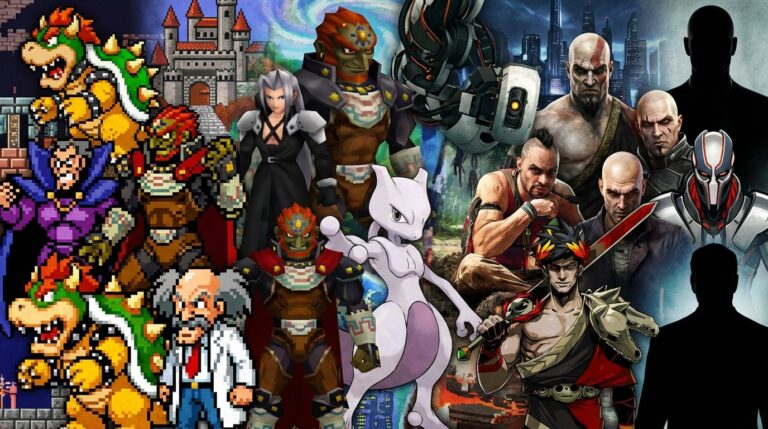

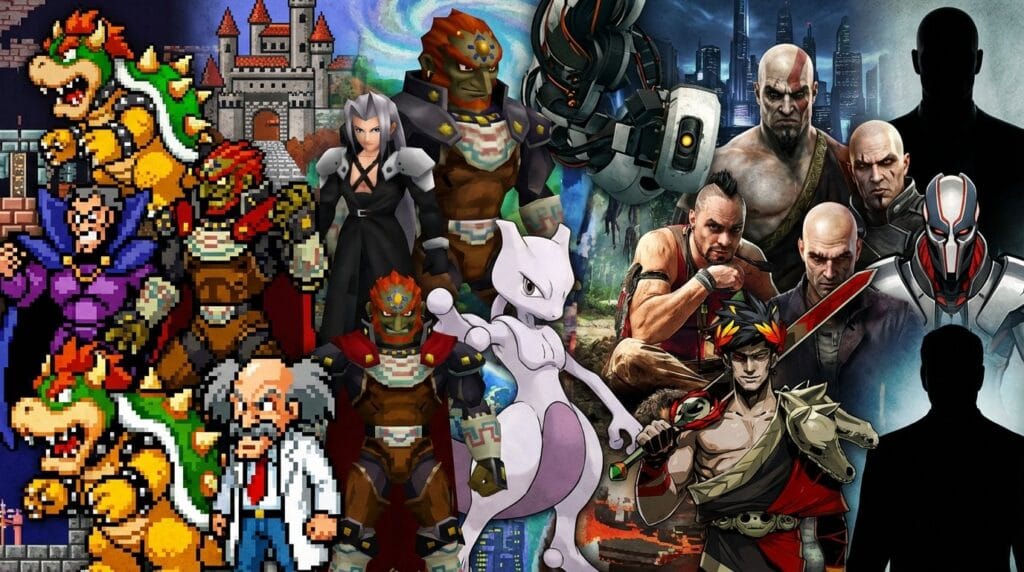
Every generation of gaming has its unforgettable moments—the epic boss battles, the jaw-dropping plot twists, and the villains whose names are forever etched into our memories. From the earliest pixelated sprites to the fully rendered nightmares of today’s blockbusters, video game antagonists have evolved alongside the consoles we play on. Whether they’re cackling madmen, tragic antiheroes, or monstrous abominations, these villains have done more than just challenge our skills; they’ve defined what it means to be a gamer in the NES era, the Switch 2 era, and everything in between.
The best villains aren’t just obstacles. They’re icons—forces of nature that push players to their limits and whose very presence elevates the entire game. Sometimes, their motivations make us question our own. Sometimes, they’re so evil, so relentless, that we can’t wait to take them down. And sometimes, they’re so charismatic that we almost root for them, despite everything.
In this list, we’re diving deep into the hall of fame of gaming’s most legendary antagonists. From 8-bit tyrants to modern masterminds, these are the 19 iconic video game villains who have shaped entire generations—from the NES all the way to the Switch 2. If you’re a gamer, you’ve faced at least a few of these legends. Ready to relive their most diabolical moments?
Super Mario Bros.
Story
When Super Mario Bros. landed on the NES and revolutionized platforming forever, it also introduced gamers to one of pop culture’s most instantly recognizable villains: Bowser, King of the Koopas. The story is classic: Mario must rescue Princess Peach from Bowser’s clutches, traversing perilous worlds, stomping Goombas, and dodging fireballs every step of the way. Bowser’s reign of terror over the Mushroom Kingdom became the archetype for evil overlords everywhere.
Bowser isn’t just a one-off antagonist—he’s the recurring thorn in Mario’s side, returning in sequel after sequel, each time with new tricks, castles, and minions. His hulking presence and nefarious plans have been a constant source of tension, humor, and challenge for generations of players.
Gameplay
Bowser’s boss battles are legendary for their escalating difficulty. The original Super Mario Bros. made reaching Bowser the ultimate test of platforming prowess—dodging his fire breath and timing jumps over his bridge, hoping to trigger that coveted axe and send him plummeting into the lava. Every sequel found new ways to keep him fresh, from Super Mario Bros. 3’s airships to Super Mario Odyssey’s globe-trotting wedding hijinks.
Bowser’s versatility as a villain is unmatched. Sometimes he’s a menacing challenge, sometimes a comic foil, but he always forces players to bring their A-game. The battles are usually the perfect blend of reflexes, timing, and pattern recognition—never feeling cheap, always feeling earned.
Why it’s on this list
Bowser is the quintessential video game villain—instantly recognizable, endlessly memeable, and the face of evil for millions of gamers. He’s more than just Mario’s nemesis; he’s a symbol of the obstacles and victories that define the medium itself. Without Bowser, the landscape of gaming villains would look very different.
Graphics and Sound
From the original NES pixels to the fully animated, expressive monster of Switch 2, Bowser’s look and roar have evolved right alongside gaming technology. His theme music is iconic, his castle’s fiery ambiance unforgettable. Whether you’re facing a few orange pixels or a towering, HD-rendered beast, Bowser always commands the stage.
Legacy and Reception
Bowser’s influence is massive—he’s the gold standard for gaming antagonists, referenced and parodied across every corner of pop culture. He’s appeared in everything from kart racers to RPGs, and his popularity shows no sign of waning. Few villains can claim to be as beloved—or as hated—as Bowser.
The Legend of Zelda: Ocarina of Time
Platform | Nintendo 64 |
|---|---|
Publisher | Nintendo |
Genre | Action-Adventure |
Release Date | 11/21/1998 |
Story
Ganondorf, the Gerudo King of Thieves, is the mastermind behind the greatest evil Hyrule has ever faced. In Ocarina of Time, his insidious plot to steal the Triforce and plunge the world into darkness is the driving force behind Link’s epic quest. What starts as a tale of childhood adventure quickly escalates into a battle against an ancient sorcerer whose ambitions threaten the very fabric of reality.
Ganondorf’s transformation from a cunning manipulator into the monstrous Ganon is one of gaming’s most memorable villain arcs. His presence looms over every dungeon, every boss fight, and every twist in the story. He’s not just a villain—he’s the villain.
Gameplay
Ganondorf’s impact on gameplay is felt throughout Ocarina of Time. Players are constantly preparing for the inevitable showdown, collecting items, solving puzzles, and growing stronger. The final battle is an unforgettable gauntlet—first facing Ganondorf in his human form atop his collapsing castle, then confronting the monstrous Ganon in a desperate fight to the finish.
Every encounter with Ganondorf is a test of everything players have learned. His attacks are brutal, his patterns punishing, and his design is both regal and terrifying. The sense of dread he inspires is palpable—this is a villain who means business.
Why it’s on this list
Ganondorf is the definitive Zelda antagonist and a benchmark for evil in the medium. His complexity as a character, his sheer power, and his pivotal role in the series’ lore make him one of the most iconic villains of all time. Ocarina of Time wouldn’t be the classic it is without him.
Graphics and Sound
From the haunting organ music that heralds his arrival to his menacing design, Ganondorf’s presentation is top-tier. His castle is a masterclass in foreboding atmosphere, and his transformation sequence is still a jaw-dropper, even today. Every aspect of his character is designed to make your skin crawl.
Legacy and Reception
Ganondorf has become synonymous with the Legend of Zelda franchise, appearing in sequels, spin-offs, and even Smash Bros. His legacy is felt in every Zelda title that followed, and he remains a favorite among fans and critics alike. Few villains have left such an indelible mark on gaming history.
Final Fantasy VII
Story
Sephiroth is more than just a villain—he’s a force of nature, a fallen hero whose twisted ambitions and godlike power make him one of gaming’s most compelling antagonists. When he murders Aerith in cold blood, players everywhere were left shocked and devastated. His descent into madness, fueled by a desire to become a god and destroy the world, is as chilling as it is tragic.
The story of Final Fantasy VII is as much about Cloud and his friends as it is about the specter of Sephiroth looming over them. His enigmatic origins, his connection to the planet, and his ultimate plan to summon Meteor make him a villain for the ages.
Gameplay
Sephiroth’s presence is felt in every corner of Final Fantasy VII, from haunting flashbacks to climactic boss battles. His boss fight is a true test of everything you’ve learned, with brutal attacks and epic music pushing players to their limits. The tension leading up to the final showdown is palpable, making victory all the sweeter.
Sephiroth isn’t just strong—he’s menacingly intelligent, manipulating events from the shadows and always staying one step ahead. Facing him requires strategy, preparation, and a bit of luck, making every encounter memorable.
Why it’s on this list
Sephiroth is the poster child for RPG villains—charismatic, tragic, and utterly terrifying. His iconic look, unforgettable theme music, and shocking actions have made him a legend in gaming. He redefined what a villain could be in an RPG, setting the bar for all who followed.
Graphics and Sound
From his flowing silver hair to his chilling “One Winged Angel” theme, every aspect of Sephiroth’s design is iconic. The pre-rendered cutscenes brought his menace to life, and the haunting music underscored every appearance. Even today, Sephiroth’s visual and audio cues send shivers down players’ spines.
Legacy and Reception
Sephiroth’s legacy extends far beyond Final Fantasy VII—he’s appeared in sequels, spin-offs, and even Smash Bros. His influence on villain design is undeniable, and he’s consistently ranked among the greatest antagonists of all time. Few villains have inspired as much fear, admiration, and discussion as Sephiroth.
Resident Evil 2
Story
Few villains have inspired as much dread as the relentless Tyrant, also known as Mr. X, in Resident Evil 2. Unleashed upon Raccoon City by the nefarious Umbrella Corporation, Mr. X is the embodiment of unstoppable evil. His silent, imposing figure stalks Leon and Claire through the ruined police station, turning every corner into a potential death sentence.
The story of Resident Evil 2 is a race against time as survivors try to escape the city while being hunted by a monster that just won’t quit. With Umbrella’s sinister experiments lurking in the background, Mr. X becomes the face of the corporation’s utter disregard for humanity.
Gameplay
Mr. X changes the way you play Resident Evil 2. His constant pursuit means players can never truly relax, forcing quick decision-making and tense resource management. The remake amplified this terror, with improved AI and sound design making his approach unmistakable and terrifying.
Boss fights with Mr. X are brutal tests of your skills and nerves. He takes a beating and keeps coming, requiring players to use every trick in the book to survive. His presence elevates the entire game, turning survival horror into an unforgettable adrenaline rush.
Why it’s on this list
Mr. X is the ultimate stalker villain—unrelenting, unfeeling, and utterly terrifying. He represents the shift in horror games toward more dynamic, unpredictable threats, and his impact on the Resident Evil series is undeniable.
Graphics and Sound
The remake’s visuals brought Mr. X to life like never before, with chilling detail in his trench coat, glowing eyes, and hulking frame. His footsteps echo through the halls, and the music ramps up the tension every time he appears. The sense of impending doom is perfectly captured through sight and sound.
Legacy and Reception
Mr. X’s legacy is cemented as one of survival horror’s greatest threats. The Resident Evil 2 remake brought him to a whole new generation, and his meme-worthy moments have only added to his legend. He’s a villain that players love to fear, and his influence can be seen in countless horror games since.
Metroid
Story
Mother Brain is the central villain of the original Metroid, orchestrating the Space Pirates’ plans to weaponize the deadly Metroids. As Samus Aran delves deeper into the alien labyrinth of Zebes, the looming threat of Mother Brain becomes ever more apparent. She’s the puppet master, pulling strings behind every trap and monster.
Mother Brain’s presence is felt in every room, every corridor, as players work their way toward the climactic showdown. The story is minimal but effective, letting the isolation and dread build until the final confrontation.
Gameplay
Mother Brain’s lair is a gauntlet of deadly obstacles. The final battle requires precision, speed, and nerves of steel, as players must dodge projectiles and navigate deadly barriers to finally destroy her. The challenge is unforgiving, making victory all the more satisfying.
Her role as the final boss set the standard for Metroidvania games to come, blending exploration, tension, and climactic battles. Every encounter with Mother Brain is a high-stakes test, demanding mastery of the game’s mechanics.
Why it’s on this list
Mother Brain is one of gaming’s original masterminds, a villain whose influence stretches across decades. She set the template for sci-fi evil overlords and remains a legendary figure in gaming lore. Without her, Metroid wouldn’t be the genre-defining classic it is.
Graphics and Sound
Mother Brain’s design was striking even in the NES era—a grotesque, cybernetic brain encased in glass, surrounded by deadly defenses. The music in her lair is among the most intense and memorable in early gaming, ramping up the pressure as you close in for the kill.
Legacy and Reception
Mother Brain’s legacy is immense—she’s inspired countless imitators and remains a central figure in the Metroid series. Her appearances in sequels and spin-offs have only added to her legend, and she’s widely recognized as one of the most important villains in gaming history.
Sonic the Hedgehog
Platform | Sega Genesis |
|---|---|
Publisher | Sega |
Genre | Platformer |
Release Date | 06/23/1991 |
Story
Dr. Robotnik, also known as Dr. Eggman, is the mad genius whose robotic creations and world-conquering schemes have made Sonic’s life a constant race against time. From kidnapping innocent animals to building towering death machines, Robotnik’s evil knows no bounds.
The story of Sonic the Hedgehog is simple but effective: stop Robotnik before his machines take over the world. His constant reinventions and absurdly elaborate plans keep the stakes high and the action frantic throughout the series.
Gameplay
Every Sonic game is a showdown between speed and cunning, with Robotnik’s traps and bosses testing your reflexes and quick thinking. Each zone ends with a battle against one of his contraptions, forcing players to adapt to new attacks and patterns.
Robotnik’s presence is felt in every level, whether you’re dodging spikes, outrunning collapsing platforms, or facing down his latest mechanical monstrosity. His boss fights are always a highlight, combining platforming with inventive enemy design.
Why it’s on this list
Dr. Robotnik is the face of evil for an entire generation of gamers. His mix of comic relief and genuine menace makes him one of the most memorable villains in gaming. He’s a constant reminder that brains can be just as dangerous as brawn.
Graphics and Sound
Robotnik’s design is instantly recognizable, from his round frame to his wild mustache. The music that accompanies his boss battles is iconic, and his machines are always visually distinct and creatively animated, especially as graphics have improved over the years.
Legacy and Reception
Robotnik has become a legend in his own right, appearing in countless games, cartoons, and movies. His rivalry with Sonic is as enduring as any in gaming, and his influence can be seen in villain design across genres. He’s the perfect blend of menace and humor.
Metal Gear Solid
Platform | PlayStation |
|---|---|
Publisher | Konami |
Genre | Stealth Action |
Release Date | 09/03/1998 |
Story
Liquid Snake is the genetically enhanced twin of Solid Snake, and his drive to prove his superiority is at the heart of Metal Gear Solid’s intricate plot. His plan to use the nuclear-equipped Metal Gear Rex to bring the world to its knees is as ambitious as it is terrifying.
The story is a web of betrayals, secrets, and philosophical musings on war and identity, with Liquid Snake orchestrating chaos from the shadows. His personal connection to Snake adds emotional weight to every encounter.
Gameplay
Liquid Snake’s influence is everywhere in Metal Gear Solid, from his taunting radio calls to his climactic boss battles. The final sequence—a multi-stage showdown atop Metal Gear Rex, followed by a high-speed jeep chase—remains one of the most thrilling in gaming history.
His tactics are as much psychological as physical, forcing players to question their every move. The game’s stealth mechanics and varied boss fights keep players on their toes, with Liquid always one step ahead.
Why it’s on this list
Liquid Snake is the ultimate rival—a villain whose personal vendetta raises the stakes in every confrontation. His complexity, charisma, and unpredictability set a new standard for antagonists in action games.
Graphics and Sound
Metal Gear Solid’s cinematic presentation brought Liquid Snake to life with expressive voice acting, memorable music, and dramatic cutscenes. His design, from his slicked-back hair to his intense glare, is instantly recognizable.
Legacy and Reception
Liquid Snake’s legacy is huge, influencing countless villains in the years since. His impact on the Metal Gear series and on gaming as a whole is undeniable, and his story continues to captivate fans decades later.
Street Fighter II
Story
M. Bison, the psychopathic dictator and head of the criminal organization Shadaloo, is the ultimate challenge in Street Fighter II. His quest for world domination and psychotic lust for power make him the perfect final boss in the world of competitive fighting games.
Bison’s backstory as a ruthless warlord who uses Psycho Power to terrorize the globe adds depth to his villainy. He’s the force uniting the game’s diverse cast of fighters, giving each of them a reason to step into the ring.
Gameplay
M. Bison’s boss fight is infamous for its difficulty. His moves are fast, powerful, and often seemingly unfair, pushing players to their limits. Mastering his patterns is a rite of passage for Street Fighter fans.
Outside of the boss fight, Bison’s presence is felt in the game’s storylines and rivalries. He’s the ultimate test of skill, and defeating him is the crowning achievement for any arcade warrior.
Why it’s on this list
M. Bison redefined what a fighting game villain could be. His combination of raw power, cunning, and sheer presence set the template for countless fighting game antagonists to follow.
Graphics and Sound
Bison’s design is iconic—his red military outfit, glowing eyes, and menacing grin are instantly recognizable. His theme music is one of the most memorable in the genre, and his special moves are accompanied by flashy visual effects that make every fight feel epic.
Legacy and Reception
M. Bison is a legend among fighting game fans, appearing in countless sequels, spin-offs, and adaptations. His role as the ultimate boss is secure, and he remains a favorite for both players and pop culture at large.
Pokémon Red and Blue
Story
Giovanni, the leader of Team Rocket, is the shadowy mastermind behind countless nefarious schemes in the original Pokémon games. His quest for power and control over rare Pokémon puts him at odds with trainers everywhere, culminating in a showdown that shocked players everywhere—Giovanni is the final Gym Leader.
Giovanni’s dual role as criminal boss and respected Gym Leader adds layers to his character, making every encounter more impactful. He’s the puppet master pulling the strings behind the game’s biggest threats.
Gameplay
Facing Team Rocket’s grunts is a recurring challenge throughout the game, but Giovanni stands apart with his powerful Ground-type Pokémon and ruthless tactics. The final battle in the Viridian Gym is a true test of your team’s strength and preparation.
Giovanni’s battles force players to think strategically, exploiting weaknesses and managing resources. His unpredictability and high-level Pokémon make every encounter a memorable challenge.
Why it’s on this list
Giovanni is the original Pokémon villain, setting the standard for all who followed. His combination of charm, power, and ruthlessness make him one of the most memorable antagonists in gaming.
Graphics and Sound
The original Game Boy graphics gave Giovanni a mysterious, intimidating presence, while later remakes expanded on his design with more detail and flair. His theme music is instantly recognizable, adding to the tension of every battle.
Legacy and Reception
Giovanni’s legacy is massive—he’s appeared in countless Pokémon games, anime episodes, and even spin-offs. His role as both villain and Gym Leader is iconic, and he remains a fan favorite decades after his debut.
Castlevania: Symphony of the Night
Platform | PlayStation |
|---|---|
Publisher | Konami |
Genre | Action-Adventure |
Release Date | 03/20/1997 |
Story
Dracula, the immortal vampire lord, is the driving force behind the Castlevania series, but it’s in Symphony of the Night that he reaches his most iconic form. His resurrection plunges the world into darkness, and only Alucard stands in his way.
Dracula’s tragic backstory and complex relationship with his son add depth to his villainy, making him more than just a monster. His influence is felt in every corner of the castle, every monster you face, and every twist in the story.
Gameplay
Dracula’s castle is a sprawling labyrinth filled with traps, secrets, and deadly enemies. Every step brings you closer to the final confrontation, with Dracula’s presence looming over every challenge. The boss fight itself is a gauntlet of transformations and brutal attacks.
Dracula’s design and attack patterns force players to adapt on the fly, making the final battle a true test of skill and preparation. His unpredictability keeps players on their toes until the very end.
Why it’s on this list
Dracula is the ultimate gothic villain—timeless, powerful, and deeply tragic. His influence on the Castlevania series and on gaming as a whole is immeasurable, and Symphony of the Night is his crowning achievement.
Graphics and Sound
The game’s detailed sprite work brings Dracula and his castle to life, with lush backgrounds and fluid animations. The haunting music, especially during boss fights, adds to the sense of dread and grandeur.
Legacy and Reception
Dracula’s legacy is cemented as one of gaming’s most iconic villains. Symphony of the Night is widely regarded as a masterpiece, and Dracula’s role is a big reason why. His influence can be seen in countless games that followed.
The Legend of Zelda: Majora’s Mask
Story
Majora’s Mask is a villain unlike any other—a sentient, malevolent artifact that possesses Skull Kid and threatens to destroy the world by crashing the moon into Termina. The story is a race against time, with Link reliving the same three days over and over in a desperate attempt to stop the apocalypse.
The mask’s influence warps reality, turning friends into enemies and hope into despair. Its power is both mysterious and terrifying, making it a unique and unforgettable antagonist.
Gameplay
Majora’s Mask changes the way you approach every challenge. The looming threat of the falling moon adds constant pressure, and every action must be carefully planned. The final battle against Majora is a surreal, multi-stage fight that tests every skill you’ve learned.
The game’s time loop mechanics and dark themes make every encounter with Majora’s influence feel urgent and meaningful. Defeating the mask requires mastery of both combat and puzzle-solving.
Why it’s on this list
Majora’s Mask is one of the most unique and disturbing villains in gaming history. Its ability to warp reality and its sheer existential threat make it a standout even in the storied Zelda franchise.
Graphics and Sound
The game’s visuals are haunting, with distorted faces and unsettling environments. The music, especially the moon’s theme, ratchets up the tension, creating an atmosphere of dread and urgency.
Legacy and Reception
Majora’s Mask is a cult classic, beloved for its bold storytelling and unforgettable villain. The mask itself has become a symbol of the series’ willingness to take risks and push boundaries.
BioShock
Story
Andrew Ryan, the visionary founder of Rapture, is one of gaming’s most complex antagonists. His utopian dreams turn to nightmares as the city descends into chaos, and his philosophical musings on free will and power make him a villain unlike any other.
The story of BioShock is a descent into madness, with Ryan’s ideals clashing violently with reality. His infamous “Would you kindly?” twist is one of the most shocking moments in gaming, forever changing how players think about agency in games.
Gameplay
BioShock’s gameplay is shaped by Ryan’s presence. The city of Rapture is a dangerous, unpredictable place, filled with traps, enemies, and moral choices. The final confrontation with Ryan is more cerebral than physical, forcing players to confront their own role in the story.
Every enemy, every trap, is a reflection of Ryan’s failed vision. The game’s mix of combat, exploration, and choice ensures that his influence is always felt.
Why it’s on this list
Andrew Ryan is the thinking man’s villain—a character whose motivations are as fascinating as they are terrifying. His impact on both the game’s story and its mechanics make him a standout in gaming history.
Graphics and Sound
Rapture’s art deco design is a marvel, with Ryan’s statues and propaganda posters everywhere. The voice acting and music bring the city to life, making every encounter with Ryan unforgettable.
Legacy and Reception
BioShock is hailed as one of the greatest games of all time, and Andrew Ryan’s role is a big part of that. His influence on narrative design is immense, and his character remains a touchstone for storytelling in games.
Portal 2
Platform | PC, PlayStation 3, Xbox 360 |
|---|---|
Publisher | Valve |
Genre | Puzzle-Platformer |
Release Date | 04/18/2011 |
Story
GLaDOS, the rogue AI at the heart of Portal 2, is as hilarious as she is terrifying. Her dry wit and biting sarcasm make every moment in Aperture Science’s labyrinth a delight, even as she tries to kill you at every turn.
The story is a battle of wits between player and machine, with GLaDOS constantly taunting, testing, and manipulating you. Her transformation from antagonist to reluctant ally is one of gaming’s most satisfying arcs.
Gameplay
Portal 2’s puzzles are masterpieces of design, with GLaDOS’s commentary providing both hints and comic relief. Her traps and tests are as deadly as they are inventive, forcing players to think outside the box.
The final battle is a mind-bending test of logic and reflexes, with GLaDOS pulling out all the stops in a desperate bid for control. Her presence is felt in every room, every turret, and every sarcastic remark.
Why it’s on this list
GLaDOS is the ultimate AI villain—brilliant, unpredictable, and endlessly entertaining. Her personality elevates Portal 2 from great to legendary, making her one of the most beloved antagonists in gaming.
Graphics and Sound
Portal 2’s sterile, futuristic environments are the perfect backdrop for GLaDOS’s machinations. The voice acting, especially Ellen McLain’s performance, is pitch-perfect, and the music sets the mood for every test chamber.
Legacy and Reception
GLaDOS has become a pop culture icon, referenced in everything from memes to music videos. Her influence on AI villains is huge, and Portal 2 is still celebrated as one of the smartest, funniest games ever made.
Undertale
Platform | PC, PlayStation 4, Nintendo Switch |
|---|---|
Publisher | Toby Fox |
Genre | RPG |
Release Date | 09/15/2015 |
Story
Flowey the Flower starts as a seemingly harmless guide but quickly reveals himself as a sadistic, reality-bending villain. His ability to manipulate the game’s code and break the fourth wall makes every encounter unpredictable and unsettling.
Flowey’s backstory is tragic, but his actions are pure evil—he delights in tormenting both the player and the game’s other characters. The final battle is a surreal, mind-warping experience that defies expectations.
Gameplay
Flowey’s boss fights are unlike anything else in gaming, blending bullet hell mechanics with meta-narrative twists. He changes the rules on the fly, forcing players to adapt to new attacks, save file manipulations, and even fake game crashes.
Every encounter with Flowey is a test of your ability to think outside the box. His unpredictability and willingness to break the rules make him one of the most challenging and memorable villains ever.
Why it’s on this list
Flowey redefined what a video game villain could be, using the medium itself as a weapon. His meta awareness and willingness to break the fourth wall make him a standout in the world of indie games.
Graphics and Sound
Undertale’s simple graphics are used to great effect, with Flowey’s transformations among the most disturbing in the game. The music, especially during his boss fight, is intense and unforgettable.
Legacy and Reception
Flowey’s influence can be seen in countless indie games that followed, and Undertale is celebrated for its bold storytelling and innovative design. Flowey remains one of the most talked-about villains in recent memory.
Dark Souls
Platform | PlayStation 3, Xbox 360, PC |
|---|---|
Publisher | Bandai Namco Entertainment |
Genre | Action RPG |
Release Date | 09/22/2011 |
Story
Gwyn, Lord of Cinder, is the tragic final boss of Dark Souls—a once-noble king whose sacrifice to kindle the First Flame ultimately leads to his downfall. His transformation from hero to hollowed husk is a meditation on the cost of power and the inevitability of decay.
The story of Dark Souls is shrouded in mystery, but Gwyn’s presence is felt throughout, with every boss and every area linked to his legacy. His fall from grace is the emotional core of the game.
Gameplay
Gwyn’s boss fight is a brutal test of timing and endurance. His relentless attacks and unpredictable patterns push players to their limits, demanding mastery of the game’s mechanics.
Every step toward Gwyn is a journey through a world shaped by his choices. The challenge and satisfaction of finally defeating him are unmatched, cementing his role as one of gaming’s greatest villains.
Why it’s on this list
Gwyn is the ultimate tragic villain—his sacrifice saved the world, but his refusal to let go doomed it. His story is a haunting reminder of the price of heroism and the inevitability of change.
Graphics and Sound
Dark Souls’ haunting visuals bring Gwyn’s ruined kingdom to life, with somber lighting and epic architecture. The boss music during his fight is a mournful piano piece, underscoring the tragedy of his fall.
Legacy and Reception
Gwyn’s influence can be seen in countless games that followed, and Dark Souls is celebrated as one of the greatest games ever made. His role as both hero and villain is a masterclass in storytelling.
The Witcher 3: Wild Hunt
Platform | PlayStation 4, Xbox One, PC, Nintendo Switch |
|---|---|
Publisher | CD Projekt Red |
Genre | Action RPG |
Release Date | 05/19/2015 |
Story
Eredin, the King of the Wild Hunt, is the spectral leader of a band of otherworldly riders who terrorize the world of The Witcher. His pursuit of Ciri threatens to plunge the world into eternal winter, making him the ultimate threat to Geralt and his allies.
The story is an epic battle of wills, with Eredin’s cold, relentless ambition driving the game’s most intense moments. His connection to the larger lore of the Witcher universe adds depth and menace to every encounter.
Gameplay
Eredin’s presence is felt in every major quest, with the Wild Hunt’s raids and ambushes testing Geralt’s skills and resources. The final battle is a cinematic, multi-stage duel that pushes players to their limits.
Eredin’s tactics are as unpredictable as they are brutal, forcing players to adapt and make tough choices. His supernatural powers and otherworldly allies make every encounter a challenge.
Why it’s on this list
Eredin is the perfect fantasy villain—mysterious, powerful, and utterly relentless. His role in The Witcher 3 elevates the stakes and makes every victory feel hard-won.
Graphics and Sound
The Witcher 3’s visuals are stunning, with Eredin’s design standing out as particularly menacing. The music and voice acting bring his character to life, making every encounter memorable.
Legacy and Reception
The Witcher 3 is widely regarded as one of the greatest RPGs ever, and Eredin’s role as the primary antagonist is a big part of that. His influence on the series and on fantasy gaming as a whole is immense.
Persona 5
Platform | PlayStation 3, PlayStation 4, PC, Nintendo Switch, Xbox One |
|---|---|
Publisher | Atlus |
Genre | Turn-Based RPG |
Release Date | 04/04/2017 |
Story
Masayoshi Shido, the corrupt politician at the heart of Persona 5, is the driving force behind the game’s most sinister events. His ambition to rule Japan at any cost puts him on a collision course with the Phantom Thieves.
Shido’s manipulation of public perception, abuse of power, and utter lack of remorse make him a villain you love to hate. The reveal of his true nature is one of the game’s most shocking moments, raising the stakes for the final act.
Gameplay
Shido’s Palace is a sprawling labyrinth filled with traps, puzzles, and powerful enemies. The final battle against him is a multi-stage epic, requiring players to use every skill and strategy they’ve learned.
Every encounter with Shido’s minions is a test of your team’s strength and your ability to outthink your enemies. His boss fight is a highlight of the game, blending story and gameplay seamlessly.
Why it’s on this list
Shido is the ultimate corrupt official—a villain whose actions have real-world resonance. His role as the final antagonist in Persona 5 cements his place among gaming’s greatest villains.
Graphics and Sound
Persona 5’s stylish visuals and slick animations make Shido’s Palace a feast for the eyes. The music, especially during the boss fight, is intense and memorable, adding to the sense of urgency.
Legacy and Reception
Shido’s role in Persona 5 is widely praised, and the game itself is considered one of the best JRPGs of the last decade. His impact on the series and on players is undeniable.
Hollow Knight
Platform | PC, Nintendo Switch, PlayStation 4, Xbox One |
|---|---|
Publisher | Team Cherry |
Genre | Action-Adventure, Metroidvania |
Release Date | 02/24/2017 |
Story
The Radiance is the hidden force corrupting Hallownest, a being of light whose influence warps minds and twists reality. Its story is one of ancient betrayal, forgotten gods, and a kingdom on the brink of collapse.
The Radiance’s motives are mysterious, but its impact is devastating, turning once-peaceful bugs into mindless husks and shattering the world’s fragile balance.
Gameplay
The Radiance’s boss fight is the ultimate test of skill in Hollow Knight, blending bullet hell mechanics with precise platforming. Its attacks are relentless, requiring perfect timing and nerves of steel.
Every step toward the Radiance is a journey through a world shaped by its influence. The challenge and satisfaction of finally defeating it are unmatched.
Why it’s on this list
The Radiance is a villain whose impact goes beyond the story—it shapes the entire game world and challenges players in new and innovative ways. Its role in Hollow Knight is unforgettable.
Graphics and Sound
Hollow Knight’s hand-drawn visuals bring the Radiance and its world to life, with haunting animations and beautiful backgrounds. The music during the boss fight is epic, adding to the sense of scale and danger.
Legacy and Reception
Hollow Knight is hailed as one of the best indie games ever, and the Radiance is a big part of that. Its influence on the genre is massive, inspiring countless games in its wake.
God of War (2018)
Story
Baldur, the Norse god cursed with invulnerability, is the primary antagonist in God of War (2018). Driven mad by his inability to feel anything, Baldur’s quest for vengeance against his mother Freya and his relentless pursuit of Kratos turn him into a tragic yet terrifying villain.
His story is one of pain, loss, and obsession, with every encounter ramping up the tension and stakes. Baldur’s personal vendetta gives the game its emotional core.
Gameplay
Baldur’s boss fights are some of the most intense in the series, blending cinematic choreography with brutal combat. His unpredictable attacks and shifting strategies keep players on their toes, while his invulnerability forces creative thinking.
Every battle with Baldur is an event, pushing both Kratos and the player to their limits. The final showdown is a masterclass in tension and storytelling.
Why it’s on this list
Baldur is a villain defined by tragedy—his pain is palpable, and his actions, while monstrous, are rooted in deep emotional scars. He’s a testament to how far video game storytelling has come.
Graphics and Sound
God of War (2018) is a visual powerhouse, and Baldur’s design is both imposing and expressive. The voice acting and music add emotional weight to every encounter, making his story unforgettable.
Legacy and Reception
Baldur’s role in God of War (2018) is widely praised, and the game itself is considered a modern masterpiece. His influence on the series and on gaming as a whole is immense.
The Legend of Zelda: Tears of the Kingdom
Story
Demon King Ganondorf returns in Tears of the Kingdom, resurrected to unleash chaos upon Hyrule once again. His cunning, power, and malevolent ambition turn the peaceful kingdom into a battleground, testing Link and Zelda like never before.
Ganondorf’s plans threaten to unravel not just the world, but the very fabric of reality itself. His presence is a constant threat, looming over every quest and every corner of Hyrule.
Gameplay
Tears of the Kingdom raises the stakes with new mechanics, abilities, and epic boss battles. Ganondorf’s fights are multi-layered and intense, requiring mastery of the game’s systems and quick thinking under pressure.
His minions and traps are everywhere, shaping the world and challenging players at every turn. The final battle is a true test of everything you’ve learned, blending story, strategy, and pure skill.
Why it’s on this list
Ganondorf is the ultimate recurring villain—his return in Tears of the Kingdom is both a nostalgia hit and a bold new chapter for the series. His enduring appeal and ever-evolving threat make him a legend.
Graphics and Sound
The Switch’s capabilities bring Ganondorf to life with stunning detail, expressive animations, and epic music. His lair and the world’s corruption are visually striking, and his theme is as menacing as ever.
Legacy and Reception
Tears of the Kingdom is celebrated as a new high point for the Zelda series, and Ganondorf’s role is a big part of that. His influence on the franchise and on gaming villains as a whole is unmatched.
Super Smash Bros. Ultimate
Story
Galeem is the apocalyptic force at the heart of World of Light, the single-player adventure in Super Smash Bros. Ultimate. As a godlike entity, Galeem wipes out nearly every fighter in an instant, transforming the world into a twisted landscape of spirits and challenges.
The story is a desperate struggle for survival, with players fighting to reclaim their friends and defeat an enemy with seemingly limitless power.
Gameplay
Galeem’s influence shapes every aspect of World of Light, with transformed stages, corrupted fighters, and relentless challenges. The final battle is a spectacular, multi-stage clash that tests every skill you’ve honed across the game’s massive roster.
Every encounter with Galeem’s minions is a unique twist on the classic Smash formula, keeping gameplay fresh and unpredictable. The sense of scale and urgency is unmatched.
Why it’s on this list
Galeem is a villain that brings the entire Smash universe together, raising the stakes to cosmic levels. Its sheer power and influence make it a worthy final boss for the ultimate crossover.
Graphics and Sound
Super Smash Bros. Ultimate is a visual and auditory feast, and Galeem’s design is otherworldly and imposing. The music, especially during boss fights, is epic and fitting for the scale of the conflict.
Legacy and Reception
Galeem’s role in Ultimate is widely celebrated, and the game itself is considered a milestone in fighting games. Its impact on the series and on crossover gaming is profound.
The Legend of Zelda: Breath of the Wild
Story
Calamity Ganon is the monstrous, elemental embodiment of evil in Breath of the Wild. Sealed for centuries, it finally breaks free, laying waste to Hyrule and corrupting everything it touches. Its influence turns guardian machines into deadly foes and shrouds the kingdom in darkness.
The story is a desperate battle to reclaim Hyrule, with Calamity Ganon’s presence lurking in the background of every quest and every ruined village.
Gameplay
Calamity Ganon’s corruption shapes the world, transforming familiar locations into dangerous battlegrounds. The final showdown in Hyrule Castle is a multi-stage epic, requiring players to use every tool and strategy at their disposal.
Every encounter with Ganon’s minions is a test of your skills and preparation. The open-world design ensures that his influence is always felt, no matter where you go.
Why it’s on this list
Calamity Ganon is the ultimate force of destruction—a villain whose impact is felt in every corner of the game. Its role in Breath of the Wild redefines what a Zelda villain can be.
Graphics and Sound
The game’s stunning visuals bring Calamity Ganon to life as a swirling mass of malice and energy. The music, especially during the final battle, is epic and haunting, adding to the sense of danger.
Legacy and Reception
Breath of the Wild is celebrated as one of the greatest games ever made, and Calamity Ganon’s role is a big part of that. Its influence on open-world design and villain presentation is immense.
From the earliest days of 8-bit tyranny to the sprawling, cinematic showdowns of today, video game villains have always been the driving force behind our greatest gaming memories. These 19 antagonists didn’t just challenge us—they helped define the very eras in which we played, pushing boundaries and raising the stakes for every hero’s journey.
As technology advances and storytelling becomes ever more sophisticated, we can only imagine the villains yet to come. But if this list proves anything, it’s that a great villain is timeless—forever lurking in the shadows, waiting for the next generation to press start. Here’s to the legends who made us rage, cheer, and, above all, remember.