
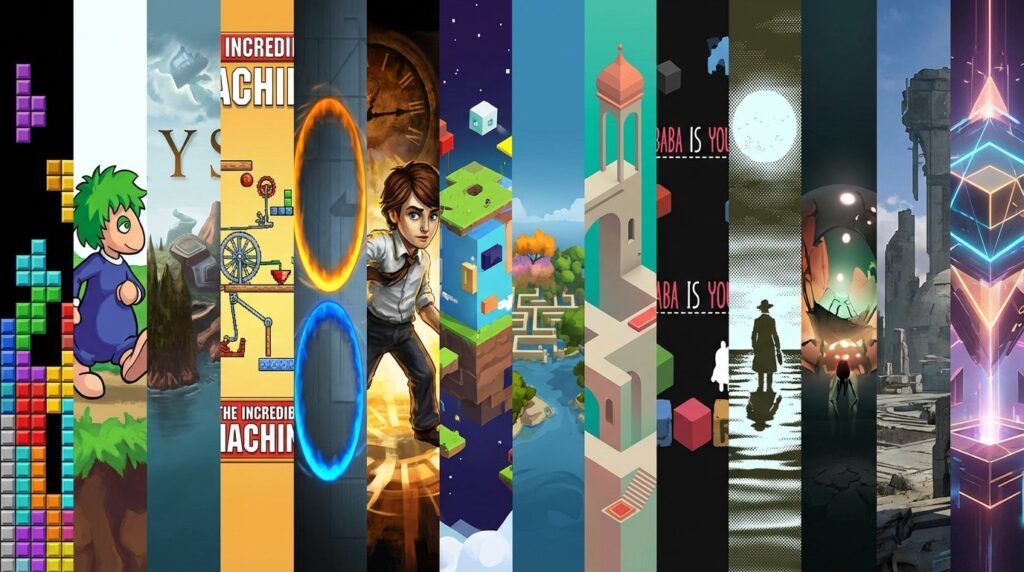
Puzzle games have always been a playground for innovation, challenging our minds while delighting us with clever mechanics and inventive design. From the pixelated screens of the early arcade era to the hyper-stylized, narrative-driven experiences of today, this genre has consistently pushed the boundaries of what games can be. As we move into 2026, puzzle games continue to evolve, blending genres, experimenting with storytelling, and using new technology to reshape the way we engage with challenges both big and small.
The following listicle takes you on a journey through the most groundbreaking and imaginative puzzle games ever made. We’ve handpicked 14 titles, each renowned for their creativity, impact, and lasting influence on the genre. These games span decades—from retro classics that laid the foundation to recent and upcoming releases that are redefining what’s possible. Whether you’re a hardcore puzzle enthusiast or a casual gamer, prepare to discover (or rediscover) some of the most innovative experiences the gaming world has ever offered.
Tetris
Story
There’s no deep lore or convoluted narrative here—Tetris is all about pure, distilled gameplay. Created by Alexey Pajitnov in 1984, this Soviet export swept the globe without needing a story, its simple concept captivating millions. The falling blocks, or “tetrominoes,” needed no explanation; the challenge was universal and instantly understood.
Still, the “story” of Tetris is in its legacy—a tale of international intrigue, licensing battles, and cultural impact. Its journey from a Moscow computer lab to Game Boy screens worldwide is gaming legend, with the game itself becoming a symbol of the medium’s universal appeal.
Gameplay
Tetris is the ultimate “easy to learn, hard to master” experience. Players rotate and drop a series of geometric blocks to complete horizontal lines, which then vanish to make room for more. The game’s escalating speed and relentless pace create an addictive pressure that has stood the test of time.
Its genius lies in the balance between randomness and skill. Every decision matters, and the simplicity of the controls belies the depth of strategy involved in stacking, clearing, and planning ahead. Tetris has inspired countless imitators, but few have matched its elegance.
Why it’s on this list
Tetris is the very definition of innovation in puzzle gaming. It established the rules for an entire genre and proved that games didn’t need complex graphics or stories to become legends. Its influence is felt in everything from casual mobile games to competitive esports.
Graphics and Sound
Originally, Tetris featured nothing more than colored blocks and basic chiptune bleeps. Yet, those simple visuals and the iconic “Korobeiniki” theme became instantly recognizable. Later versions have reimagined the graphics and music, but the minimalist design remains timeless.
Legacy and Reception
Tetris is one of the best-selling and most ported games of all time. It’s been inducted into the World Video Game Hall of Fame and is often cited as one of the greatest video games ever made. Decades later, it’s still played competitively and continues to inspire new generations of designers.
Portal
Story
Valve’s Portal dropped players into the sterile, mysterious chambers of Aperture Science, where you play as Chell, a silent protagonist subjected to a series of increasingly deadly tests. Guided (and taunted) by the artificial intelligence GLaDOS, the story unfolds through sly humor, environmental storytelling, and a deepening sense of unease.
Portal’s narrative is deceptively simple but loaded with dark wit and subversive twists. The growing tension and GLaDOS’s memorable personality have made it one of the most beloved stories in gaming, despite its brevity.
Gameplay
Portal redefined what a first-person puzzle game could be. Armed with the iconic portal gun, players create linked portals on flat surfaces to navigate space, solve physics-based challenges, and outwit the facility’s traps.
The mechanics are brilliantly intuitive yet endlessly inventive, demanding lateral thinking and creative problem-solving. Portal never wastes your time—each puzzle introduces a new twist, and the game’s pacing is a masterclass in design.
Why it’s on this list
Portal is a landmark in puzzle innovation, seamlessly blending narrative and gameplay. Its portal mechanic influenced countless games across genres, and its impact on game design is still felt today.
Graphics and Sound
Portal’s clean, claustrophobic visuals and robotic sound design perfectly match its unsettling, comedic atmosphere. The voice acting, especially Ellen McLain’s performance as GLaDOS, is legendary, and the end-credits song “Still Alive” became an instant classic.
Legacy and Reception
Critics and players alike praised Portal for its originality, humor, and design. It won multiple Game of the Year awards, spawned a successful sequel, and remains a staple of speedrunning and puzzle game discussions.
The Witness
Story
Jonathan Blow’s The Witness throws you onto a mysterious, sunlit island filled with intricate puzzles and cryptic environmental clues. There’s no hand-holding or direct exposition: the narrative is told through audio logs, visual cues, and the structure of the island itself.
Players slowly uncover the island’s secrets, piecing together philosophical questions about perception, knowledge, and consciousness. The story is subtle, rewarding curiosity and patience with profound moments of realization.
Gameplay
At its core, The Witness is about line-drawing puzzles—but it’s so much more than that. The island is a sprawling, open-world labyrinth where each area introduces new rules and twists. Solutions often require observation, experimentation, and keen attention to both the puzzles and the environment.
The game is a masterclass in non-linear design, letting players tackle puzzles in any order and discover connections at their own pace. Every breakthrough feels earned, and the sense of discovery is unparalleled.
Why it’s on this list
Few games have reimagined what a puzzle game can be like The Witness. Its open-world structure, environmental storytelling, and layered puzzles set a new standard for the genre, influencing countless games in its wake.
Graphics and Sound
The Witness is visually stunning, with vibrant, painterly visuals that make the island a joy to explore. The ambient soundscape and minimalist score create an atmosphere of tranquility and mystery, enhancing the sense of immersion.
Legacy and Reception
Critics hailed The Witness as a masterpiece, praising its depth, ambition, and design. It’s widely regarded as one of the best puzzle games of the 2010s and continues to inspire passionate debate and analysis among fans.
Baba Is You
Story
Baba Is You drops you into a surreal world where the rules of reality are literally up for grabs. There’s little in the way of traditional narrative, but its charm comes from the bizarre scenarios and the sense of playful experimentation.
The game’s quirky characters and strange environments serve as a canvas for the real story: your journey of discovery as you bend logic to progress through each level.
Gameplay
What sets Baba Is You apart is its mind-bending core mechanic: the rules of each puzzle are blocks of text you can push around to change how the world works. “BABA IS YOU,” “FLAG IS WIN,” or “WALL IS STOP” can be rearranged to transform objects, redefine victory, or even swap your own identity.
This mechanic turns every level into a meta-puzzle, challenging players to break conventions and think outside the box. The sheer creativity and open-endedness make every solution feel like a personal triumph.
Why it’s on this list
Baba Is You is the closest games have come to letting players “hack” the rules themselves. Its innovative design has been hailed as a stroke of genius, earning it a place among the most inventive puzzle games ever made.
Graphics and Sound
The visuals are charmingly simple, with retro-inspired pixel art and adorable animations. The quirky sound effects and minimalist music add to the whimsical, offbeat atmosphere.
Legacy and Reception
Upon release, Baba Is You received widespread acclaim for its originality and challenge. It won multiple indie awards and is hailed as a modern classic, with a passionate community still dissecting its cleverest puzzles.
Professor Layton and the Curious Village
Story
This Nintendo DS classic introduced players to Professor Layton, the unflappable British gentleman, and his eager apprentice Luke. Tasked with unraveling the mysteries of St. Mystere, you’re drawn into a charming whodunit filled with eccentric characters and clever twists.
The game’s narrative combines old-school detective fiction with whimsical humor, making for an engaging and memorable adventure that feels like an interactive storybook.
Gameplay
Professor Layton and the Curious Village blends point-and-click exploration with a massive variety of brain teasers, riddles, and logic puzzles. Each puzzle is seamlessly woven into the story, ranging from math problems to lateral-thinking challenges.
The game’s clever hint system and escalating difficulty make it accessible to newcomers while offering plenty for veterans to chew on. It’s a perfect blend of narrative and pure puzzle-solving.
Why it’s on this list
Few games have done more to popularize the puzzle genre for mainstream audiences. Its polished presentation and integration of story and puzzles set a new standard, spawning a beloved franchise and inspiring countless imitators.
Graphics and Sound
The hand-drawn art style is warm and inviting, reminiscent of a European animated film. The soundtrack is equally charming, with playful tunes and atmospheric sound effects that bring St. Mystere to life.
Legacy and Reception
Professor Layton and the Curious Village was a smash hit, both critically and commercially. It kicked off a long-running series and cemented Layton as one of gaming’s most beloved puzzle icons.
The Talos Principle
Story
Croteam’s The Talos Principle places you in the role of a sentient robot exploring a series of ancient ruins and high-tech environments. Guided by the enigmatic voice of “Elohim,” you’re challenged not just physically, but philosophically, as you unravel the mystery of your own existence.
The game delves deep into questions about consciousness, free will, and humanity, delivering a narrative that’s equal parts cerebral and emotionally resonant.
Gameplay
The Talos Principle is a first-person puzzle game that mixes classic block-pushing and laser-reflecting mechanics with modern design. Each puzzle is a self-contained challenge, but the open world allows for exploration and nonlinear progression.
As new tools and mechanics are introduced, the puzzles grow increasingly complex and satisfying. Optional “star” puzzles and hidden terminals add layers of depth and replayability.
Why it’s on this list
The Talos Principle stands out for its fusion of challenging puzzles and philosophical storytelling. It pushes players to think deeply, not just about solutions, but about the nature of intelligence and reality itself.
Graphics and Sound
Visually, the game juxtaposes lush landscapes with stark, crumbling ruins and striking sci-fi architecture. The atmospheric soundtrack and subtle sound design enhance the game’s meditative tone.
Legacy and Reception
Upon release, The Talos Principle received critical acclaim for its ambitious storytelling and polished puzzles. It’s become a touchstone for thoughtful, narrative-driven puzzle games, inspiring a devoted cult following.
Monument Valley
Story
Monument Valley invites you to guide Princess Ida through a world of impossible architecture and optical illusions. The story is minimalist but emotionally evocative, using visual storytelling and striking environments to convey a sense of wonder and melancholy.
Players uncover fragments of a lost civilization as they manipulate the world, piecing together a subtle narrative about forgiveness and discovery.
Gameplay
The core of Monument Valley is its manipulation of perspective. Players twist, rotate, and slide parts of the environment to create new paths, exploiting the logic of impossible shapes inspired by M.C. Escher.
The puzzles are accessible yet deeply satisfying, offering a meditative experience that emphasizes beauty as much as challenge. Later levels introduce new mechanics and companions, keeping the experience fresh.
Why it’s on this list
Monument Valley is a masterclass in minimalist design and visual innovation. Its use of architecture as a puzzle element set a new benchmark for mobile games and inspired a wave of artistic, perspective-based puzzlers.
Graphics and Sound
The game’s art style is breathtaking, with pastel colors, clean lines, and surreal landscapes. The ethereal soundtrack and delicate sound effects contribute to a dreamlike atmosphere that resonates long after you finish playing.
Legacy and Reception
Monument Valley was a critical and commercial hit, winning numerous awards for design and music. Its influence can be seen in countless indie and mobile titles, and it remains a gold standard for visually-driven puzzle games.
Catherine
Story
Catherine is an adult-oriented puzzle game that combines a surreal horror narrative with relationship drama. Players control Vincent, a man caught between his longtime girlfriend Katherine and the mysterious Catherine, as he navigates a series of bizarre, nightmare-fueled challenges.
The story is full of twists, exploring themes of commitment, temptation, and personal growth. It’s as much a psychological thriller as it is a puzzle game.
Gameplay
Catherine’s central gameplay loop revolves around climbing treacherous towers of blocks, which shift, collapse, and threaten to drop you to your doom. Each nightmare puzzle is timed and fiendishly difficult, requiring quick reflexes, planning, and nerves of steel.
Off the puzzle grid, you make choices in Vincent’s waking life that affect the narrative and endings. The blend of intense puzzle action and social simulation is unique and compelling.
Why it’s on this list
Catherine is one of the boldest experiments in merging mature storytelling with hardcore puzzle gameplay. Its nightmarish block puzzles and branching narrative set it apart from anything else on the market.
Graphics and Sound
The game sports a distinct anime-inspired visual style, with detailed character designs and stylish cutscenes. The jazz-infused soundtrack and voice acting add tension and emotional weight.
Legacy and Reception
Catherine was praised for its originality, challenging puzzles, and adult themes. It developed a dedicated cult following and remains a standout example of genre-bending innovation.
Braid
Story
Braid tells the story of Tim, a man on a quest to rescue a princess, but the game’s narrative quickly reveals itself to be far more complex and ambiguous. The story unfolds through cryptic text and environmental cues, encouraging players to piece together its deeper meanings.
Themes of regret, obsession, and the passage of time are woven into every level, making Braid as much a meditation as a platformer.
Gameplay
Braid’s gameplay is built around manipulating time itself. Each world introduces a new twist: rewinding, slowing, or splitting time to solve platforming puzzles. The mechanics are tightly integrated with the story, requiring players to master each new temporal rule.
The puzzles are clever and challenging, often demanding creative, non-linear thinking. Braid rewards experimentation and rewards players with frequent “a-ha!” moments.
Why it’s on this list
Braid is widely credited with jumpstarting the modern indie game revolution. Its inventive time-manipulation mechanics and narrative ambition set a new bar for what puzzle games could achieve.
Graphics and Sound
The hand-painted art style gives Braid a distinctive, dreamlike look. The evocative soundtrack and ambient effects further immerse players in its mysterious world.
Legacy and Reception
Braid was a critical darling, earning praise for its innovation, design, and storytelling. It inspired a new wave of indie developers and remains a touchstone for experimental puzzle games.
Return of the Obra Dinn
Story
Set aboard a lost merchant ship in the early 1800s, Return of the Obra Dinn puts you in the shoes of an insurance investigator tasked with uncovering the fate of every soul onboard. There’s no linear plot—instead, the story unfolds as you piece together the ship’s tragic events using deduction and logic.
The narrative is masterfully constructed, each revelation deepening the mystery and drawing you into the tragic fates of the crew.
Gameplay
Obra Dinn’s gameplay is a blend of deduction, observation, and logic puzzles. Armed with a supernatural pocket watch, you view “frozen moments” of the crew’s final seconds, using dialogue, accents, and environmental clues to identify each person.
The game challenges players to think like detectives, cross-referencing clues and mapping out relationships. It’s a rare example of narrative-driven deduction, where every answer feels like a genuine discovery.
Why it’s on this list
Return of the Obra Dinn is a singular, genre-defying puzzle game that makes you feel like a real investigator. Its innovative mechanics and intricate storytelling are unlike anything else in gaming.
Graphics and Sound
Obra Dinn’s one-bit, monochrome art style is instantly recognizable and evocative of classic computer adventures. The atmospheric sound design and voice acting bring each scene to life, creating an immersive sense of time and place.
Legacy and Reception
The game won multiple awards for design and innovation, with critics lauding its originality and depth. It’s considered one of the most inventive detective games ever made, cementing Lucas Pope’s reputation as a visionary designer.
Picross S
Story
Picross, also known as nonograms or picture crosswords, has been a staple for puzzle aficionados for decades. Picross S brought the classic formula to the Nintendo Switch, offering hundreds of logic-based picture puzzles.
There’s no overarching plot, but the real story is in the satisfaction of revealing hidden images one square at a time.
Gameplay
Players are presented with a grid and numeric clues for each row and column, using logic to fill in the correct squares and unveil pixel art pictures. Picross S refines the formula with intuitive controls, new modes, and a steady difficulty curve.
The game is endlessly replayable, perfect for short bursts or marathon sessions. Whether you’re a newcomer or a seasoned solver, Picross S offers a satisfying mental workout.
Why it’s on this list
Picross S takes a classic puzzle concept and elevates it with smart design and a wealth of content. Its simple, elegant gameplay has kept fans coming back for more, making it a mainstay of the genre.
Graphics and Sound
The visuals are clean and uncluttered, focusing attention on the puzzles themselves. The relaxing music and subtle sound cues enhance the meditative experience.
Legacy and Reception
The Picross series has a loyal following, and Picross S is widely praised for its polish and accessibility. It continues to introduce new players to the joys of logic-based puzzling.
Human Resource Machine
Story
In Human Resource Machine, you play as an office worker in a dystopian corporate world, climbing the ranks by solving increasingly complex programming challenges. The story is told through quirky cutscenes and darkly humorous commentary on the nature of work and automation.
The narrative is subtle but effective, offering sharp satire on the monotony and absurdity of modern office life.
Gameplay
The game’s core mechanic is visual programming. Each level tasks you with automating a task by creating a sequence of commands, effectively teaching you the basics of assembly language without requiring any prior knowledge.
Puzzles quickly ramp up in complexity, demanding logical thinking, efficiency, and creativity. Optional challenges encourage you to optimize your solutions, adding replay value.
Why it’s on this list
Human Resource Machine is a brilliant fusion of programming and puzzle-solving, making abstract concepts accessible and fun. Its innovative approach has inspired a wave of educational puzzle games.
Graphics and Sound
The cartoonish visuals and whimsical animations give the game a unique personality. The soundtrack is playful, while the sound effects punctuate every success (or failure) with charm.
Legacy and Reception
The game was praised for its accessibility and educational value, introducing many players to the fundamentals of coding. It remains a favorite among puzzle fans and educators alike.
Superliminal
Story
Superliminal is set in a surreal dreamscape where perception is reality. You play as a test subject in a mysterious sleep therapy program gone awry, guided by cryptic messages and a soothing (if not always helpful) narrator.
The story unfolds through environmental cues, dream logic, and clever writing, drawing players deeper into its mind-bending world.
Gameplay
Superliminal’s central mechanic is forced perspective—objects grow or shrink depending on how you view and interact with them. Puzzles challenge you to manipulate the environment by thinking about scale and perception in entirely new ways.
The game is filled with surprises, subverting expectations at every turn and rewarding creative thinking. Each level introduces fresh twists, keeping the experience unpredictable and engaging.
Why it’s on this list
Superliminal takes the concept of perspective-based puzzles to a whole new level, blending innovative mechanics with psychological storytelling. It’s a must-play for anyone who craves something truly different.
Graphics and Sound
The visuals are clean and stylized, with a dreamlike quality that enhances the surreal atmosphere. The sound design and music are understated but effective, immersing players in the uncanny world.
Legacy and Reception
Superliminal received critical acclaim for its originality and clever design. It quickly gained a cult following and is often cited as one of the most inventive puzzle games of its era.
Viewfinder
Story
Viewfinder puts you in a vibrant, mysterious world where reality can be reshaped with the snap of a camera. There’s a subtle narrative about discovery and perception, told through environmental storytelling and cryptic messages.
The story takes a backseat to the sense of wonder as you experiment with the game’s unique mechanics and unravel the secrets of its shifting landscapes.
Gameplay
The core innovation in Viewfinder lies in its ability to turn photographs into three-dimensional objects. Snap a picture, place it in the environment, and watch as it becomes part of the world—bridges, platforms, and solutions to spatial puzzles.
This mechanic opens up endless possibilities, encouraging creativity and experimentation. Each new area builds on the concept, introducing twists that will keep even veteran puzzle fans guessing.
Why it’s on this list
Viewfinder is a showcase for what’s possible when technology and creativity collide. Its groundbreaking use of photography as a puzzle mechanic marks it as one of the most innovative games of the decade.
Graphics and Sound
The art direction is bold and colorful, with a painterly style that makes each environment feel alive. The ambient soundtrack and subtle sound effects create an immersive, soothing atmosphere that encourages exploration.
Legacy and Reception
Upon release, Viewfinder was celebrated for its originality and polished design. It’s already considered a standout in the new wave of experimental puzzle games, and its influence is sure to grow in the years ahead.
The Legend of Zelda: Tears of the Kingdom
Story
The sequel to Breath of the Wild, Tears of the Kingdom, continues Link and Zelda’s epic journey through a Hyrule reshaped by cataclysmic events. The story builds on the rich lore of the series, introducing new mysteries, characters, and realms to explore.
This entry dives even deeper into themes of legacy, resilience, and the balance between old and new—a narrative that resonates with both longtime fans and newcomers.
Gameplay
Tears of the Kingdom takes the open-world puzzle-solving of its predecessor and dials it up to eleven. The new “Fuse” and “Ultrahand” mechanics let players combine objects and create solutions to puzzles in almost limitless ways, turning the entire world into a sandbox for creative experimentation.
Environmental puzzles, shrines, and dungeons are more intricate and dynamic than ever, rewarding ingenuity and perseverance. The freedom to approach challenges from any angle has set a new standard for systemic, emergent puzzle design.
Why it’s on this list
While primarily an action-adventure game, Tears of the Kingdom’s innovative puzzle mechanics have redefined what’s possible in open-world design. Its blend of physics, creativity, and exploration have influenced the entire industry.
Graphics and Sound
The visuals are breathtaking, with sweeping vistas, detailed environments, and imaginative creature design. The soundtrack is evocative and dynamic, perfectly complementing the game’s sense of adventure and wonder.
Legacy and Reception
Released to universal acclaim, Tears of the Kingdom is hailed as one of the greatest games of its generation. Its innovations have already inspired a new wave of open-world games that prioritize player creativity and freedom.
From the first falling block in Tetris to the reality-warping mechanics of Viewfinder and the open-ended creativity of Tears of the Kingdom, puzzle games have constantly evolved, surprising us with fresh ideas and unforgettable experiences. These 14 titles represent the cutting edge of the genre, each pushing boundaries in their own unique way.
As we look ahead to the future of gaming in 2026 and beyond, one thing is certain: the spirit of innovation that has defined puzzle games for decades shows no signs of slowing down. Whether you’re seeking a nostalgic trip down memory lane or the next brain-bending challenge, these games are proof that creativity and curiosity will always have a place at the heart of gaming. So grab your controller, flex your mental muscles, and get ready to be amazed all over again.